Baby teeth may be small, but they play a big role in your child’s early growth. They help with chewing, speech, smile confidence, and the development of the jaw and permanent teeth over time.
Many parents start wondering about their child’s teeth when the first tiny tooth appears, when teething symptoms begin, or when a baby tooth becomes loose earlier than expected. While every child grows at their own pace, most children follow a general timeline for tooth eruption and loss.
That is where a baby teeth chart can be helpful. It gives parents a simple way to understand when baby teeth usually come in, the usual order in which they come in, and when they fall out to make space for adult teeth.
Regular dental checkups are also important during these stages because a dentist can track your child’s tooth development, check for early dental cavities, and guide you if anything appears too early, too late, or unusual.
At Charm Dental Care, families can find gentle dental care for children and helpful support at every stage of their smile development.
Key Takeaways
- Baby teeth help children chew, speak, smile, and make space for adult teeth.
- Most babies get their first tooth around 6 months, but every child’s timeline can be different.
- A baby teeth chart helps parents understand when teeth usually come in and fall out.
- Baby teeth usually start falling out around age 6 as permanent teeth begin to come in.
- Parents should care for baby teeth from the first tooth with brushing, healthy food habits, and regular dental checkups.
- A dentist should check your child’s teeth if they come in very late, fall out too early, or cause pain, swelling, or discomfort.
Table of Contents
Understanding Baby Teeth Development

Baby teeth are also called primary teeth. These are your child’s first set of teeth, and they usually begin coming in during infancy.
A full set includes 20 baby teeth, with 10 on the upper jaw and 10 on the lower jaw.
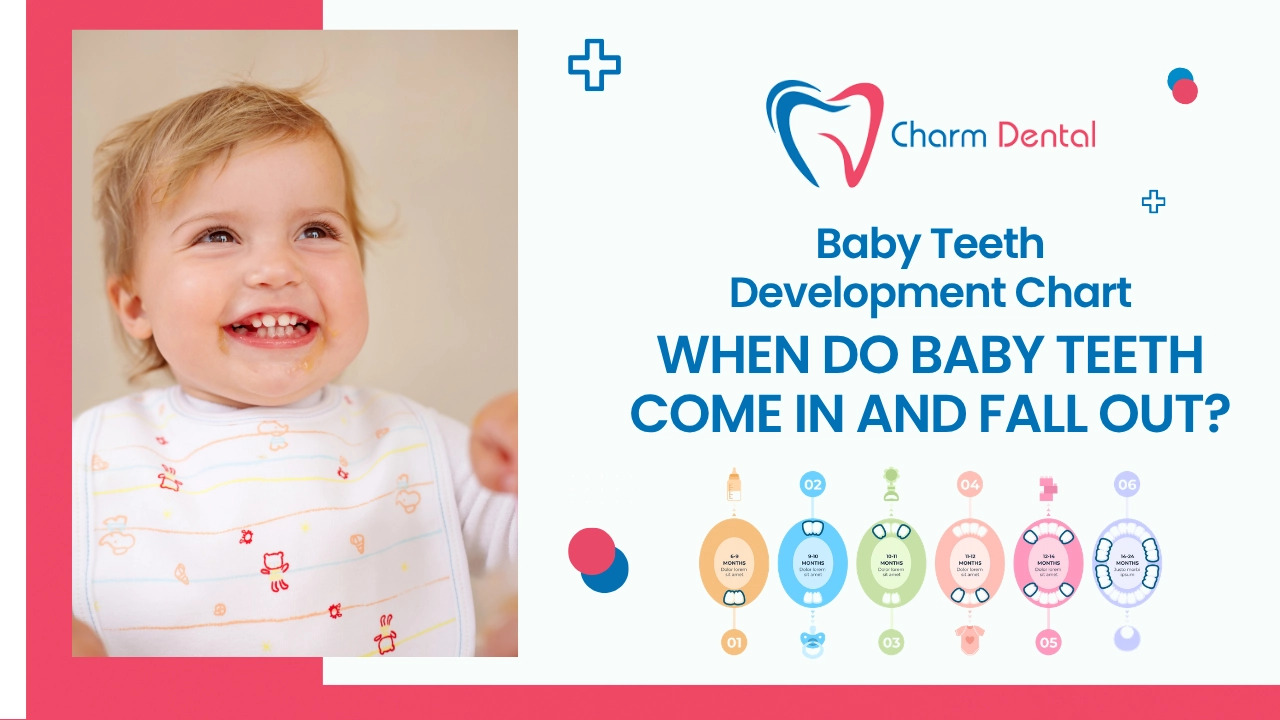
A baby teeth development chart helps parents understand this process more clearly. It shows when teeth usually appear, which teeth often come first, and when those teeth may fall out later.
Quick parent facts:
| Baby Teeth Fact | What It Means |
| Total baby teeth | Most children have 20 primary teeth. |
| First teeth | The lower front teeth often appear first. |
| Main purpose | Baby teeth help with chewing, speech, and jaw development. |
| Adult teeth support | Baby teeth hold space for permanent teeth. |
| Care needed | Baby teeth can still get cavities and infections. |
Even though baby teeth eventually fall out, they should not be ignored. A cavity in a baby tooth can cause pain, affect eating, disturb sleep, and create stress for both the child and parent.
Charm Dental Care Spring
Parents who want regular support during these early stages can visit Charm Dental Care’s Spring dental office for gentle family dental care and routine checkups.
Also Read: Importance of Dental Care for Babies
When Do Baby Teeth Come In?

Most babies get their first tooth at around 6 months, but this can vary from child to child. Some babies may start teething earlier, while others may not get their first tooth until closer to their first birthday.
So, when do baby teeth come in? In most children, the lower front teeth appear first, followed by the upper front teeth. After that, side teeth, molars, and canines slowly come in over the next couple of years.
Charm Dental Care Katy
Parents can visit Charm Dental Care’s dentist office in Katy, TX if they want a dentist to check their child’s tooth development and answer questions about teething.
1. Average Age for the First Baby Tooth
The first baby tooth usually appears between 6 and 10 months. This is often one of the lower front teeth.
A slight delay is usually normal. If your baby is eating well, growing normally, and has healthy gums, there may be no reason to worry.
But if no teeth have appeared by around 12 to 18 months, it is a good idea to ask a dentist for guidance.
2. Signs Your Baby Is Teething
Teething can look different for every baby. Some babies have very mild symptoms, while others may feel uncomfortable for several days.
Common signs include:
- More drooling than usual.
- Chewing on toys, fingers, or blankets.
- Tender or swollen gums.
- Fussiness or extra clinginess.
- Mild changes in sleep.
- Rubbing the cheeks or mouth.
Parents can gently wipe the gums, offer a clean, chilled teething ring, and keep the mouth clean during this stage.
3. Factors That Can Affect Tooth Eruption
Baby teeth do not come in at the exact same time for every child. A few things can affect the timing, such as family history, nutrition, premature birth, and the child’s overall growth pattern.
Small differences are usually normal. What matters most is that your child’s teeth and gums are developing in a healthy way.
The timing above follows general ADA guidance that primary teeth usually begin erupting around 6 months, though timing can vary by child.

Baby Teeth Eruption Chart by Age
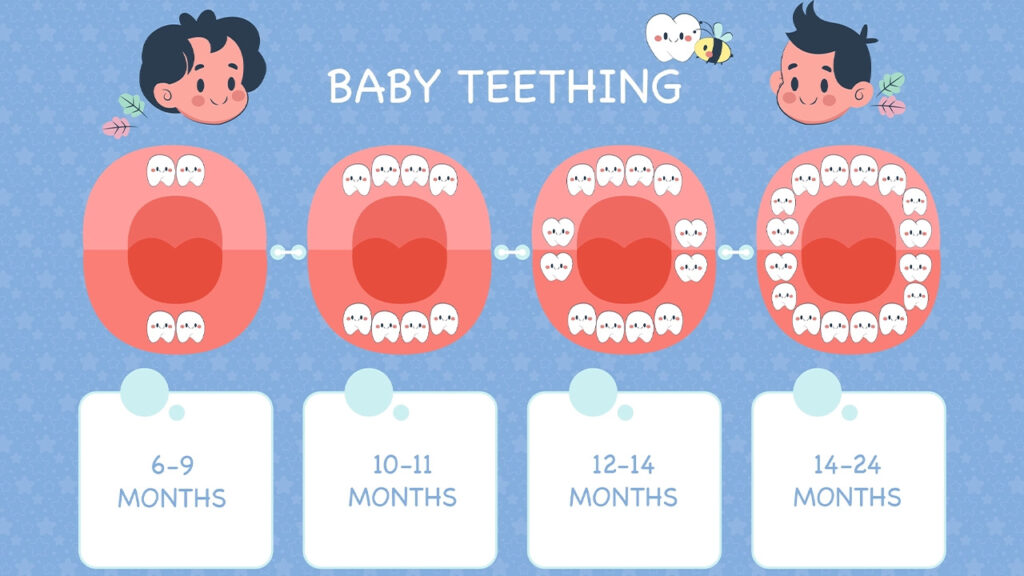
A baby teeth eruption chart gives parents a simple view of when each baby tooth usually appears. These ages are average ranges, so your child’s teeth may come in a little earlier or later.
| Baby Tooth Type | Average Eruption Age |
| Lower central incisors | 6–10 months |
| Upper central incisors | 8–12 months |
| Upper lateral incisors | 9–13 months |
| Lower lateral incisors | 10–16 months |
| Upper first molars | 13–19 months |
| Lower first molars | 14–18 months |
| Upper canines | 16–22 months |
| Lower canines | 17–23 months |
| Lower second molars | 23–31 months |
| Upper second molars | 25–33 months |
This primary teeth chart is meant to be a helpful guide, not a strict rule. Some babies get teeth early, while others take more time.
If your child has no teeth by 12 to 18 months, or if you notice swelling, tooth pain, or unusual changes in the gums, a dental checkup can help you get clear answers.
Charm Dental Care Richmond
For families in Richmond, Charm Dental Care’s family dental office can help track your child’s tooth development and support healthy early dental care.
Also Read: Top Benefits of Early Childhood Dental Visits
Order of Baby Teeth Coming In

The order of baby teeth coming in usually starts with the front teeth, then moves toward the back of the mouth. Most babies get their lower front teeth first, followed by the upper front teeth.
A common order looks like this:
- Lower front teeth come in first for many babies.
- Upper front teeth usually appear next.
- Side front teeth begin filling the smile.
- First molars come in toward the back for chewing.
- Canines appear between the front teeth and molars.
- Second molars usually complete the set of baby teeth.
This order is common, but it is not the same for every child. Some children may get their upper teeth first, while others may have teeth come in slightly out of order.
Small differences are usually normal when the teeth and gums look healthy.
Charm Dental Care Humble
If your child’s tooth growth seems delayed, unusual, or uncomfortable, a dentist can check the development pattern. Families near Humble can visit Charm Dental Care’s Humble pediatric-friendly dental office for gentle support and early dental guidance.
Baby Teething Timeline: What Parents Can Expect

A baby’s teething timeline can help parents understand what may happen at each stage. Some babies have mild symptoms, while others may experience greater discomfort as their teeth begin to push through the gums.
For families who want to see more about the clinic experience before visiting, Charm Dental Care’s video gallery can help parents get a better feel for the practice.
1.0–6 Months
During this stage, most babies do not yet have visible teeth. Parents can still care for the mouth by gently wiping the gums with a clean, damp cloth after feeding.
You may notice early signs of teething, such as drooling, chewing, or mild gum sensitivity.
2.6–12 Months
This is when the first teeth often begin to appear. The lower front teeth usually come in first, followed by the upper front teeth.
Once the first tooth appears, parents should start brushing gently with a baby-sized soft toothbrush and a tiny smear of fluoride toothpaste.
3.12–24 Months
More teeth begin coming in during this stage, including side teeth, first molars, and canines. Some toddlers may feel more discomfort when molars erupt because these teeth are larger.
Parents can help by offering water, maintaining consistent brushing, and avoiding frequent sugary snacks.
4.24–36 Months
By age 3, many children have most or all of their baby teeth. This is an important time to build a steady brushing routine and make dental visits feel normal.
At this stage, parents should continue helping with brushing because toddlers usually cannot clean every tooth properly on their own.
When Do Baby Teeth Fall Out?

Baby teeth usually start falling out around age 6, when permanent teeth begin pushing them out naturally. For many children, the lower front teeth are the first to become loose, followed by the upper front teeth.
This stage can feel exciting for children, but parents may still have questions. A loose tooth is usually normal when it happens at the right age and without pain. The tooth may wiggle for days or even weeks before it falls out.
Here is what parents should know:
- A loose tooth around age 6 is usually normal
This often means the permanent tooth beneath is ready to erupt. - Baby teeth often fall out in the same general order they came in
Front teeth usually fall out first, while molars are lost later. - A tooth should not be forced out
Let your child gently wiggle it if it is loose, but avoid pulling it before it is ready. - Early tooth loss needs attention
If a baby tooth falls out too early due to decay, injury, or infection, it may leave the space needed for adult teeth.
If your child loses a tooth too early or has pain, swelling, or bleeding after tooth loss, you can contact Charm Dental Care for guidance.
Knowing when baby teeth fall out helps parents understand what is normal and when a dental visit may be needed.
Also Read: Using the Tooth Fairy to Protect Baby Teeth
Baby Teeth Loss Chart by Age
A baby teeth loss chart helps parents understand when children usually begin losing their primary teeth. Most children start losing baby teeth around age 6, but the exact timing can vary.
| Baby Tooth Type | Average Age Lost |
| Central incisors | 6–7 years |
| Lateral incisors | 7–8 years |
| First molars | 9–11 years |
| Canines | 9–12 years |
| Second molars | 10–12 years |
This chart is a general guide. Some children lose teeth a little earlier or later, and that can still be normal.
What matters most is whether the permanent teeth are coming in properly and whether your child has pain, swelling, crowding, or early tooth loss from injury or decay.
If parents are planning routine checkups during this stage, Charm Dental Care can also help families understand their dental insurance options before the visit.

What If Baby Teeth Come In Early or Late?
Some babies get their first tooth early, while others take more time. In many cases, this is normal. A kid’s teeth growth chart can guide parents, but it should not create panic if a child’s timeline looks slightly different.
What matters most is your child’s overall growth, gum health, comfort, and tooth development pattern.
Usually Normal
A small change in timing is often normal when:
- Your baby is growing well.
- The gums look healthy.
- There is no swelling or pain.
- Teeth are coming in slowly but steadily.
- Other children in the family had a similar pattern.
When to Ask a Dentist?
Parents should consider a dental checkup if:
- No teeth appear by 12 to 18 months.
- Teeth come in with an unusual shape or color.
- Gums look swollen, painful, or irritated.
- A baby tooth falls out much earlier than expected.
- Your child has trouble chewing or seems uncomfortable.
The dental team at Charm Dental Care can check your child’s tooth development and help parents understand if everything is on track.
If you are unsure about early or delayed tooth growth, you can book a dental appointment for a gentle evaluation.
How to Care for Baby Teeth During Every Stage of Development

Good toddler teeth development depends on daily care at every stage. Parents do not need a complicated routine. A few steady habits can protect baby teeth from cavities, pain, and early damage.
For families without dental insurance, Charm Dental Care’s membership plan can make routine dental care easier to plan.
1. Infant Dental Care
Before the first tooth appears, gently wipe your baby’s gums with a clean, damp cloth after feeding. Once the first tooth comes in, start brushing with a baby-sized soft toothbrush.
2. Brushing Baby Teeth
Use a small amount of fluoride toothpaste based on your child’s age.
| Child’s Age | Toothpaste Amount | Parent Role |
| Under 3 years | Tiny smear | Brush gently for the child |
| Ages 3 to 6 | Pea-sized amount | Brush first, then let the child practice |
| Above 6 years | Pea-sized amount | Supervise until brushing is done properly |
3. Nutrition for Healthy Teeth
Healthy food habits support stronger baby teeth. Offer water often, limit juice, and choose snacks that do not stick to teeth for long.
Good options include cheese, yogurt, fruits, vegetables, eggs, and whole grains.
4. Preventing Early Childhood Cavities
To lower cavity risk, avoid bedtime bottles with milk or juice, reduce frequent sugary snacks, and keep brushing consistently every morning and night.
Regular dental visits also help parents catch small problems before they become painful.
When Should Your Child Visit the Dentist?
Your child should visit the dentist by their first birthday or within six months after the first tooth appears. Even if there is only one tooth, a dental visit can help parents understand brushing, feeding habits, teething, and cavity prevention.
Think of early pediatric dental visits as growth checkups for your child’s smile. The dentist can see how the baby teeth are coming in, check gum health, and guide parents before small concerns become bigger problems.
1. Is One Tooth Enough for a Dental Visit?
Yes, one tooth is enough. A first visit is usually simple and gentle. The dentist may check the tooth, gums, jaw development, and the risk of early cavities.
For parents who want a gentle first dental experience for their child, Dr. Radhika Shah, DDS, offers pediatric and family dentistry at Charm Dental Care. Her calm, patient-centered approach helps children feel more comfortable while providing parents with clear guidance on baby teeth, tooth development, and preventive dental care.
2. Why Are Routine Dental Exams Important?
Routine dental exams help track:
- Tooth eruption.
- Jaw growth.
- Bite development.
- Early cavities.
- Gum health.
- Thumb sucking or pacifier habits.
- Brushing and feeding routines.
3. How Often Should Children Visit?
Most children should visit the dentist every six months. Some children may need more frequent visits if they have a delayed tooth eruption, early tooth loss, or dental discomfort.
Parents can also check Charm Dental Care’s current dental offers while planning their child’s preventive dental visit.
Also Read: What Is a Pediatric Dentist?

You Might Also Like
- A Guide to Dental Sealants for Children
- Is Fluoride Bad for Toddlers?
- Pediatric Dentistry in Katy: How to Choose the Right Dentist for Your Child
Conclusion
A baby teeth chart gives parents a helpful way to understand when baby teeth usually come in and when they may fall out. While most children follow a general timeline, every child’s smile develops at its own pace.
Baby teeth support chewing, speech, jaw growth, and space for permanent teeth, so they need care from the very beginning.
Regular brushing, healthy food habits, and routine dental checkups can help protect your child from cavities, early tooth loss, and other dental concerns.
If your child’s teeth are coming in early, late, or not following the usual timeline, a dental visit can give you clear answers. Charm Dental Care can help parents track tooth development and support healthier smiles at every stage.
FAQs (Frequently Asked Questions)
Q1. When Do Babies Usually Start Teething?
Babies usually start teething around 6 months of age. Some babies may get their first tooth earlier, while others may start closer to their first birthday. This is why a baby teeth chart should be used as a general guide, not a strict rule.
Q2. How Many Baby Teeth Should A Child Have By Age 2?
By age 2, many children have most of their baby teeth, but the full set may still be coming in. Most children have 20 baby teeth by around age 3. A baby’s tooth development chart can help parents understand the usual timeline.
Q3. When Should My Child First See A Dentist?
Your child should first see a dentist by their first birthday or within six months after the first tooth appears. Early visits help track tooth growth, prevent cavities, and guide parents through each stage of baby teeth development. Parents can also review Charm Dental Care’s payment options before scheduling routine dental care for their child.
Q4. Is It Normal For Baby Teeth To Come In Late?
Yes, it can be normal for baby teeth to come in late. Some children simply develop at a different pace. Parents should speak with a dentist if no teeth appear by 12 to 18 months or if the gums look swollen, painful, or unusual.
Q5. What Happens If A Baby Tooth Falls Out Too Early?
If a baby tooth falls out too early due to decay, injury, or infection, it may leave the space needed for the permanent tooth. A dentist can assess whether treatment or a space maintainer is needed.