A loose adult tooth can sometimes be saved, but the right treatment depends on why it’s moving and how much support remains around it. If you are wondering how to fix a loose tooth, the first step is finding the cause rather than trying to tighten or repair it at home.
A loose adult tooth may be related to gum disease, dental trauma, infection, bone loss, teeth grinding or clenching, or excessive pressure from the bite.
Some causes are treatable, and the tooth may become more stable, while severe damage or loss of supporting bone can make saving the tooth more difficult.
At Charm Dental Care, we help patients across the Houston area understand the causes of loose permanent teeth and their treatment options. In this guide, we explain why an adult tooth may become loose, whether it can be saved, the treatments a dentist may consider, and when a wobbly tooth needs urgent dental care.
Key Takeaways
- A loose adult tooth may sometimes be saved, depending on the cause, degree of movement, and condition of the supporting gums, bone, and root.
- Gum disease, dental trauma, infection, bone loss, and teeth grinding or clenching commonly cause an adult tooth to become loose.
- How to fix a loose tooth depends on the underlying problem. Treatment may include periodontal care, tooth splinting, infection treatment, bite management, or other dental procedures.
- Avoid repeatedly wiggling a wobbly permanent tooth or trying to pull or repair it at home.
- A suddenly loose tooth after an injury, or looseness with severe tooth pain, swelling, bleeding, fever, or drainage, needs prompt dental attention.
- An early dental evaluation can help determine whether a loose tooth can be saved and which treatment is appropriate.
Table of Contents
Can a Loose Adult Tooth Be Saved?
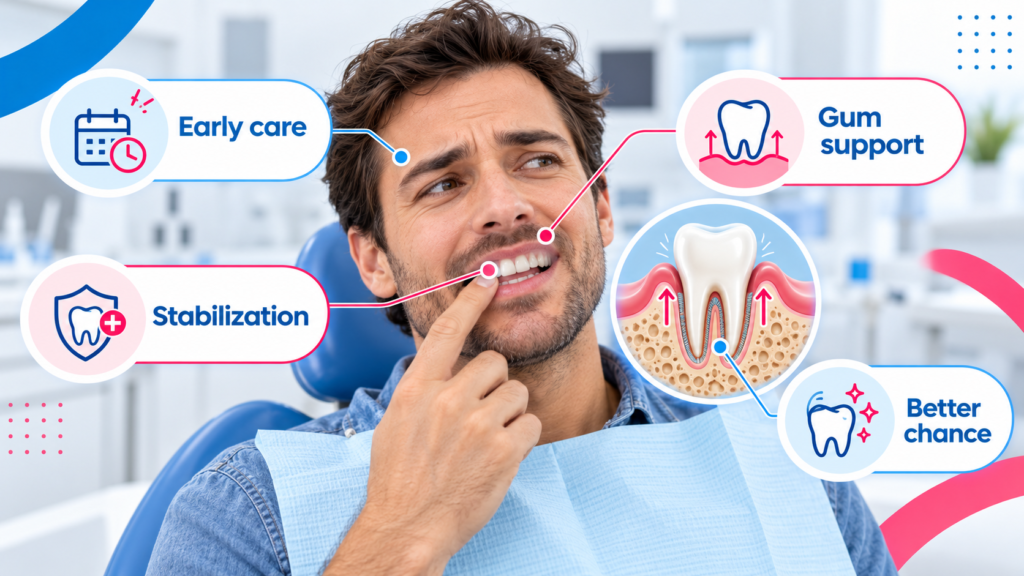
Yes, a loose adult tooth can sometimes be saved, especially if you catch it early and treat it.
Your chances depend on why the tooth became loose, how much it moves, and the condition of the supporting tissues.
A dentist will consider several factors: gum health, remaining bone support, the condition of the tooth root, signs of infection, and any recent dental trauma.
A general dentistry evaluation can help identify the cause of the mobility and determine which treatment options may be appropriate.
Here is a general overview:
| Situation | Can It Potentially Be Saved? |
|---|---|
| Mild looseness related to gum inflammation | Often, depending on the cause |
| Loose tooth after an injury | Often, depending on the severity |
| Loose tooth caused by gum disease | Sometimes |
| Severe bone loss | Depends on the remaining support |
| Root fracture or severe damage | Prognosis may be poor |
No single loose-tooth treatment works for every situation.
A dental examination can determine what is causing the movement and whether stabilizing and treating the tooth makes sense.
Why Is My Adult Tooth Wiggly?
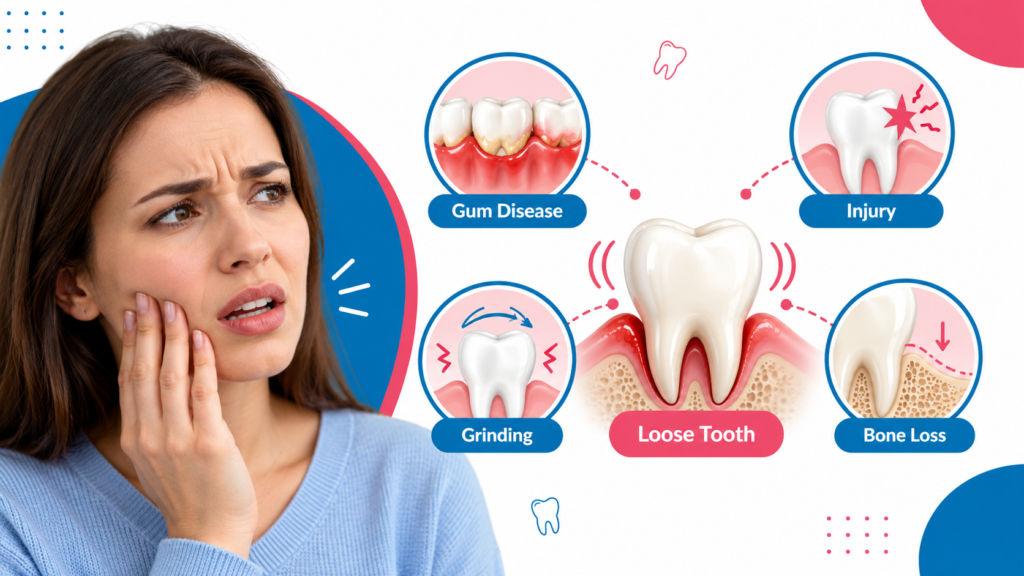
If you are wondering why your adult tooth is loose, the movement usually means something has affected the tooth or the structures supporting it.
The cause may involve the gums, supporting bone, tooth root, or forces placed on the tooth.
1. Gum Disease
According to the National Institute of Dental and Craniofacial Research (NIDCR), advanced gum disease can damage the tissues and bone that support teeth, potentially leading to loose teeth or tooth loss.
Gum disease can damage the tissues and bone that help hold permanent teeth in place. As periodontal disease progresses and bone support decreases, an adult tooth may become loose or begin to shift.
Bleeding or swollen gums, gum recession, persistent bad breath, and changes in tooth position can occur along with periodontal problems.
Getting appropriate gum disease treatment may help manage the underlying condition and protect the remaining supporting tissues.
2. Dental Trauma
A fall, sports injury, accident, blow to the mouth, or biting something unexpectedly hard can make a permanent tooth feel loose. The damage may involve the tooth itself, its root, or the tissues that hold it in the socket.
Wearing a sports mouth guard during contact sports or other activities with a risk of dental injury can help protect your teeth.
A tooth that becomes loose after an injury should be evaluated promptly, even when there is little pain at first.
3. Teeth Grinding or Clenching
Repeated grinding or clenching can place heavy pressure on the teeth and their supporting structures. Over time, these forces may contribute to tooth mobility, particularly when other dental or periodontal problems are already present.
People who wake with jaw soreness, headaches, or tooth sensitivity may also have signs of nighttime teeth grinding.
4.Infection
An infection involving a tooth or the surrounding tissues can affect its stability. Depending on where the infection starts, a person may also notice pain, swelling, tenderness, drainage, or sensitivity.
Treatment depends on the infection’s source, so a loose tooth with signs of infection should be examined rather than treated with home remedies.
5. Bone Loss
Bone loss around a tooth is often associated with advanced gum disease, although other dental conditions or injuries can also affect the supporting bone.
As bone support decreases, a permanent tooth may become less stable and begin to move. A dentist can assess the amount and location of bone loss using a clinical examination and dental X-rays.
6. Other Possible Causes
An uneven bite, damage to the tooth root, excessive biting forces, and other dental conditions may also explain why an adult tooth is wiggly.
Because several problems can produce similar symptoms, a dental examination is needed to identify the cause before deciding how to treat the loose tooth.
What Does It Mean If Your Tooth Is Loose but Still Attached?
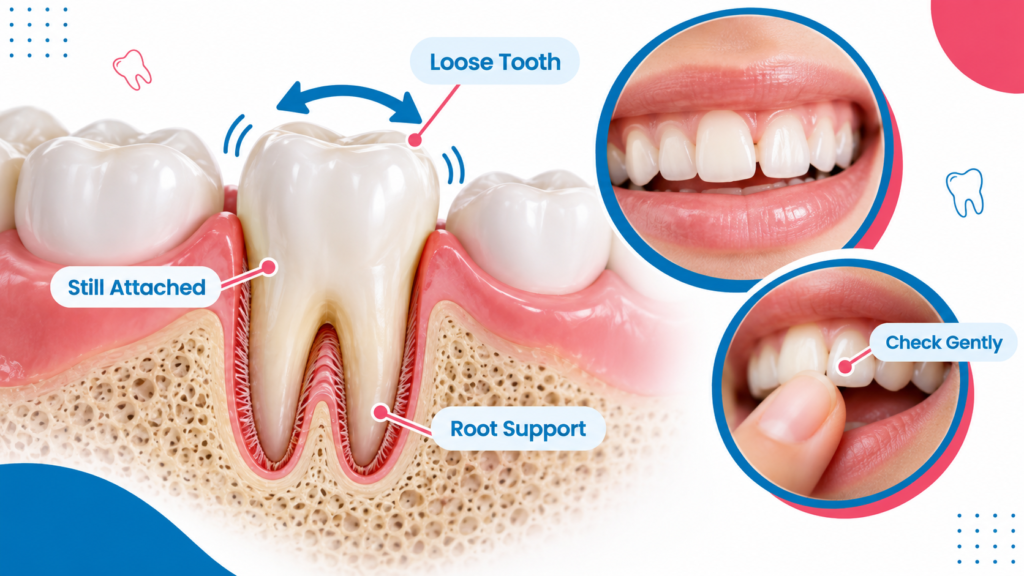
If an adult tooth is loose but still attached, it means the tooth still has some connection to the tissues that support it, but those supporting structures may have been affected.
The amount of movement alone does not show how serious the problem is.
A permanent tooth is supported by the gums, periodontal ligament, tooth socket, and surrounding bone. Gum disease, an injury, infection, bone loss, or excessive pressure on the tooth can affect these structures and make the tooth feel wobbly.
A mildly mobile tooth may have a better outlook when enough healthy support remains. More noticeable movement can point to greater damage, but a dentist needs to examine the tooth and its supporting structures before determining whether the loose tooth can be saved.
A timely dental checkup can help identify dental problems that may otherwise become more difficult to manage.
If your adult tooth is loose but still attached, avoid repeatedly wiggling it or trying to tighten it yourself. Arrange a dental evaluation so the cause can be identified and treated.
Early care may improve the chance of stabilizing the tooth.

How Do You Fix a Loose Adult Tooth?
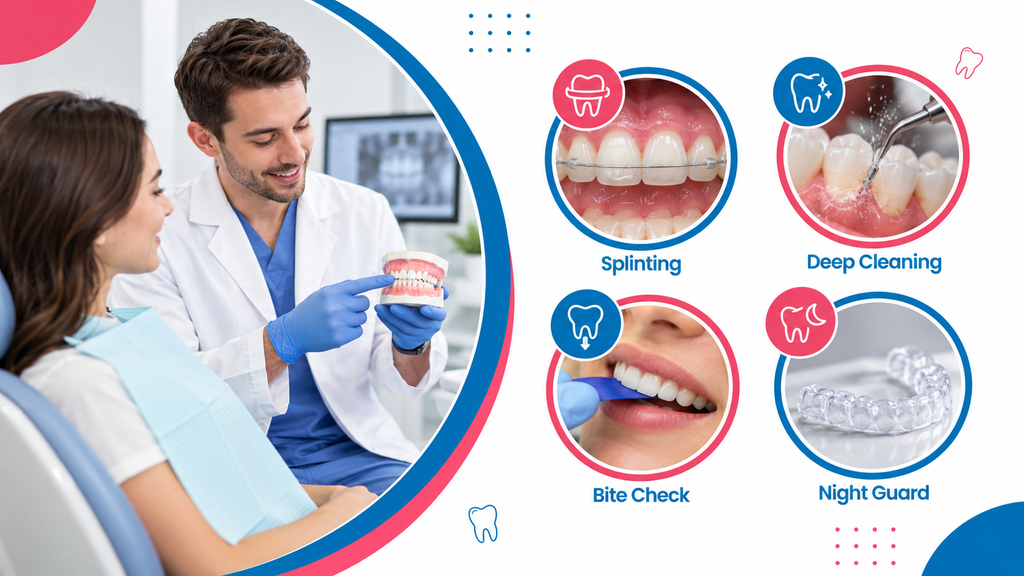
How to fix a loose tooth depends on what caused it to become mobile. Treatment focuses on addressing the underlying problem and, when possible, helping the tooth regain or maintain stability.
A dentist may recommend periodontal care, splinting, infection treatment, bite management, or another form of restorative dental care based on the condition of the tooth and its supporting structures.
1. Treating Gum Disease
When gum disease contributes to a loose adult tooth, treatment focuses on controlling the periodontal condition and protecting the remaining supporting tissues.
Depending on the severity, care may include professional cleaning, scaling and root planing, same-day teeth, periodontal treatment, and ongoing maintenance.
The amount of remaining bone and periodontal support can affect whether the tooth can be stabilized.
2. Splinting a Loose Tooth
Tooth splinting may be considered in certain cases, including some teeth affected by trauma or mobility. A dentist can connect the loose tooth to nearby stable teeth to provide additional support while the area is treated or heals.
Splinting does not treat every cause of mobility by itself. The condition responsible for the loose tooth still needs to be identified and managed.
3. Treating an Infection
If an infection is contributing to tooth mobility, treatment depends on where the infection originates. When the pulp inside the tooth is infected or damaged and the tooth can still be maintained, root canal therapy may be considered.
Periodontal treatment may be needed when the infection involves the tissues surrounding the tooth.
Treatment may involve root canal therapy, periodontal care, drainage, or another procedure depending on the source of the infection.
Antibiotics may be prescribed in certain situations, but they do not replace dental treatment to address the underlying cause.
4. Addressing Bite Problems
Excessive or uneven biting pressure can place additional stress on a tooth. A dentist may evaluate how the upper and lower teeth come together and determine if bite-related forces are contributing to the movement.
5. Managing Teeth Grinding
For patients who grind or clench their teeth, the dentist may evaluate how those forces are affecting the teeth and supporting structures. In appropriate cases, the dentist may recommend a custom night guard to help protect the teeth from grinding and clenching forces during sleep.
When Extraction May Be Necessary
Tooth extraction is not automatically required because an adult tooth is loose. It may be considered when severe bone loss, extensive root damage, a serious fracture, or another condition means the tooth cannot be predictably maintained.
The goal of a dental evaluation is to understand the cause and determine if loose tooth repair or stabilization is possible before deciding that removal is necessary.
If removal is recommended, the dentist can also discuss appropriate options for replacing the missing tooth.
Can a Loose Tooth Tighten Back Up on Its Own?
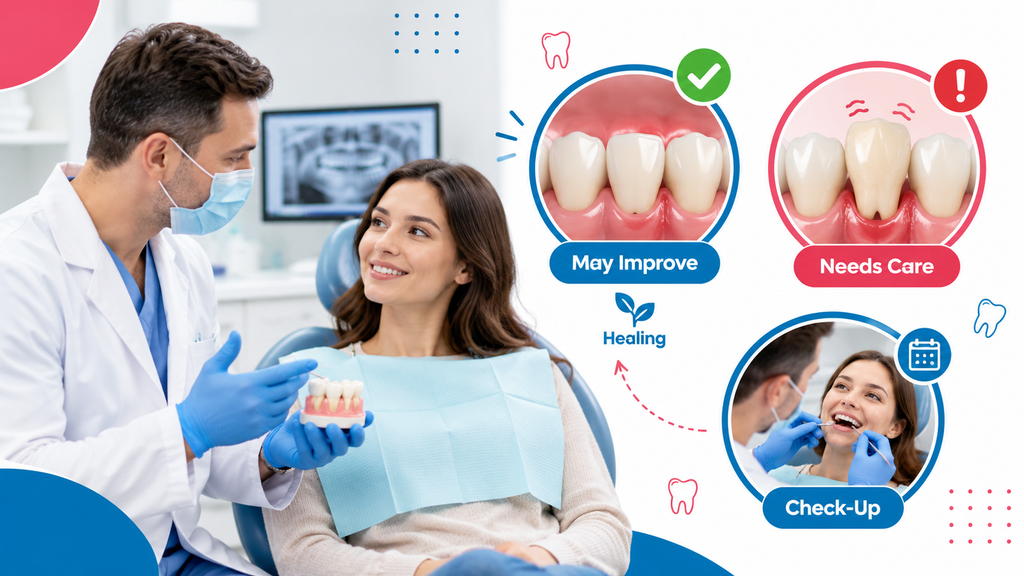
A loose permanent tooth may become more stable in some situations, but you should not rely on it tightening on its own.
The outcome depends on why the tooth became loose and how much damage has occurred to the gums, periodontal ligament, bone, or root.
1. Mobility After Trauma
A tooth may become mobile after a fall, sports injury, or other impact to the mouth. Some injured teeth can regain stability as the supporting tissues heal, but the tooth should still be examined.
Dental trauma can affect the root and surrounding structures even when the tooth remains in place.
2. Mobility Caused by Inflammation
Inflammation around a tooth can affect the tissues that support it. Depending on the cause and severity, mobility may improve after the underlying dental or periodontal problem is treated.
Regular professional teeth cleaning can form part of preventive gum care, although a noticeably loose tooth may require additional treatment based on the diagnosis.
3. Mobility Associated With Significant Bone Loss
When substantial supporting bone has been lost, a loose tooth may have a more limited ability to regain stability. The dentist will assess the remaining bone, gum health, tooth mobility, and root condition before discussing the prognosis and loose permanent tooth treatment.
A noticeably loose adult tooth should not simply be left to see if it gets better. Finding the cause early can help determine if the tooth can be stabilized and what treatment may be appropriate.
What Should You Do If Your Adult Tooth Is Loose?
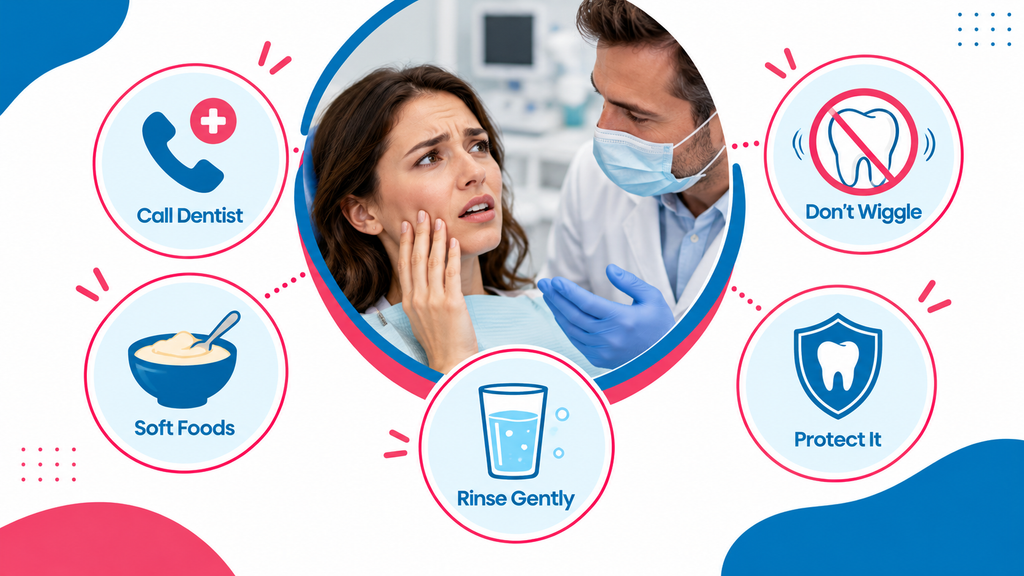
Finding a wobbly permanent tooth can be worrying, especially when it becomes loose suddenly. Until a dentist can examine it, protect the tooth from additional pressure and avoid testing how much it moves.
1. What to Do
Schedule a dental evaluation
A dentist can check the tooth, gums, bite, root, and supporting bone to find the reason for the movement.
Keep the area clean
Continue gentle brushing around the tooth. Good oral hygiene helps keep plaque and food debris from collecting around the area.
Choose softer foods temporarily
If chewing is uncomfortable, foods that require less biting pressure can reduce stress on the affected tooth.
Get prompt care after an injury
A tooth that becomes loose after a fall, sports injury, or blow to the mouth should be checked promptly.
Charm Dental Care provides emergency dental care for dental injuries and other urgent concerns.
2 . What to Avoid
- Do not repeatedly wiggle the tooth with your tongue or fingers.
- Do not try to pull an adult tooth out yourself.
- Avoid biting hard, crunchy, or sticky foods with the affected tooth.
- Do not attempt DIY loose tooth repair with glue, household materials, or other home methods.
- Do not ignore severe pain, swelling, pus, bleeding gums, fever, or worsening symptoms.
If the tooth suddenly becomes much more mobile or you develop signs of infection, seek dental care promptly rather than waiting for your next routine visit.

When Is a Loose Adult Tooth a Dental Emergency?
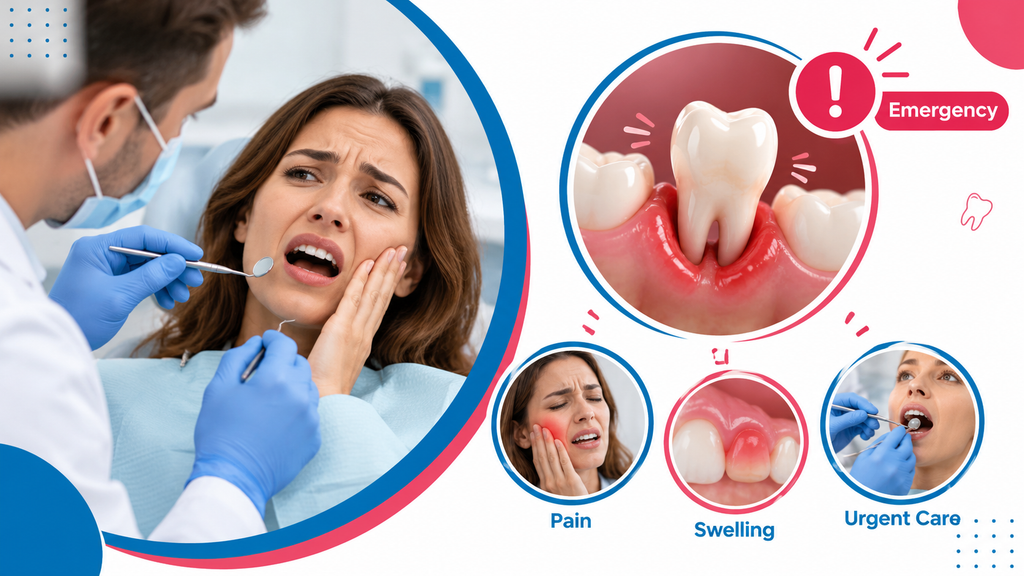
A permanent tooth that becomes loose or changes position after an injury needs immediate dental assessment, even if the pain is mild.
If a permanent tooth is completely knocked out, hold it by the crown rather than the root. If dirty, gently rinse it with milk or saline without scrubbing.
If possible, place it back into the socket without forcing it, or keep it in milk while seeking emergency dental care immediately. Do not reinsert a baby tooth.
If you develop rapidly increasing facial swelling, difficulty breathing or swallowing, or other signs of a serious spreading infection, seek emergency medical care immediately.
| What You Notice | What to Do |
|---|---|
| Tooth becomes loose after major dental or facial trauma | Seek urgent dental evaluation |
| Severe or increasing tooth pain | Contact a dentist promptly |
| Significant facial or gum swelling | Seek urgent care |
| Pus or drainage around the tooth | Contact a dentist promptly |
| Fever along with dental pain or swelling | Seek prompt medical or dental care |
| Significant bleeding that does not settle | Seek urgent care |
| Permanent tooth is completely knocked out | Get emergency dental care immediately |
| Difficulty breathing or swallowing | Seek emergency medical care immediately |
| Rapidly increasing facial swelling | Seek emergency medical care immediately |
A completely knocked-out permanent tooth is especially time-sensitive. Knowing what to do when a permanent tooth is knocked out can help you take the right steps while arranging immediate professional care.
For a loose tooth without severe symptoms, arrange a dental examination rather than waiting for the tooth to become more mobile.
If swelling is spreading quickly or you have trouble breathing or swallowing, go to an emergency medical facility.
Also Read: In Case of Dental Emergency
How Does a Dentist Diagnose a Loose Tooth?
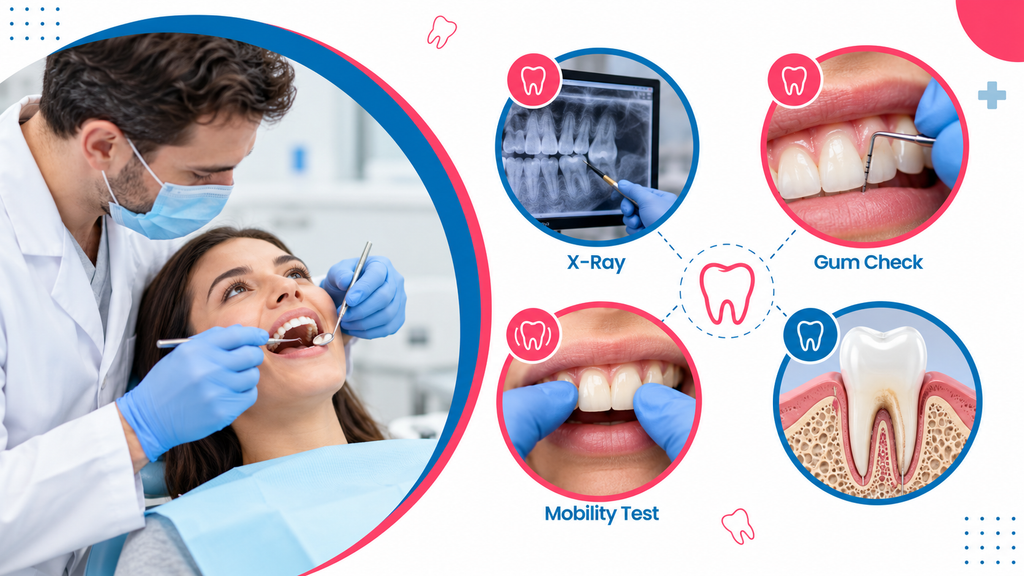
Finding the right loose-tooth treatment starts with identifying what is causing the tooth to move. During the examination, the dentist may examine several areas, not just the loose tooth.
1. Check the Tooth’s Mobility
The dentist assesses how much the tooth moves and in what direction. This helps show the degree of mobility and how much support the tooth may have lost.
2. Examine the Gums
The dentist checks the gums for inflammation, recession, bleeding, and periodontal pockets. These findings can help identify gum disease as a possible cause for a loose adult tooth.
3. Evaluate the Bite
The dentist may check how your upper and lower teeth meet. Uneven or excessive biting forces can place extra pressure on an already vulnerable tooth.
4. Review Recent Symptoms or Injuries
Tell your dentist if the looseness started after a fall, sports injury, biting something hard, or another incident. Pain, swelling, sensitivity, drainage, or changes in the gums can also provide useful clues.
Why Dental X-Rays May Be Needed
A visual exam can’t always show what’s happening below the gumline. Dental X-rays may help the dentist assess:
- The amount of bone supporting the tooth.
- The condition of the tooth root.
- Signs of infection around the root.
- Possible fractures or other damage.
- Changes in the surrounding bone.
Combining the clinical examination with X-ray findings helps the dentist determine why your adult tooth is loose and which treatment options have a reasonable chance of preserving it.
How Long Does It Take to Fix a Loose Tooth?
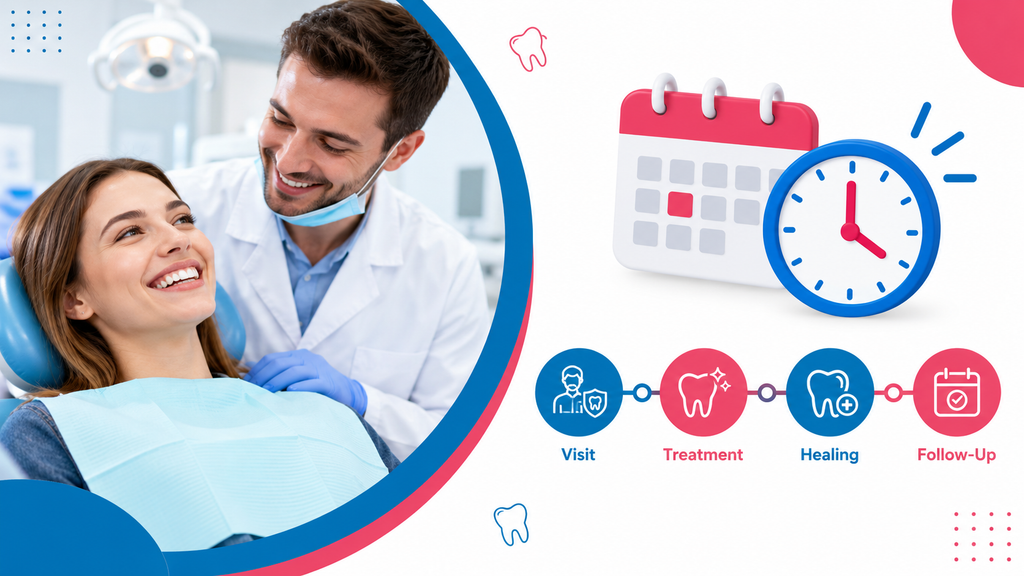
There is no standard timeline for repairing a loose tooth.
Some teeth may begin to feel more stable as inflammation settles or injured supporting tissues heal, while conditions involving significant gum or bone damage may require longer-term care.
The expected timeline mainly depends on what caused the tooth to loosen and how much support remains.
| Factor | How It Can Affect Treatment |
|---|---|
| Cause of the loose tooth | Trauma, gum disease, infection, and bite problems may require different treatments |
| Degree of mobility | A slightly mobile tooth may have different treatment needs than a tooth with significant movement |
| Bone and gum support | Greater loss of supporting tissue can affect the prognosis and treatment plan |
| Type of treatment | Splinting, periodontal care, infection treatment, and bite management follow different timelines |
| Response to treatment | Healing and improvement vary from one patient to another |
It also helps to separate stabilizing the tooth from treating the underlying cause. A tooth may feel more secure before periodontal or other dental treatment is complete.
In other situations, the cause may need ongoing management even after mobility improves.
For this reason, a dentist can give you a more useful treatment estimate after examining the tooth, reviewing the supporting bone and gums, and identifying the source of the looseness.
Can a Loose Adult Tooth Fall Out?
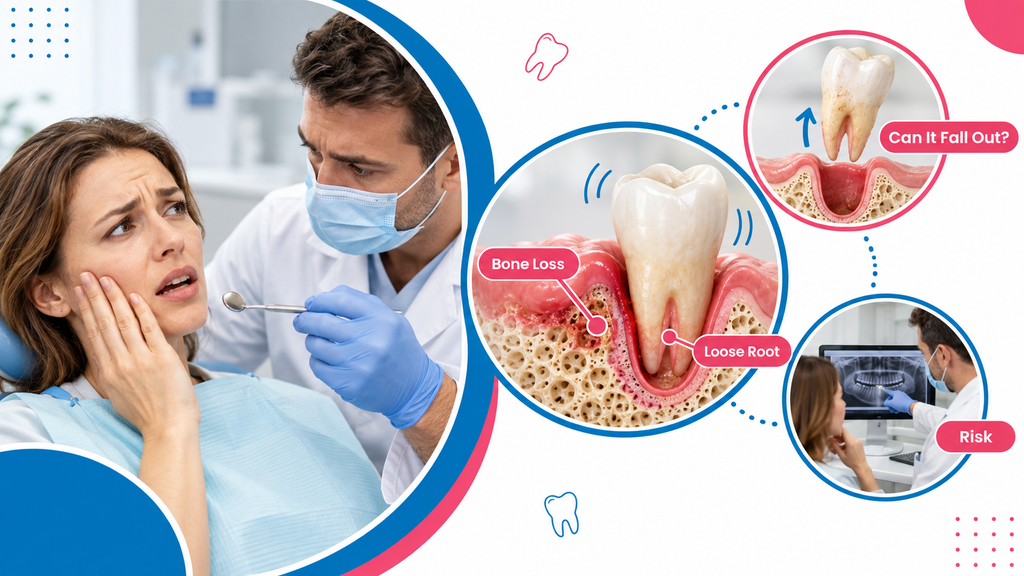
Yes, a loose adult tooth can eventually fall out when it loses enough support from the surrounding gums, periodontal ligament, or bone.
This is more likely when significant gum disease, advanced bone loss, severe trauma, or another serious dental problem remains untreated.
However, a loose tooth does not automatically mean you are going to lose it. The outlook depends on the cause and how much healthy support remains around the tooth.
Watch for changes such as:
- Increasing tooth movement.
- Gums pulling away from the tooth.
- Pain when biting or chewing.
- Swelling or bleeding around the tooth.
- Pus or drainage.
- Changes in the tooth’s position.
If you are concerned about adult teeth falling out, getting the tooth examined before the mobility progresses can provide a clearer picture of its condition and the available treatment options.
When a tooth cannot be maintained and replacement becomes necessary, dental implants may be one option your dentist discusses after evaluating your oral health and treatment needs.
Loose Tooth Treatment at Charm Dental Care in Houston
If you have a loose adult tooth, an in-person examination can help identify what is affecting its stability and which treatment may be appropriate.
Charm Dental Care has several Houston-area locations where patients can have loose or wobbly permanent teeth evaluated.
1. Loose Tooth Treatment in Spring, TX
Patients in Spring can visit our dentist in Spring, TX for an evaluation of the tooth, gums, bite, and supporting bone. We can then recommend treatment based on the cause and degree of mobility.
2. Loose Tooth Treatment in Katy, TX
At our Katy dental practice, we evaluate loose permanent teeth related to gum problems, trauma, infection, bone loss, and other dental concerns. The findings help determine if the tooth can be stabilized or needs further treatment.
3. Loose Tooth Treatment in Richmond, TX
Patients looking for dental care in Richmond,TX can have a loose tooth and its supporting tissues examined by our team. We assess factors such as gum health, bone support, tooth mobility, and the condition of the root.
4. Loose Tooth Treatment in Humble, TX
Our dentists in Humble, TX can assess a wobbly permanent tooth and identify possible problems affecting its stability. Treatment depends on the diagnosis and the amount of healthy support remaining around the tooth.
5. Loose Tooth Treatment in Tomball, TX
Patients can visit Charm Dental Care in Tomball,TX to have a loose adult tooth evaluated before the mobility progresses further.
We can discuss appropriate treatment options after identifying the source of the problem.
Why Choose Charm Dental Care for a Loose Adult Tooth?
When an adult tooth becomes loose, proper care starts with understanding the cause and the condition of the supporting tissues.
At Charm Dental Care, we focus on a thorough evaluation before recommending treatment.
- Detailed Evaluation: We assess tooth mobility, gum health, supporting bone, bite, symptoms, and other factors that may explain why a permanent tooth has become loose.
- Treatment Based on the Cause: Depending on the findings, care may involve periodontal treatment, infection management, stabilization after trauma, or management of excessive bite pressure.
- Multiple Houston-Area Locations: With offices in Spring, Katy, Richmond, Humble, and Tomball, patients have several convenient options for getting a loose tooth evaluated.
- Insurance Support: Before starting treatment, patients can review our accepted dental insurance options and available coverage information.
- Membership Option: No traditional dental insurance? Our dental membership plan provides another way to access dental care and plan for costs.
- Patient Feedback: Read experiences shared by our patients to get a better sense of care at Charm Dental Care.
You Might Also Like

Get a Loose Adult Tooth Checked Before It Gets Worse
A loose permanent tooth does not always mean the tooth will be lost. The cause, amount of movement, condition of the root, and remaining gum and bone support all affect whether a loose tooth can be saved.
If you have noticed an adult tooth becoming loose, avoid waiting for the movement to worsen. At Charm Dental Care, our team can examine the tooth, identify what is affecting its stability, and discuss appropriate treatment options.
Ready to have your tooth checked? Book a dental appointment with Charm Dental Care at one of our Houston-area locations.
FAQs (Frequently Asked Questions)
Q1. Can a Loose Adult Tooth Be Saved?
Yes, we can sometimes save a loose adult tooth. The chances depend on why it became loose, how much it moves, and the condition of the gums, supporting bone, and tooth root. Earlier evaluation can provide more treatment options in some cases.
Q2. How Do You Fix a Loose Permanent Tooth?
Loose permanent tooth treatment depends on the cause. Treatment may involve periodontal care, splinting, treating an infection, managing excessive bite pressure, or addressing teeth grinding. A dentist first needs to identify what is affecting the tooth’s stability.
Q3. Why Is My Adult Tooth Wiggly?
Gum disease, dental trauma, infection, bone loss, grinding or clenching, and excessive biting forces can make an adult tooth loose. Because these problems require different treatments, an examination is needed to identify the cause.
Q4. Can a Loose Tooth Tighten Back Up?
Sometimes. A tooth with mild mobility after certain injuries or inflammation may become more stable as the area heals or the underlying problem is treated. Significant bone loss or severe structural damage can make this less likely.
Q5. What Does It Mean If My Tooth Is Loose but Still Attached?
When an adult tooth is loose but still attached, some support remains from the periodontal ligament, gums, and surrounding bone. The amount of movement and remaining healthy support help a dentist assess the tooth’s condition and prognosis.
Q6. Can Gum Disease Cause Loose Teeth?
Yes, gum disease can damage the gums and supporting bone around a tooth. As periodontal support is lost, permanent teeth may begin to shift or become loose. Charm Dental Care also identifies loose teeth as a possible symptom of gum disease.
Q7. How Long Does It Take to Fix a Loose Tooth?
There is no fixed timeline for loose tooth repair. Recovery depends on the cause, degree of mobility, amount of healthy support remaining, treatment provided, and how the tooth responds.
Q8. Is a Loose Adult Tooth an Emergency?
A loose tooth may need urgent dental attention, especially after an injury or when accompanied by severe pain, swelling, bleeding, fever, or signs of infection. Charm Dental Care recommends having a loose or dislodged tooth assessed promptly.
Q9. Can a Loose Tooth Be Repaired Without Extraction?
Yes, some loose teeth can be treated without extraction. Depending on the cause, treatment may focus on the gums, infection, bite forces, or stabilizing the tooth. Extraction is generally considered when the tooth cannot be predictably maintained.
Q10. What Should I Do If My Adult Tooth Suddenly Becomes Loose?
Do not keep wiggling the tooth or try to pull it out yourself. Avoid chewing hard foods with that tooth, keep the area gently clean, and arrange a dental evaluation. If the looseness follows an accident or comes with significant pain, swelling, bleeding, or infection symptoms, seek prompt dental care.