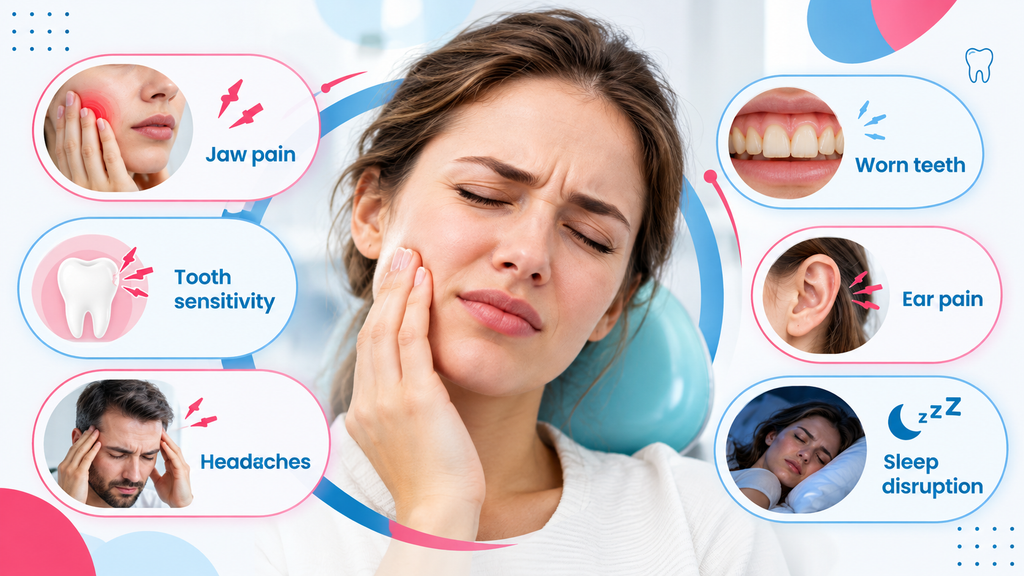
Grinding your teeth at night can be hard to spot because it happens while you sleep. You may wake up with a tight or sore jaw, notice unusual tooth sensitivity, have morning headaches, experience tooth pain, or see changes like flattened, worn, or chipped teeth.
Sometimes, a partner or family member hears the grinding before you notice any symptoms yourself.
Known as sleep bruxism, grinding or clenching teeth during sleep can range from occasional episodes to a pattern that repeatedly puts pressure on the teeth and jaw.
Some people have few obvious warning signs, so the problem may first show up during a dental exam.
If you are wondering how to tell if you grind your teeth at night, this guide covers the signs to watch for, possible causes, how dentists check for grinding, ways to protect your teeth, and when it may be time to see a dentist in Houston.
Key Takeaways
- Nighttime teeth grinding can be easy to miss. Many people do not realize they grind or clench their teeth while sleeping.
- Morning symptoms can provide clues. Jaw tightness, facial soreness, headaches, and tooth sensitivity may signal nighttime teeth grinding.
- Your teeth may show physical changes. Repeated grinding can cause flattened chewing surfaces, worn enamel, chips, cracks, or damaged dental work.
- There is not always one cause. Sleep-related factors, stress, certain habits, medications, and other health conditions may contribute.
- Ongoing grinding can affect more than your teeth. The jaw muscles and joints may also become sore or uncomfortable.
- A dental exam can help identify signs of grinding. A dentist can check for patterns of tooth wear and damage and discuss ways to protect your teeth.
Table of Contents
How to Tell If You Grind Your Teeth at Night
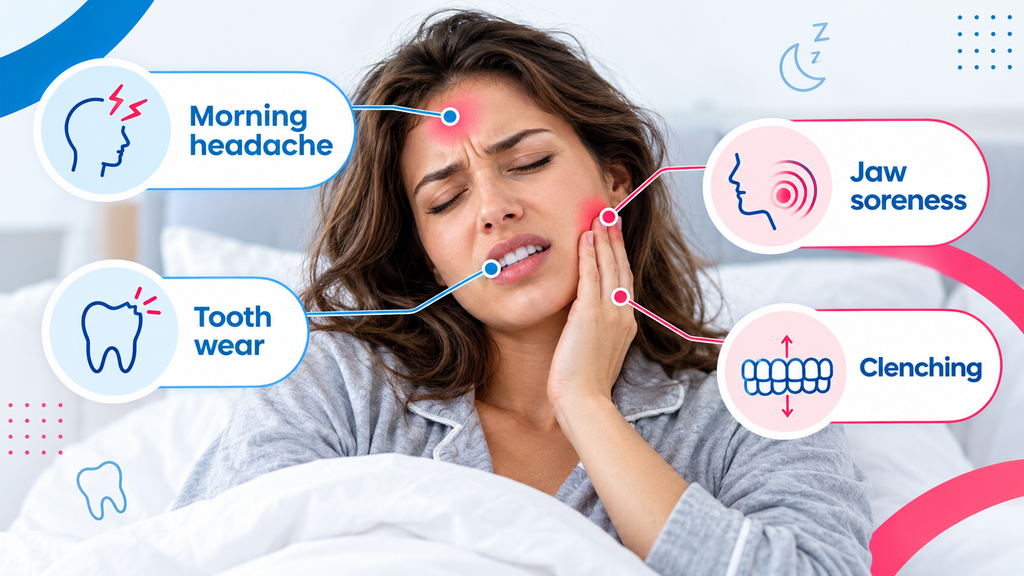
You may be grinding your teeth at night if you regularly wake up with jaw tightness, morning headaches, sensitive teeth, or unexplained facial soreness. A partner may also hear grinding sounds while you sleep.
Some people have no noticeable symptoms. In these cases, a dentist may spot unusual tooth wear or damage during a routine exam.
If these signs occur regularly, a dental checkup can help identify the cause.
What Are the Most Common Teeth Grinding Symptoms?

Teeth grinding symptoms can vary from person to person.
Some appear when you wake up, while others develop gradually as repeated grinding or clenching puts pressure on the teeth and jaw.
1. Jaw Pain or Tightness in the Morning
A tired, sore, or tight jaw after waking can be a sign that your jaw muscles were active during sleep. You may also notice stiffness when you first open and close your mouth.
2. Morning Headaches or Facial Pain
Sleep bruxism may be associated with headaches or soreness around the temples, cheeks, and jaw. Because headaches can have several causes, recurring morning pain should not automatically be attributed to teeth grinding.
3. Tooth Sensitivity and Pain
Repeated grinding can wear down tooth surfaces and contribute to sensitivity. You may notice discomfort when eating or drinking something hot, cold, or sweet.
If sensitivity becomes frequent, it helps to understand other possible causes of tooth sensitivity.
4. Flattened, Chipped or Cracked Teeth
Grinding places repeated pressure on your teeth. Over time, you may notice flattened edges, small chips, cracks, or changes in tooth shape.
Worn Tooth Enamel and Molars
The signs of teeth grinding on molars may be easier for a dentist to identify because these teeth handle much of the pressure from clenching and grinding. Their chewing surfaces may gradually become flatter or show unusual wear.
5. Ear, Neck or Facial Pain
Some people with bruxism experience discomfort around the face, jaw, ears, or neck. These symptoms can also have other causes, so persistent pain deserves proper evaluation.
6. Grinding or Clenching Sounds During Sleep
Grinding can sometimes be loud enough for a partner or family member to hear. Because you remain asleep during the episode, another person may notice the sound long before you realize you have grinding of teeth while sleeping.

Why Do I Grind My Teeth at Night?
There isn’t always one clear reason for grinding your teeth while sleeping.
Sleep bruxism can be linked to several factors, and the combination may differ for each person.
Common factors associated with teeth grinding include:
- Stress and emotional factors: Stress, nervousness, and emotional strain may be associated with bruxism.
- Caffeine and alcohol: Higher intake, especially later in the day, may contribute to nighttime grinding in some people.
- Smoking: Tobacco use is another factor associated with bruxism.
- Certain medications: Some medicines used for depression, seizures, or ADHD may increase the likelihood of bruxism. If you think a medication is affecting you, speak with the healthcare professional who prescribed it before making any changes.
- Genetics: Bruxism can sometimes run in families.
- Sleep-related factors: Because grinding happens during sleep, other sleep concerns may also need attention when symptoms suggest a broader problem.
The National Institute of Dental and Craniofacial Research (NIDCR) explains that teeth grinding can have several contributing factors, including stress, certain medications, and sleep-related concerns. There is not always one clear cause.
Can Sleep Apnea Be Related to Teeth Grinding?
Sleep bruxism and sleep apnea can occur together, but teeth grinding does not automatically mean you have sleep apnea.
Symptoms such as loud snoring, interrupted breathing during sleep, or other sleep concerns may warrant further evaluation with a healthcare professional.
If sleep apnea is suspected, diagnosis typically involves a medical sleep evaluation rather than a dental exam alone.
For patients already exploring this connection, understanding how sleep apnea oral appliances work can also help explain the dental side of sleep-related care.
What Happens If Teeth Grinding Continues?
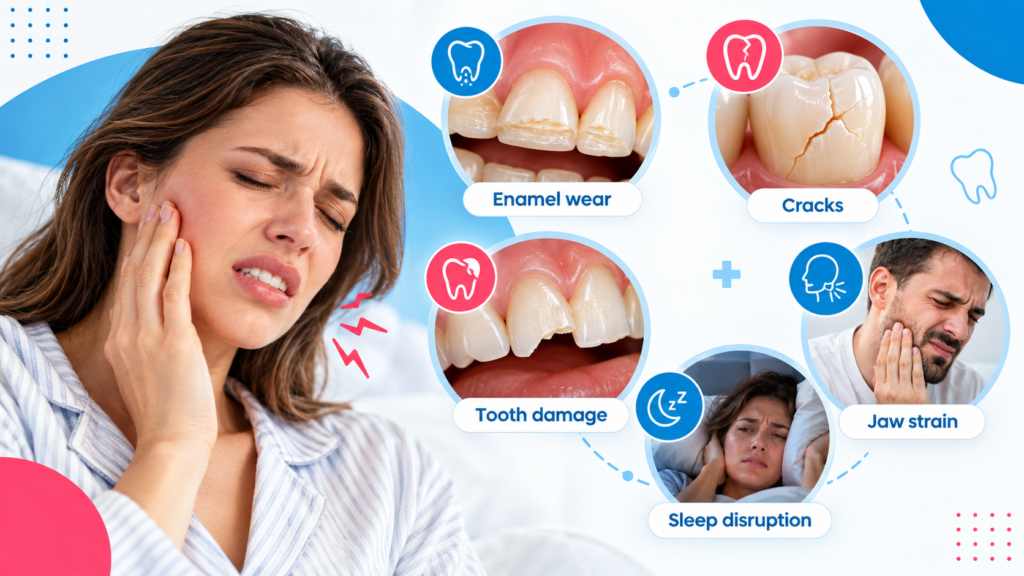
Occasional grinding may not cause noticeable damage, but frequent or forceful bruxism can put repeated pressure on the teeth, jaw muscles, and dental restorations.
Over time, you may notice changes such as:
- Worn enamel: Repeated tooth-to-tooth contact can gradually wear down the chewing surfaces.
- Chips and cracks: Grinding can place extra force on teeth that are already weakened or heavily restored. If damage occurs, the treatment and cost to repair a chipped tooth can depend on how much of the tooth is affected.
- Tooth sensitivity: As tooth surfaces wear, hot, cold, or sweet foods may become uncomfortable.
- Damaged dental work: Fillings, crowns, veneers, and other restorations can also be subjected to repeated grinding forces.
- Jaw discomfort: Nighttime clenching may leave the jaw muscles tired or sore, especially after waking.
- Headaches and facial discomfort: Some people with sleep bruxism experience recurring discomfort around the temples, face, or jaw.
If you notice a cracked tooth, increased sensitivity, or changes in your teeth’ shape, have the area checked rather than waiting for the damage to become more noticeable.
How Do Dentists Diagnose Teeth Grinding?
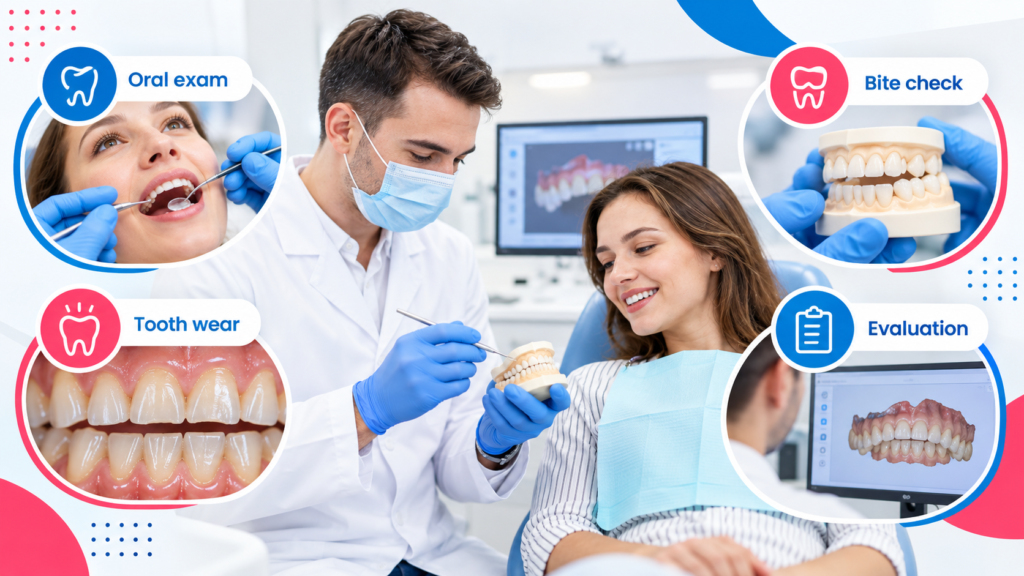
A dentist can look for patterns that suggest nighttime grinding and ask about symptoms such as morning jaw soreness, headaches, sensitivity, or changes in your teeth.
These evaluations are part of the broader general dentistry care used to identify oral health problems before they become more noticeable.
Because some people have few noticeable sleep bruxism symptoms, a dental exam may uncover signs they haven’t noticed.
1. Dental Examination
Your dentist may ask about your symptoms, sleep habits, jaw discomfort, medications, and anything a partner has noticed while you sleep. This background helps put the physical signs seen during the exam in context.
2. Checking for Tooth Wear and Damage
The dentist can check for flattened chewing surfaces, worn enamel, chips, cracks, sensitivity, and damage to fillings or crowns. The dentist may also check how your upper and lower teeth fit together.
3. Evaluating the Jaw Muscles and Joints
Your dentist may check for jaw tenderness, muscle soreness, limited jaw movement, or joint discomfort.
Because these symptoms can also occur with other jaw conditions, the dentist will consider your symptoms alongside the findings from your dental examination.
If jaw discomfort is a major concern, our guide to TMJ disorder and treatment options provides more information about possible causes and treatments.
4. When a Sleep Study May Be Recommended
A routine dental exam cannot diagnose every sleep-related condition. If your symptoms raise concerns about sleep apnea or another sleep disorder, your dentist or healthcare provider may recommend further evaluation.
In some cases, this may include an overnight sleep study to better understand what happens while you sleep.
How to Stop Grinding Your Teeth at Night
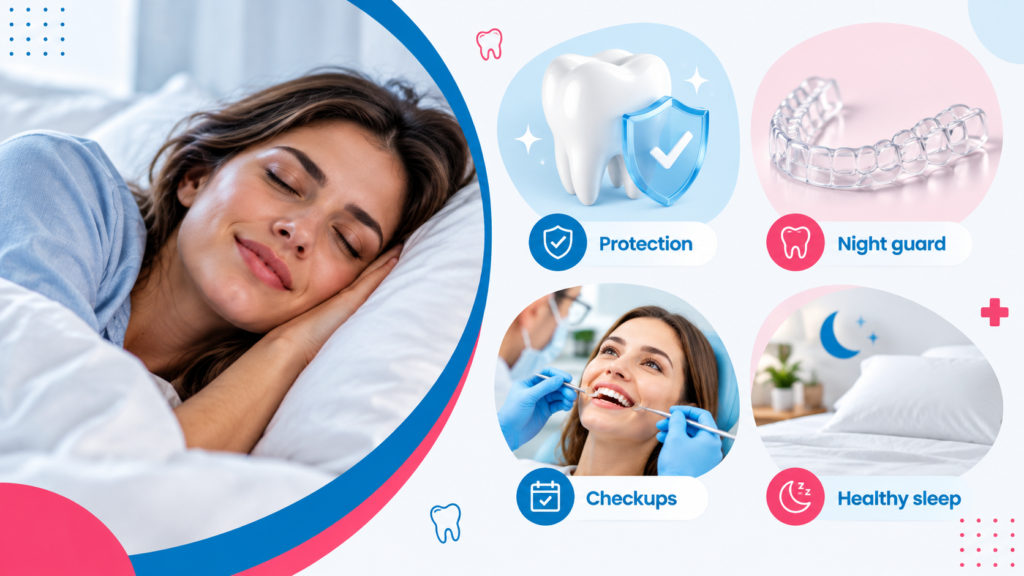
If you are trying to stop grinding your teeth at night, the right approach depends on your symptoms and possible contributing factors.
Treatment may focus on protecting your teeth, changing certain habits, and addressing sleep or health concerns when needed.
1. Use a Dentist-Fitted Night Guard
A custom night guard fits over the teeth and creates a protective barrier between the upper and lower arches. It can help reduce direct tooth-to-tooth contact and protect against further wear, chips, and damage from grinding.
A night guard does not necessarily stop sleep bruxism itself. Its main role is to protect your teeth from repeated grinding forces.
If cost is a factor, our guide to the cost of a custom night guard explains what Houston patients can expect.
2. Reduce Evening Caffeine and Alcohol
If you regularly consume caffeine or alcohol later in the day, your dentist or healthcare provider may suggest reviewing these habits as part of managing nighttime grinding.
3. Improve Your Sleep Habits
A consistent sleep schedule and a relaxing bedtime routine can support better sleep. If you also experience loud snoring, breathing interruptions, or other ongoing sleep concerns, further medical evaluation may be appropriate.
4. Practice Stress and Jaw Relaxation Techniques
If For grinding is linked to stress or jaw tension, relaxation techniques may help reduce muscle tension. Try keeping your teeth slightly apart when your jaw is resting and avoid unnecessary clenching during the day.
5. Address Underlying Sleep or Medical Concerns
When another health or sleep condition may be contributing, managing bruxism may involve care beyond the night guard itself. Your dentist can discuss the dental findings and advise when another healthcare professional should be involved.
If a custom appliance or other dental care is recommended, you can also review our dental payment options before moving forward with treatment.

When Should You See a Dentist for Teeth Grinding?
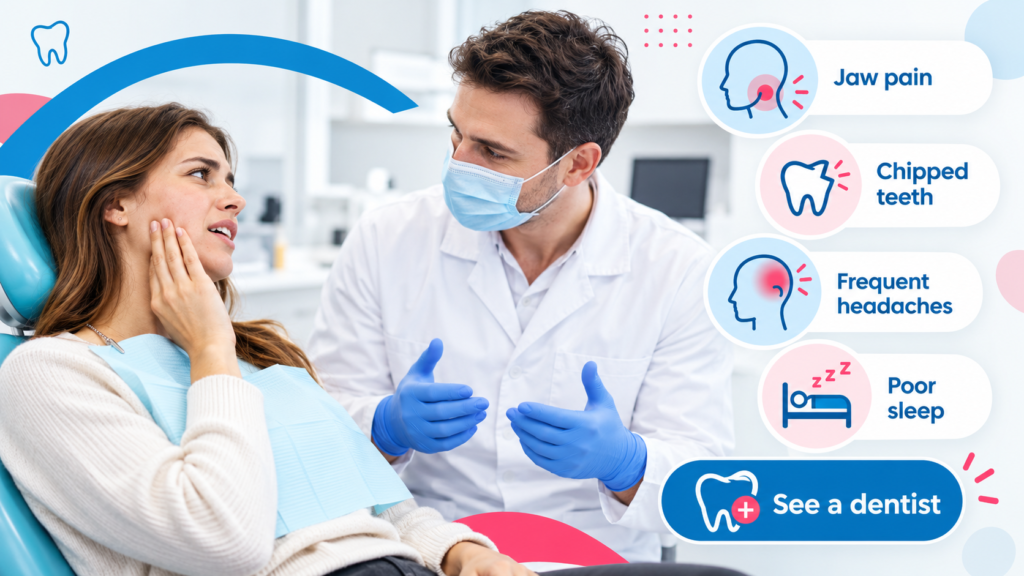
Consider seeing a dentist if signs of nighttime grinding are happening regularly or you notice changes in your teeth.
An evaluation can identify wear or damage and determine what protection or treatment may be appropriate.
Schedule a dental visit if you notice:
- Persistent morning jaw pain or tightness.
- Increasing tooth sensitivity.
- Flattened or visibly worn teeth.
- A chipped or cracked tooth.
- Frequent morning headaches or facial discomfort.
- Damage to fillings, dental crowns, or other dental work.
- A partner regularly hearing you grind your teeth.
- Symptoms becoming more frequent or uncomfortable.
You do not need to wait until a tooth breaks to have possible grinding checked. An earlier evaluation may help identify wear and give you a chance to protect your teeth from further damage.
If cost or coverage is a concern, review our dental insurance options before scheduling your visit.
If your symptoms persist or worsen, it is worth having your teeth and jaw checked. You can also contact our dental team with questions about your symptoms or a visit to Charm Dental Care.
Teeth Grinding Care in Spring, Katy, Richmond, Humble and Tomball
If you wake up with jaw soreness, sensitive teeth, or other signs of nighttime grinding, visit Charm Dental Care at one of our Houston-area locations.
Our dental team can examine your teeth for wear or damage and discuss appropriate next steps based on what we find.
1. Teeth Grinding Care in Spring, TX
Patients can visit our Spring dental office for an evaluation if nighttime grinding is causing tooth sensitivity, visible wear, or morning jaw discomfort.
2. Teeth Grinding Care in Katy, TX
If you notice frequent headaches, jaw tightness, or changes in your teeth, our Katy dental office can check for signs associated with grinding or clenching.
3. Teeth Grinding Care in Richmond, TX
At our Richmond dental office, we can examine worn, sensitive, chipped, or cracked teeth and discuss ways to protect them from further grinding forces.
4. Teeth Grinding Care in Humble, TX
Not sure if the discomfort you feel each morning is related to bruxism? Our Humble dental office can evaluate your teeth and jaw for signs that may help explain your symptoms.
5. Teeth Grinding Care in Tomball, TX
If a partner has noticed grinding sounds while you sleep or you’ve noticed unusual wear on your teeth, schedule an evaluation at our Tomball dental office.
With dental offices in Spring, Katy, Richmond, Humble, and Tomball, you can choose the Charm Dental Care location that is most convenient for you.
If you are experiencing signs of nighttime grinding, book an appointment to have your teeth and jaw evaluated.
Why Choose Charm Dental Care for Teeth Grinding Concerns?
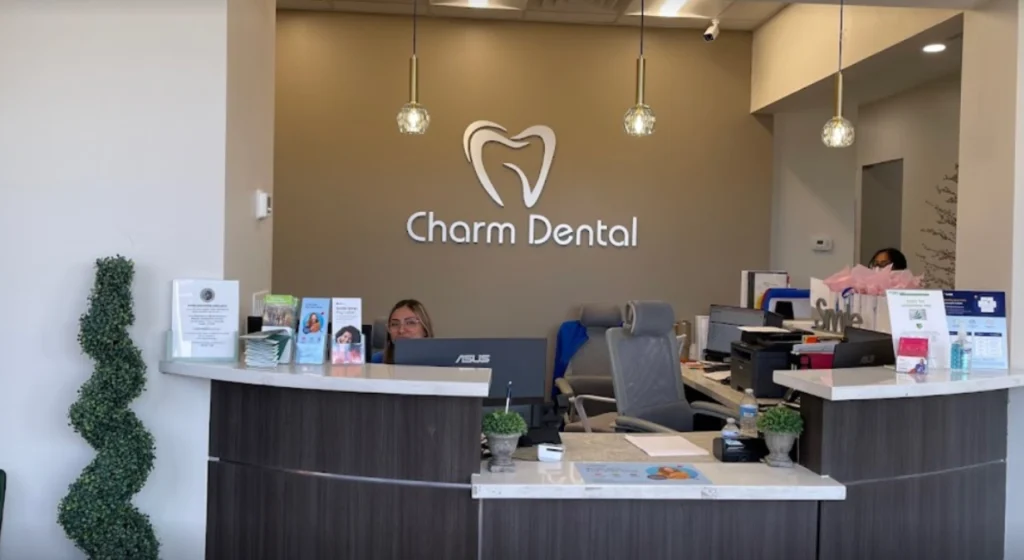
Nighttime grinding can affect people differently, so the first step is understanding what is happening to your teeth and jaw.
At Charm Dental Care, we can check for wear, sensitivity, cracks, damaged dental work, and other signs that may be related to grinding.
Patients choose our Houston-area dental offices for:
- Thorough dental evaluations: We examine your teeth, bite, jaw, and symptoms before discussing next steps.
- Protection for worn or damaged teeth: If grinding is affecting your teeth, we can discuss options based on the type and extent of damage.
- Convenient Houston-area locations: Patients can visit us in Spring, Katy, Richmond, Humble, or Tomball.
- Options for patients without dental insurance: Our dental membership plan provides another way to plan for dental care.
- Dental experiences: View our patient testimonials to hear directly from people who have visited Charm Dental Care.
If you suspect you grind your teeth at night, a checkup can help you understand what is happening before additional wear or damage develops
You Might Also Like
1. Teeth Grinding in Kids (Bruxism): Causes, Signs, and Gentle Fixes
2. How to Deal with Tooth Sensitivity to Sugar?
3. Dental Onlay vs Crown: What’s the Difference and Which One Does Your Tooth Actually Need?

Protect Your Teeth From Nighttime Grinding
Nighttime teeth grinding can go unnoticed until you develop jaw soreness, headaches, tooth pain, or visible tooth wear. Recognizing these changes early can help you seek care before further damage develops.
If you suspect nighttime grinding, book an appointment with Charm Dental Care. Our dental team can examine your teeth and jaw, discuss possible causes, and recommend appropriate ways to protect your teeth.
FAQs (Frequently Asked Questions)
Q1. How Can I Tell If I Grind My Teeth At Night?
You may grind your teeth at night if you regularly wake with a sore or tight jaw, morning headaches, sensitive teeth, or facial discomfort. Worn, flattened, chipped, or cracked teeth can also be signs. In some cases, a partner hears the grinding before the person notices any symptoms.
Q2. What Are The Most Common Signs Of Teeth Grinding?
Common signs of teeth grinding at night include morning jaw discomfort, headaches, sensitive teeth, worn enamel, flattened chewing surfaces, and chipped or cracked teeth. Signs of teeth grinding on molars may be especially noticeable as flattened or worn chewing surfaces.
Q3. Why Do I Grind My Teeth While Sleeping?
Several factors may contribute to nighttime teeth grinding, including stress, caffeine, alcohol, tobacco use, certain medications, and sleep-related conditions. There is not always one clear cause, and the contributing factors can differ from person to person.
Q4. Can Teeth Grinding Damage My Teeth?
Yes, frequent grinding can gradually wear down enamel and place extra pressure on the teeth. Over time, this may contribute to sensitivity, chips, cracks, or damage to fillings, crowns, and other dental work.
Q5. Can Teeth Grinding Cause Headaches Or Jaw Pain?
It can; some people wake with tight or sore jaw muscles, facial discomfort, or temple headaches. Because headaches and jaw pain can have many causes, it’s worth discussing frequent symptoms with a dentist.
Q6. How Do Dentists Know If You Grind Your Teeth?
Dentists examine your teeth for unusual wear, chips, cracks, and damaged dental work. They may also check your jaw muscles and ask about morning symptoms or grinding sounds during sleep. These findings can suggest bruxism, although tooth wear alone cannot confirm that grinding is currently happening at night.
Q7. How Can I Stop Grinding My Teeth At Night?
Treatment depends on what may be contributing to the grinding and how it is affecting your teeth. We may recommend a custom night guard to protect your teeth. Improving sleep habits, reducing evening caffeine and alcohol, relaxing the jaw, and addressing related sleep or medical concerns may also help as part of a broader care plan.
Q8. Do I Need A Night Guard For Teeth Grinding?
You may benefit from a night guard if grinding wears down or damages your teeth. A dentist can examine your teeth and decide if one is appropriate. If you already wear a retainer, our guide to the difference between a night guard and a retainer explains why the two appliances serve different purposes.
Q9. Can Teeth Grinding Crack A Tooth?
Yes, repeated grinding and clenching can place heavy pressure on the teeth and may contribute to cracks, especially in teeth that are already weakened or have large fillings. If you notice a visible crack, pain when biting, or sudden sensitivity, schedule a dental evaluation so a dentist can check the tooth before the damage worsens.