Coconut oil has become a popular home remedy for brighter teeth, especially through a practice called oil pulling. But does coconut oil whiten teeth, or does it simply help your mouth feel cleaner?
While some studies suggest oil pulling may reduce plaque and certain oral bacteria, the American Dental Association (ADA) says there is no reliable scientific evidence that it whitens teeth.
Baking soda may remove some surface stains, but mixing it with coconut oil doesn’t produce the same results as professional whitening.
So, what can these home remedies actually do? Let’s look at their benefits, limitations, safety concerns, and the whitening treatments that can produce more noticeable results.
Key Takeaways
- Coconut oil is not proven to whiten teeth. Oil pulling may help reduce plaque and oral bacteria, but limited evidence shows it changes the natural shade of teeth.
- Cleaner teeth can sometimes look brighter, but removing surface buildup is different from bleaching tooth discoloration.
- Baking soda may help with some surface stains because it’s mildly abrasive, but mixing it with coconut oil doesn’t make it a professional-strength whitening treatment.
- Oil pulling shouldn’t replace daily dental care, including brushing with fluoride toothpaste, cleaning between your teeth, and regular dental visits.
- The cause of discoloration matters. Surface stains, tartar, aging, enamel changes, and deeper discoloration may require different approaches.
- For patients looking for a more noticeable change, professional teeth whitening may provide more predictable results after a dentist evaluates the teeth and gums.
Table of Contents
Does Coconut Oil Whiten Teeth?
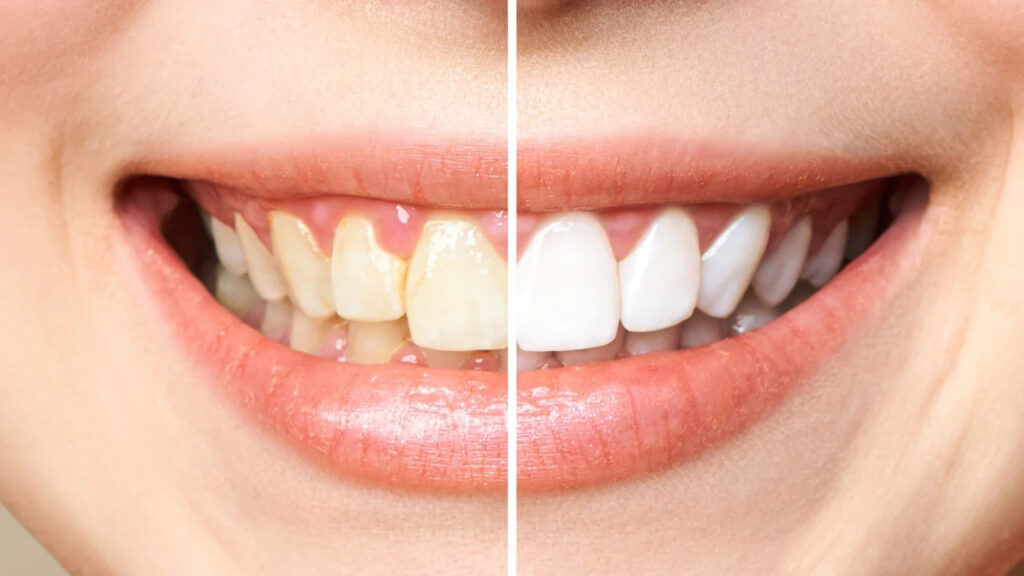
Coconut oil may leave your mouth feeling cleaner, but limited evidence shows it doesn’t actually whiten teeth or change their natural shade.
Oil pulling differs from bleaching treatments, which are specifically designed to lighten tooth color.
The key difference is where the discoloration comes from:
- Surface stains develop on the outside of teeth from things like coffee, tea, and strongly colored foods.
- Deeper discoloration develops within the tooth and may be related to aging, enamel changes, certain medications, or dental trauma.
- Plaque and buildup can make teeth look duller, so removing buildup may make the smile appear cleaner without actually bleaching the teeth.
That is why the answer to “can coconut oil whiten teeth” isn’t a simple yes.
Teeth may look slightly brighter when surface buildup is reduced, but coconut oil hasn’t been shown to produce the kind of color change associated with proven whitening treatments.
If your goal is a noticeably brighter smile, understanding the safety of whitening and the cause of the discoloration can help you choose a more appropriate option.

How Does Coconut Oil Affect Your Teeth?
People most commonly use coconut oil for teeth through oil pulling, a practice that involves swishing edible oil around the mouth and then spitting it out.
Some people add it to their routine hoping for cleaner teeth, fresher breath, or a brighter smile.
What Can Oil Pulling Actually Do?
Some studies have examined oil pulling for plaque and oral bacteria, but evidence for broader dental benefits remains limited.
The American Dental Association’s guidance on oil pulling and whitening notes that there is no documented tooth-whitening effect from oil pulling.
That means your teeth may feel cleaner after oil pulling, but don’t confuse that with bleaching or changing their natural shade.
Think of the difference this way:
- Less plaque or buildup may make teeth look cleaner.
- Whitening means actually lightening discoloration or changing the visible shade of the teeth.
Those are not the same result.
What About Yellow or Stained Teeth?
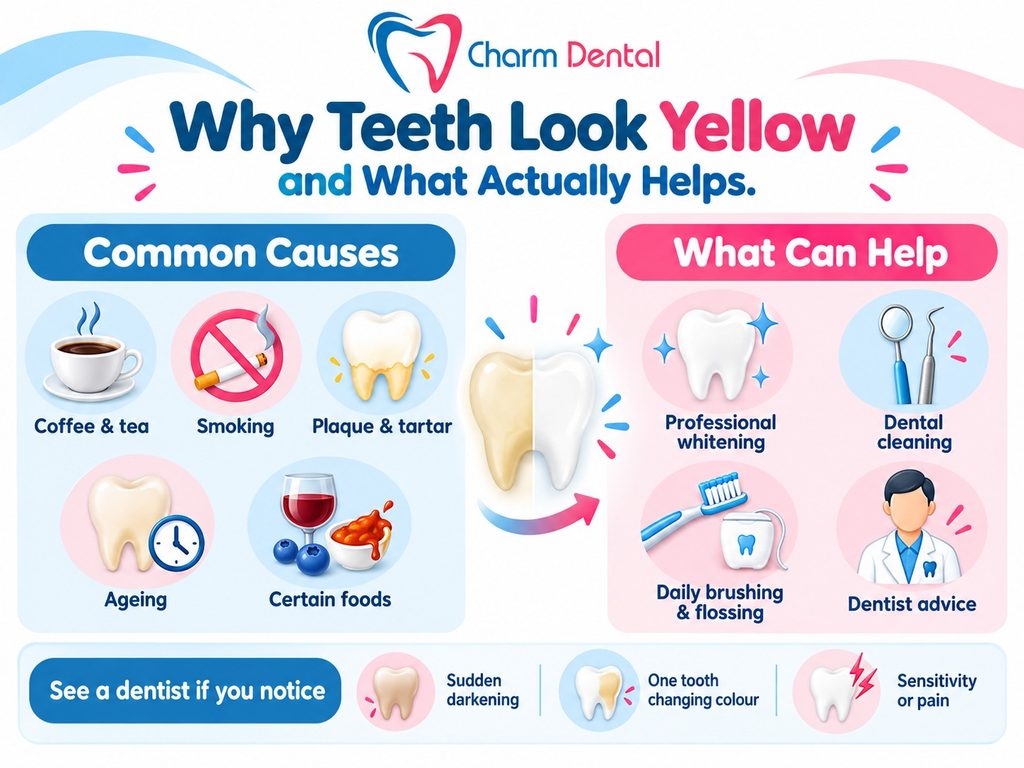
If discoloration is mainly from surface buildup, better oral hygiene may make your smile look fresher. But deeper stains and natural tooth color are unlikely to change simply by swishing coconut oil.
Regular brushing, flossing, and professional teeth cleaning still matter for controlling plaque and tartar that oil pulling alone can’t remove.
So, while some people ask whether coconut oil helps whiten teeth, it’s best to keep oral-hygiene benefits separate from claims that it can actually whiten enamel.
Does Coconut Oil Make Your Teeth Whiter?
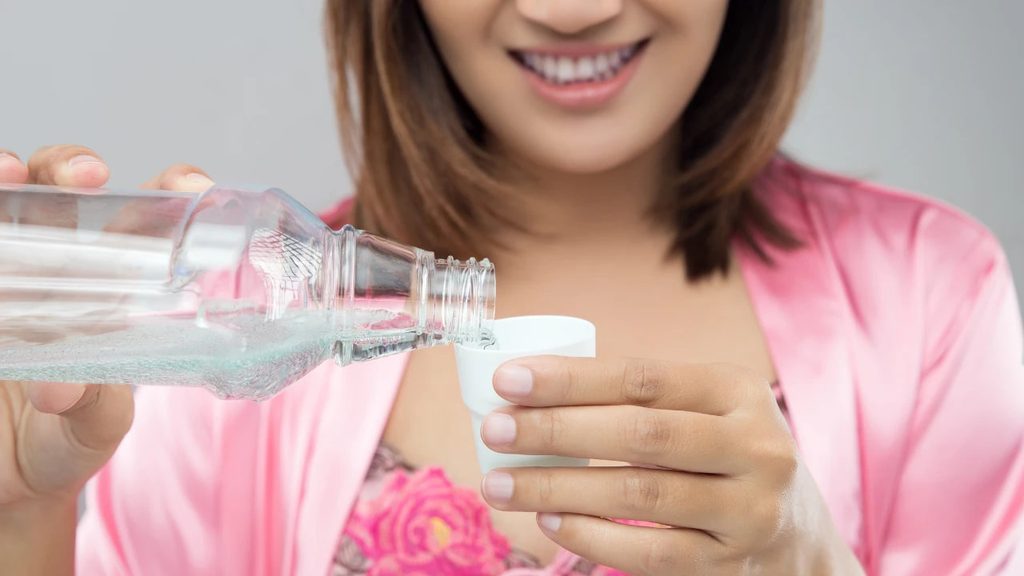
Sometimes teeth may look a little brighter after plaque or surface buildup is reduced, but that does not necessarily mean their actual color has changed.
Coconut oil hasn’t been shown to bleach enamel the way peroxide-based whitening products do.
What Kind of Stain Are You Trying to Remove?
| Type of discoloration | Common examples | Is coconut oil likely to whiten it? |
|---|---|---|
| Surface staining | Coffee, tea, tobacco, dark-colored foods | No proven whitening effect |
| Plaque or buildup | Film or deposits on the teeth | May look cleaner if buildup is reduced |
| Deeper discoloration | Aging, trauma, internal tooth changes | No |
| Natural tooth shade | Naturally cream or yellow-toned teeth | No |
This is why claims about getting coconut oil white teeth can be misleading. A cleaner tooth surface and a genuinely lighter tooth shade are two different things.
If stains are your main concern, it helps to understand how teeth whitening works before trying home remedies. Whitening treatments are designed specifically to address discoloration, while coconut oil is not considered a bleaching agent.
So, does coconut oil whiten your teeth? There isn’t enough evidence to rely on it for a noticeable color change, especially when discoloration comes from within the tooth.
Also Read: Foods That Naturally Whiten Teeth
Do Baking Soda and Coconut Oil Whiten Teeth?
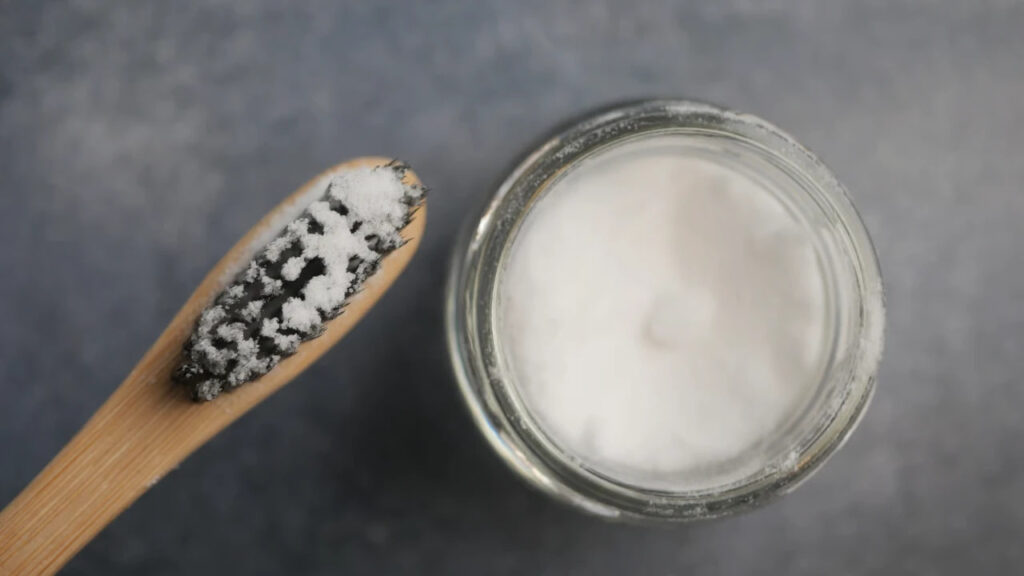
Mixing baking soda with coconut oil is a popular DIY approach, but the two ingredients work differently.
Baking soda is mildly abrasive, so it may help remove some stains sitting on the tooth surface. Coconut oil, on the other hand, has no established bleaching effect.
How Does Baking Soda Affect Tooth Stains?
Baking soda can physically lift some surface stains from foods and drinks. That can make teeth appear cleaner or slightly brighter, but it does not necessarily change their underlying shade.
People with sensitive teeth should be particularly careful with abrasive DIY methods.
If sensitivity is already a concern, learning about whitening sensitive teeth can help you choose more appropriate options before trying to scrub stains away at home.
Does Adding Coconut Oil Improve the Results?
There is no good evidence that coconut oil with baking soda for teeth produces a stronger whitening effect simply because the ingredients are combined.
You may see coconut oil and baking soda teeth whitening promoted as a natural alternative, but removing some surface staining is very different from bleaching discoloration within the tooth.
What About Regular Use?
Using more baking soda or scrubbing harder won’t whiten your teeth. Frequent or aggressive use may irritate your gums or increase sensitivity.
If you choose to use baking soda and coconut oil on your teeth, it should never replace fluoride toothpaste, flossing, or routine dental care.
Is Oil Pulling Safe for Your Teeth?

For most adults, occasional oil pulling is generally considered low-risk when you swish the oil and then spit it out.
The bigger concern is treating it as a replacement for dental habits with much stronger evidence.
Oil pulling does not replace brushing with fluoride toothpaste or cleaning between your teeth. You still need a consistent daily dental hygiene routine to remove plaque, protect against cavities, and keep your gums healthy.
If you choose to try oil pulling:
- Spit the oil out rather than swallowing it.
- Don’t brush aggressively afterward to increase the whitening effect.
- Continue using fluoride toothpaste instead of replacing it with coconut oil.
- Keep flossing or cleaning between your teeth as part of your normal routine.
- Stop if you experience irritation or discomfort.
It is also worth keeping expectations realistic.
Oil pulling may leave your mouth feeling fresh or clean, but it doesn’t prevent every dental problem or whiten your teeth.
If your main reason for using coconut oil is discoloration, stains that persist despite good oral hygiene may need a different approach.
What Actually Works to Whiten Teeth?
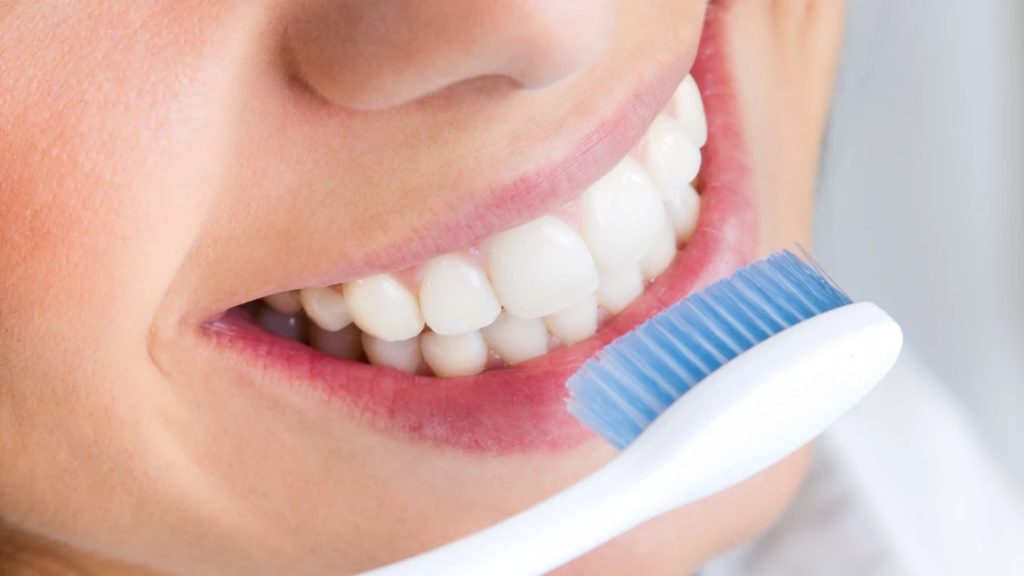
Coconut oil may help with some oral hygiene concerns, but it hasn’t been proven to change tooth color.
If whitening is your goal, these options have a clearer role:
1. Professional Teeth Whitening
- Targets tooth discoloration: Professional whitening uses bleaching agents designed to lighten tooth shade, not simply remove surface buildup.
- Starts with a dental check: Your dentist can look for dental cavities, gum problems, sensitivity, and existing restorations before whitening.
- Offers professional guidance: If you want a more noticeable change, your dentist can discuss professional teeth whitening based on your smile and oral health.
2. Dentist-Recommended At-Home Whitening
- Lets you whiten at home: A dentist can recommend an appropriate whitening option and explain how to use it correctly.
- Useful for sensitive teeth: Professional guidance can be especially helpful if you already experience sensitivity.
- Considers existing dental work: Crowns, veneers, bonding, and fillings may not change shade along with natural teeth.
3. Whitening Toothpaste for Surface Stains
- Best suited to surface stains: Whitening toothpaste may help with stains from coffee, tea, and certain foods.
- Results are usually limited: It mainly works on the tooth surface and should not be expected to produce the same change as bleaching.
Not sure what is causing the discoloration? Contact our dental team before repeatedly trying DIY whitening methods.
Why Are My Teeth Yellow or Discolored?
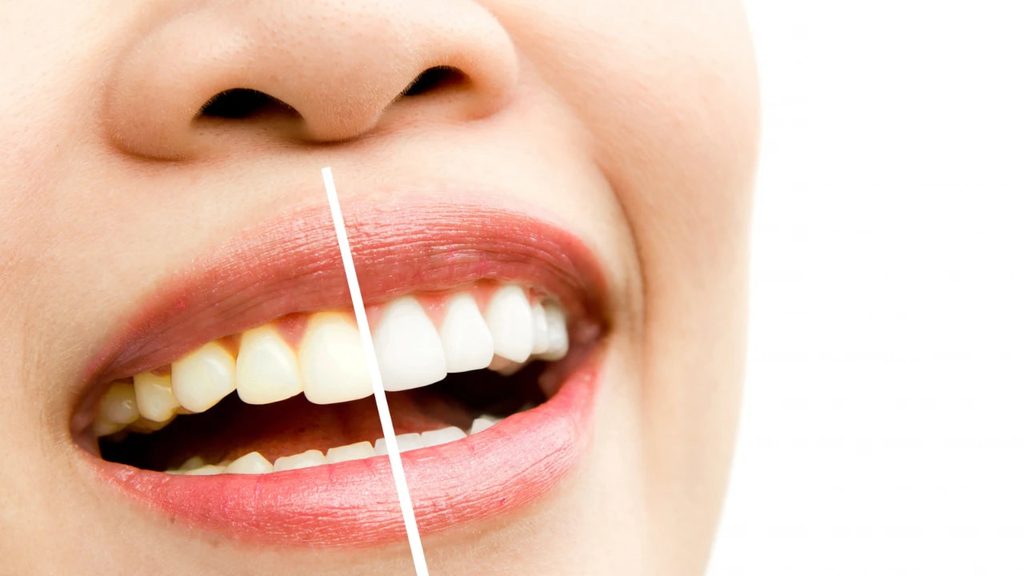
Yellow or stained teeth do not always mean poor oral hygiene.
Tooth color can change for several reasons, and knowing the cause matters because not every type of discoloration responds to the same whitening method.
1. Food and Drinks
Coffee, tea, red wine, dark sauces, and other strongly pigmented foods and drinks can gradually leave stains on the outer surface of enamel.
These are known as extrinsic stains and may respond better to cleaning or whitening than discoloration that develops inside the tooth.
2. Tobacco Use
Smoking cigarettes or using smokeless tobacco can leave yellow or brown stains on teeth. Nicotine and tar contribute to discoloration, which may become more noticeable over time.
3. Plaque and Tartar
Plaque that is not removed can harden into tartar, which may make teeth look yellow or dull. Tartar cannot simply be brushed away at home.
This is one reason professional teeth cleaning can make a visible difference when buildup affects your smile’s appearance.
4.Aging
Teeth often look more yellow as you age. Enamel can gradually thin, letting more of the naturally yellowish dentin underneath show through.
5. Enamel Changes and Certain Medications
Enamel changes, dental trauma, and some medications can affect tooth color from within. These bigger changes may not respond well to coconut oil, baking soda, or ordinary whitening toothpaste.
Before trying to whiten persistent discoloration, especially when one tooth looks noticeably darker than the others, it is worth finding out what is causing the color change.
Also Read: The Importance of Professional Teeth Cleaning

Teeth Whitening Options in Spring, TX and Other Houston-Area Locations
Thinking about professional whitening after trying home remedies?
Charm Dental Care serves patients across Spring, TX, Katy, Richmond, Humble, and Tomball, TX, making it easier to discuss tooth stains, discoloration, and professional whitening options at a convenient location.
1. Teeth Whitening in Spring, TX
If stains or discoloration are keeping your smile from looking as bright as you would like, visit our Spring dental office to discuss the cause and explore whitening options based on your oral health and goals.
2. Teeth Whitening in Katy, TX
Patients looking for a brighter smile can visit our Katy dental office to discuss surface stains, deeper discoloration, sensitivity, and suitable cosmetic dental options.
3. Teeth Whitening in Richmond, TX
At our Richmond dental office, we can evaluate tooth discoloration and help you decide whether professional whitening or another approach is right for your smile.
4. Teeth Whitening in Humble, TX
Visit our Humble dental office to explore whitening options while considering factors such as tooth sensitivity, existing crowns or fillings, and the type of discoloration you have.
5. Teeth Whitening in Tomball, TX
If coconut oil or other home remedies have not improved stubborn stains, our Tomball dental office can help identify the cause of discoloration and discuss appropriate whitening options.
Ready for a Brighter Smile? Visit Charm Dental Care
If coconut oil and home remedies haven’t improved your tooth discoloration, our dental team can help identify the cause and discuss suitable whitening options.
At Charm Dental Care, we welcome patients from Spring, Katy, Richmond, Humble, Tomball, and nearby Houston communities.
Book an appointment today to discuss professional teeth whitening and take the next step toward a brighter smile.
Coconut Oil vs. Baking Soda vs. Professional Teeth Whitening
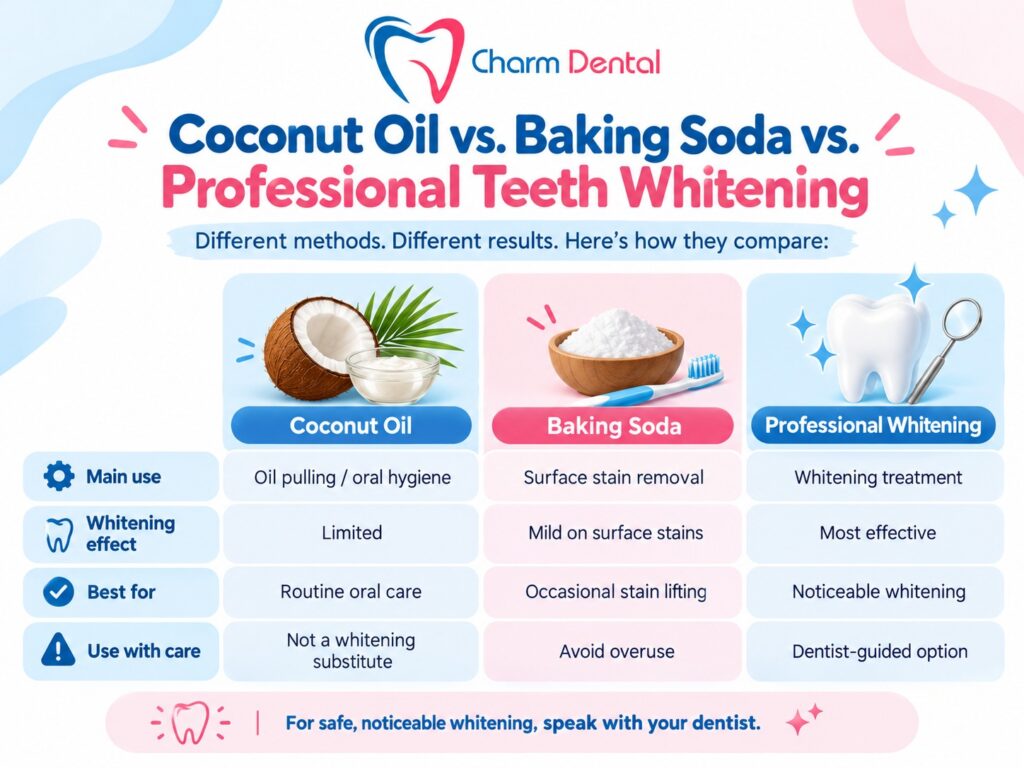
Coconut oil, baking soda, whitening toothpaste, and professional whitening work differently.
The biggest difference is whether a method simply helps with surface stains or can actually lighten tooth color.
| Method | Helps With Surface Stains? | Changes Natural Tooth Color? | Dentist Supervision |
|---|---|---|---|
| Coconut oil / oil pulling | Limited evidence | No established whitening effect | No |
| Baking soda | May help remove some surface stains | Limited | Usually no |
| Whitening toothpaste | Yes, for some surface stains | Limited | No |
| Professional teeth whitening | Yes | Can lighten tooth shade | Yes |
Coconut oil is the weakest option here if your main goal is whitening.
Baking soda and whitening toothpaste may improve some surface staining, but they still differ from treatments that use bleaching ingredients to lighten discoloration.
The best choice also depends on why your teeth look yellow or stained. Someone with coffee stains may need a different approach than someone with age-related discoloration, a darkened tooth, or dental restorations.
That is why identifying the cause of discoloration is more useful than simply choosing whichever DIY whitening method is trending.
Can Coconut Oil Whiten Crowns, Veneers, or Fillings?
No, coconut oil does not whiten dental crowns, veneers, bonding, or tooth-colored fillings. These restorations are made from materials that don’t respond to whitening the same way natural tooth enamel does.
This matters if you are trying to brighten your entire smile. Natural teeth may lighten with certain whitening treatments, while existing dental work can stay the same shade.
If you have porcelain veneers, crowns, or bonding on visible teeth, talk with your dentist before starting a whitening treatment so you know what kind of result to expect.
Coconut oil and baking soda will not reliably correct a color difference between natural teeth and dental restorations either.
If an older crown, veneer, or filling no longer blends with your smile, a dentist can examine it and discuss appropriate cosmetic options.
When Should You See a Dentist About Tooth Discoloration?

Not every yellow or stained tooth needs treatment. Gradual staining from coffee, tea, certain foods, or aging is common.
But a noticeable change in tooth color can sometimes have a dental cause that whitening products or home remedies will not fix.
Consider seeing a dentist if you notice:
- One tooth becoming darker than the surrounding teeth.
- Sudden discoloration without an obvious reason.
- Dark spots that could indicate tooth decay.
- Staining that remains even with regular brushing and professional cleanings.
- New sensitivity to hot, cold, or sweet foods.
- Discoloration accompanied by tooth pain or a toothache.
- Changes in color around a filling, crown, veneer, or other restoration
A single dark tooth deserves particular attention, especially after an injury.
Instead of repeatedly trying coconut oil, baking soda, or whitening products, a dental exam can help determine whether the color change is simply a stain or something happening inside the tooth.
If an exam or treatment is recommended, you can also review your dental insurance benefits to better understand your coverage before moving forward.
Why Choose Charm Dental Care for Teeth Whitening in Houston?

If you are considering whitening because coconut oil or other home remedies haven’t given you the results you want, a dental evaluation can help determine what may work for your type of discoloration.
At Charm Dental Care, patients can benefit from:
- Personalized whitening care: Your dentist can consider the type of staining, tooth sensitivity, gum health, and existing dental work before discussing suitable whitening options.
- Professional guidance: If stains are caused by tartar, tooth decay, an older restoration, or another dental concern, your dentist can identify that before whitening begins.
- Flexible options for dental care: Patients without traditional insurance can explore the dental membership plan and review available benefits and savings.
- Convenient next steps: Once you know which approach is suitable for your smile, the dental team can explain the treatment process and answer questions before you decide how to proceed.
- Experiences from other patients: If you are visiting Charm Dental Care for the first time, patient testimonials can help you learn from others’ experiences.
You Might Also Like
1. How to Whiten Your Teeth Without Damaging Them
2. Are You the Right Candidate for Teeth Whitening?
3. Teeth Whitening Trends: Should You Go Natural?

Ready to Discuss Teeth Whitening in Houston?
If stains or discoloration are affecting how you feel about your smile, you do not have to keep experimenting with coconut oil or other DIY methods.
- Find out what is causing the discoloration: A dental evaluation can help distinguish surface staining from deeper color changes or dental concerns.
- Discuss your whitening goals: Your dentist can explain which options suit your teeth, gums, sensitivity, and existing dental work.
- Explore available savings: Check current dental offers before scheduling to see what promotions may be available.
FAQs (Frequently Asked Questions)
Q1. Can Coconut Oil Whiten Teeth?
No strong evidence shows that coconut oil can bleach teeth or change their natural shade. Oil pulling may reduce some plaque and bacteria, but cleaner-looking teeth aren’t the same as whitened teeth.
Q2. Does Coconut Oil Make Your Teeth Whiter?
Coconut oil may make your mouth feel cleaner, but it isn’t a proven whitening agent. If it reduces surface buildup, teeth may appear slightly brighter without actually changing color.
Q3. Does Coconut Oil Help Whiten Teeth Naturally?
Limited evidence suggests coconut oil produces a noticeable whitening effect. It should not be considered a substitute for whitening products specifically designed to address tooth discoloration.
Q4. Can I Use Coconut Oil And Baking Soda On My Teeth?
Some people use coconut oil with baking soda for teeth, but the mixture should be used cautiously. Baking soda may help remove certain surface stains because of its mild abrasive action, while coconut oil does not add a proven bleaching effect.
Q5. Does Baking Soda And Coconut Oil Whiten Teeth?
Baking soda may help with some external stains, but combining it with coconut oil does not reliably whiten the natural color of teeth. Frequent or aggressive scrubbing can also cause irritation or sensitivity.
Q6. How Often Should You Use Oil Pulling?
No established oil-pulling schedule is required for healthy teeth. If you choose to try it, keep it as an optional addition to brushing with fluoride toothpaste, flossing, and regular dental care.
Q7. Can Coconut Oil Remove Yellow Stains From Teeth?
It depends on what is causing the yellow appearance. Coconut oil is unlikely to change natural tooth color or deeper discoloration. Surface stains, tartar, aging, and internal tooth changes may require different approaches.
Q8. Can Coconut Oil Whiten Crowns Or Veneers?
No, coconut oil does not change the original shade of crowns, veneers, fillings, or bonding. If dental work no longer matches the surrounding teeth, a dentist can discuss cosmetic dentistry options.
Q9. What Is The Safest Way To Whiten Teeth?
The right approach depends on your oral health, sensitivity, existing restorations, and the cause of discoloration. A dental evaluation can help determine which whitening option is appropriate for your smile.