Can you go to the dentist while pregnant? Yes, in most cases, routine dental visits and necessary treatments are safe during pregnancy. Regular dental care can help prevent problems like gum inflammation, tooth decay, and infections that may affect your oral health.
Still, you may have questions about dental X-rays, fillings, anesthesia, or the best trimester for treatment. Knowing what to expect can help you feel more comfortable about your next appointment.
In this guide, we’ll explain safe dental treatments during pregnancy, when to seek urgent care, and what to know before visiting a dentist in Houston, TX.
Key Takeaways
- Routine dental exams and cleanings are generally safe during pregnancy.
- Necessary dental treatments, including fillings, root canals, and extractions, can usually be performed during pregnancy.
- Dental X-rays and local anesthesia may be used when clinically appropriate.
- Persistent tooth pain, swelling, or infection should be evaluated promptly.
- Tell your dentist how far along you are and share any pregnancy-related medical concerns.
Is It Safe to Go to the Dentist While Pregnant?
Yes, you can generally go to the dentist while pregnant for exams, cleanings, and treatment your dentist considers necessary. ACOG and the ADA say preventive, diagnostic, and restorative dental care can be provided during pregnancy.
Charm Dental’s general dentistry team can discuss your oral-health questions during an exam.
Before your visit:
- Tell the dentist you’re pregnant and how many weeks along you are.
- Share your medicines and health details, including any pregnancy-related restrictions.
- Call about persistent tooth pain or swelling. Don’t wait for it to go away on its own. ACOG notes that delaying care for urgent dental problems can lead to more complex issues.
Review out emergency dental care options.
Why Dental Care Matters More During Pregnancy
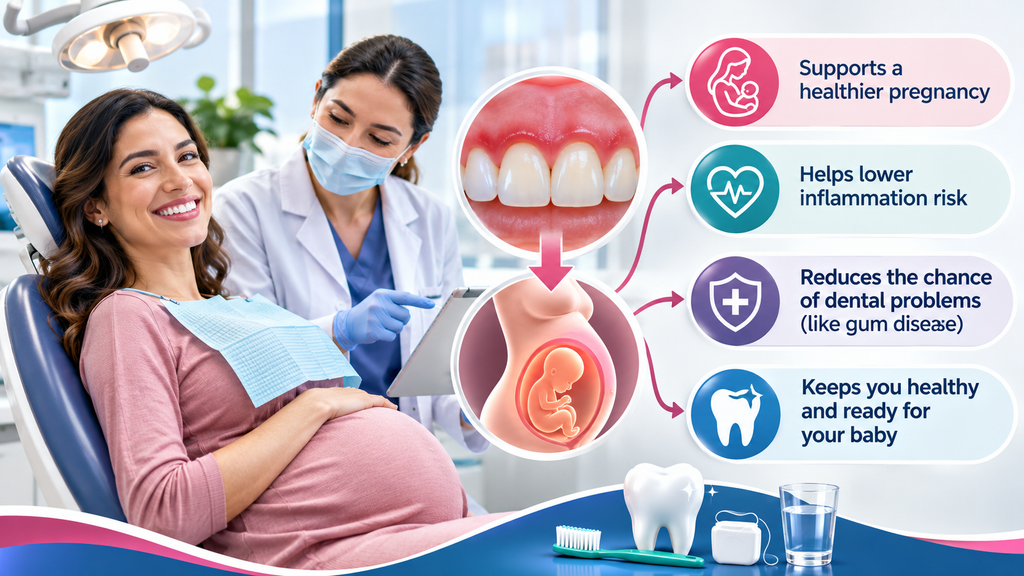
Hormonal changes can make gums more sensitive to plaque. Pregnancy gingivitis may cause redness, tenderness, or bleeding.
Charm Dental’s article on gum disease symptoms and treatment explains signs to bring up with your dentist.
| What can change | How it may affect your mouth |
|---|---|
| Hormonal shifts | Gums may become swollen or bleed more easily. If symptoms persist, your dentist can assess them and discuss what is appropriate. |
| Morning sickness or reflux | Stomach acid can reach the teeth. The ADA advises rinsing after vomiting and waiting before brushing because acid can temporarily soften enamel. |
| Frequent snacking or dry mouth | More frequent eating and less saliva can affect your teeth. Drinking water and sticking to daily brushing and flossing can help support your routine. |
These changes are good reasons to keep up with dental care during pregnancy.
If you have tooth pain while pregnant, swelling, or possible infection, contact a dentist instead of waiting for the problem to pass.

Which Dental Treatments Are Safe During Pregnancy?
Dental work while pregnant depends on the treatment and your health needs.
ACOG says preventive care and necessary treatment, including fillings, root canals, and extractions, can be managed during pregnancy.
Your dentist can review the timing and options with you.
| Treatment | What to know |
|---|---|
| Exams and cleanings | Routine care can continue. Dental cleanings help remove plaque and tartar. |
| Fillings | If decay needs treatment, your dentist can discuss restorative care and timing. |
| Dental X-rays during pregnancy | X-rays may be taken when needed to diagnose a problem. Ask why an image is recommended and how the office follows current radiation-safety guidance. |
| Tooth extraction | If a tooth is causing significant pain or infection, an extraction may be considered. Learn about wisdom tooth extraction. |
| Root canal | A root canal may be recommended for an infected or badly damaged tooth. Read about root canal treatment and preparing for the procedure. |
| Crowns | Your dentist can assess whether a crown is needed now or can wait. |
| Whitening or cosmetic work | These treatments are usually elective. Ask whether teeth whitening or other cosmetic care can wait until after pregnancy. |
| Sedation | Options differ. The ADA advises pregnant patients to avoid nitrous oxide exposure; discuss other options with your dentist and prenatal provider. |
Is Dental Numbing Safe While Pregnant?
Local anesthetic may be used when needed for dental treatment. Tell your dentist about your pregnancy, current medicines, and any instructions from your prenatal provider.
Can You Get a Tooth Pulled While Pregnant?
Yes, an extraction may be appropriate if a dentist finds it necessary.
A root canal while pregnant may also be recommended to treat infection or damage, so call about persistent pain or swelling instead of waiting until after delivery
Read Charm Dental’s article on sedation during pregnancy.
The Best Time for Dental Work: A Trimester Guide
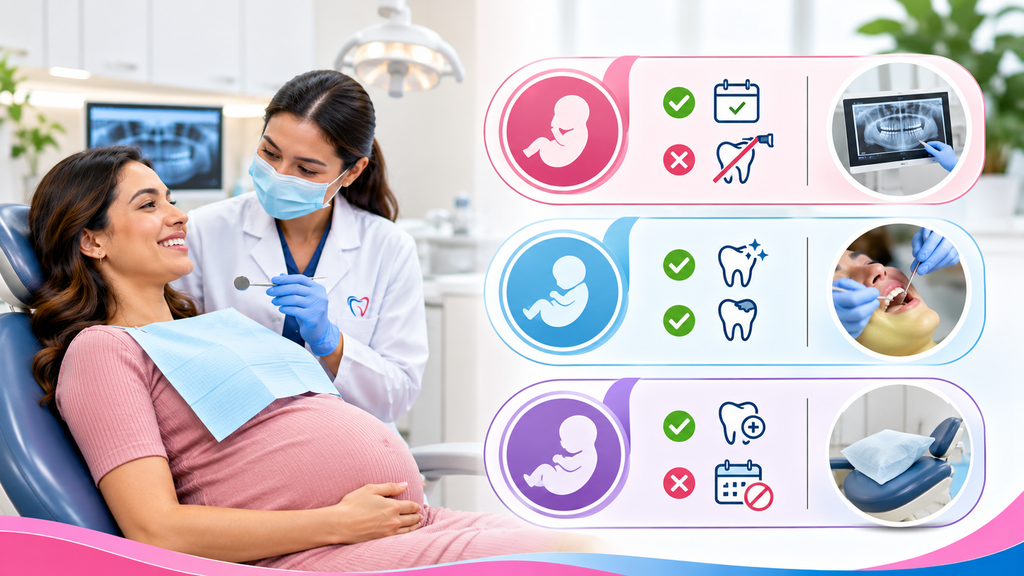
There isn’t one trimester that determines whether dental treatment can be done. Your dentist will consider the reason for treatment, your health, and your comfort.
ACOG says fillings, root canals, and extractions can be managed during pregnancy when needed, so urgent care shouldn’t be delayed just to reach another trimester.
If you’re due for routine care, learn why regular dental checkups matter.
- First trimester: Tell the dental team you’re pregnant and share any symptoms, medicines, or prenatal care instructions. Keep routine visits if you’re due, and call about pain or swelling.
- Second trimester: Some patients find planned visits more comfortable at this stage. It isn’t a requirement for treatment, and needed care can be discussed at any point in pregnancy.
- Third trimester: A long appointment may feel less comfortable. Let the team know if you need breaks or a position adjustment.
For dental work while pregnant, ask which care is needed now and what can reasonably wait.
Tooth Pain or a Dental Emergency While Pregnant: What to Do
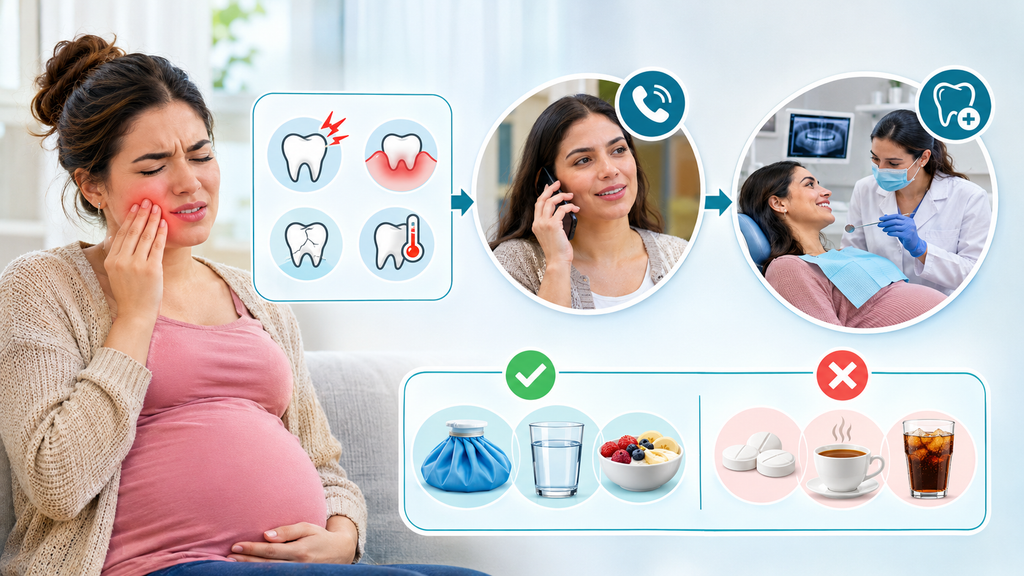
If you have tooth pain while pregnant, call a dentist about severe or persistent pain, swelling, fever, a broken tooth, or bleeding that won’t stop.
Prompt advice can help you understand what needs attention and when.
- Call about urgent symptoms: Contact a dentist and mention that you’re pregnant. Our emergency dental care can advise you about next steps and appointment availability.
- For a cracked tooth: Rinse gently with warm water and use a cold compress for swelling. The Houston dental emergency guide has more steps for common injuries.
- Share key details: Tell the dental team how many weeks pregnant you are, when the symptoms began, what medicines you take, and whether your prenatal provider has given you any restrictions.
- Check before taking medicine: Don’t take leftover antibiotics or start pain medicine without asking your dentist, prenatal provider, or pharmacist.
- Get immediate medical help for serious symptoms: Trouble breathing or swallowing, rapidly spreading swelling, or uncontrolled bleeding needs urgent attention. The ADA lists airway-threatening swelling and uncontrolled bleeding as dental emergencies.

Dental Care While Breastfeeding
Dental care while breastfeeding usually does not need to wait until weaning. Routine visits and dental X-rays can generally continue; diagnostic X-rays do not make breast milk radioactive.
Local numbing medicine may also be used for dental treatment. For example, LactMed reports that lidocaine levels in breast milk are low and poorly absorbed by infants.
Before treatment, tell your dentist that you’re breastfeeding and share any medicines or supplements you take.
Ask the dentist or your prescribing clinician about a specific medication or sedation plan, since recommendations depend on the drug and your circumstances.
What to Tell Your Dentist Before Your Visit
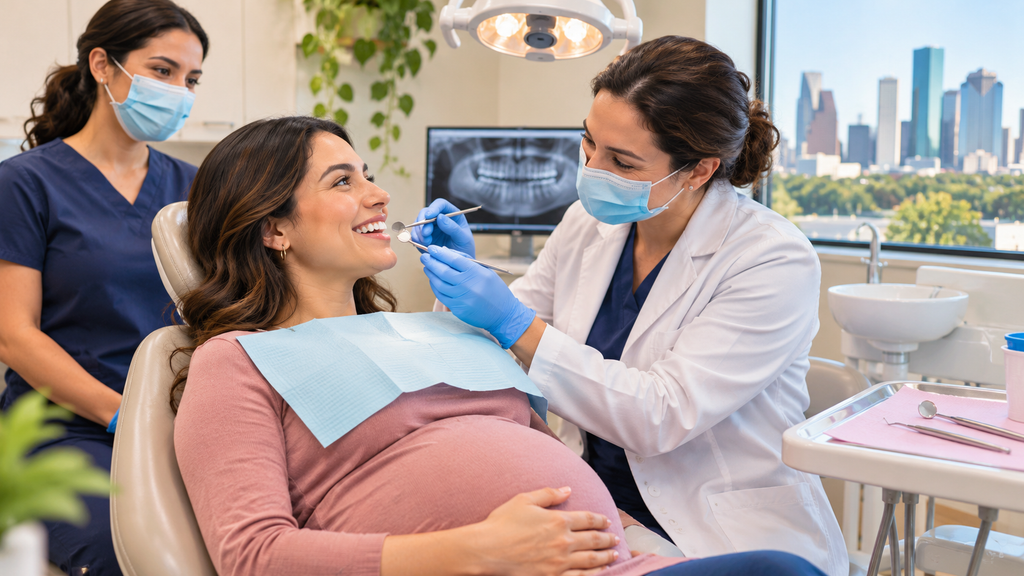
When booking a dental appointment while pregnant, share the details that can affect your exam or treatment.
You can request an appointment online and let the team know you’re pregnant.
Before the visit, prepare these details:
- How far along you are: Share your current week or trimester and due date.
- Prenatal care instructions: Mention any high-risk concerns or restrictions, and bring your prenatal provider’s contact information if coordination may be needed.
- Medicines and allergies: List prescriptions, over-the-counter medicines, vitamins, supplements, and medication allergies.
- Your symptoms: Explain what hurts, when it started, and whether you have swelling, fever, bleeding, or trouble eating.
- Recent dental care: Note recent treatments or X-rays and any care you have postponed.
This information helps the dental team understand your situation before discussing treatment options.
Does Insurance or Texas Medicaid Cover Dental Care During Pregnancy?

Coverage varies by plan, program, and eligibility. Being pregnant doesn’t automatically mean every dental service is covered, so check benefits before scheduling treatment.
1. Private Dental Insurance
Check whether your dental insurance plan covers exams, cleanings, X-rays, fillings, or other recommended care. Ask about deductibles, waiting periods, annual limits, and whether the dental office is in network.
Our insurance and financing can help you prepare questions for your insurer.
2. Texas Medicaid and State Programs
Texas Medicaid dental benefits may depend on the managed-care plan. Eligible pregnant women may also qualify for dental care through the Title V Maternal and Child Health program, but eligibility and covered services have requirements.
Confirm your benefits directly with your health plan or program before your visit.
3. Questions to Ask Before Your Visit
- Is this dental office in my plan’s network?
- Are the exam and recommended treatment covered?
- Do I need approval before treatment?
- What costs might I owe?
If insurance doesn’t cover all recommended care, ask the office about available payment plans.
Also Read: Is Dental Insurance Worth It? A Complete Guide to Making the Right Choice
Simple Ways to Protect Your Teeth at Home While Pregnant
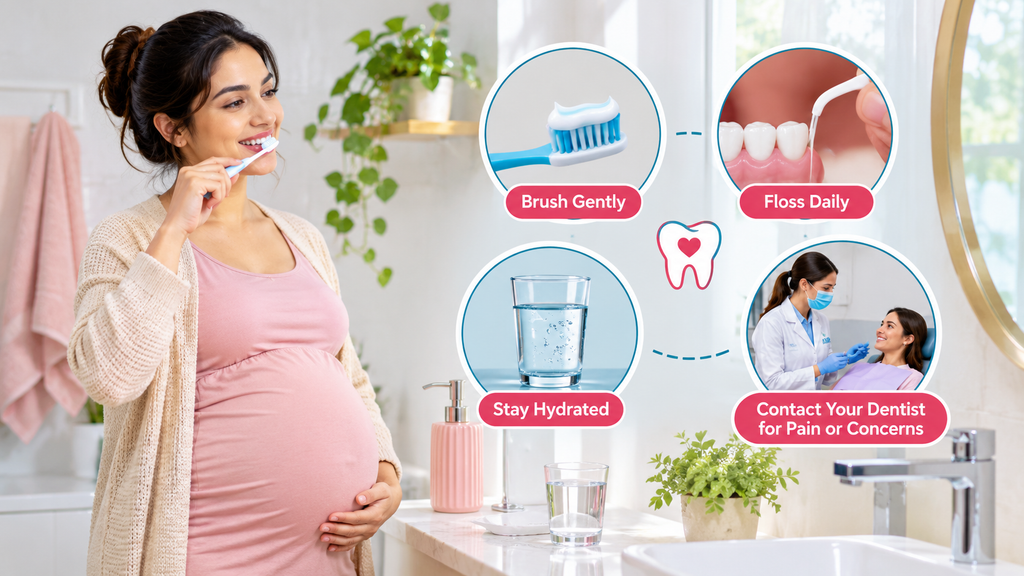
A steady home-care routine can help manage plaque and support your gums, which may be more sensitive during pregnancy.
For everyday tips between visits, see ways to keep your teeth clean between dental cleanings.
1. Keep brushing and flossing
Brush twice a day with fluoride toothpaste and clean between your teeth daily. If your gums feel tender or bleed, use a soft-bristled toothbrush and let your dentist know if it continues.
Plaque buildup can contribute to pregnancy gingivitis, which may cause swollen or bleeding gums.
2. After morning sickness
Rinse your mouth with water after vomiting. Wait before brushing, since stomach acid can temporarily soften enamel.
3. Make small habits easier
- Keep water nearby, especially if nausea or a dry mouth makes brushing harder.
- Choose snacks that are less likely to stick to your teeth.
- If brushing triggers nausea, try a smaller-headed toothbrush or brush at a different time of day.
These steps support dental care during pregnancy, but they don’t replace an exam if you have ongoing pain, swelling, or gum bleeding.
Yes, the location descriptions should connect to pregnancy-related dental needs, not just mention each office. Here’s the revised section:
Pregnant and Need a Dentist in Houston?
If you’re looking for a dentist for pregnant women in Houston, Charm Dental Care has offices in five Houston-area communities.
When booking, mention your pregnancy and the dental concern you’d like to discuss.
1. Spring, TX
Charm Dental Spring, TX
If you’re due for a cleaning or checkup, tell the Spring team how far along you are and ask about scheduling. The office lists Saturday hours from 9 a.m. to 3 p.m.
2. Richmond, TX
Charm Dental Richmond, TX
If your gums are tender or bleeding during pregnancy, describe the symptoms when you contact the Richmond office. Its listed Saturday hours are 9 a.m. to 3 p.m.
3. Humble, TX
Charm Dental Humble, TX
If tooth pain is making it hard to eat or sleep, tell the Humble team you’re pregnant when asking about an appointment. Confirm Saturday availability with the office because its online listings conflict about those hours.
4. Katy, TX
Charm Dental Katy, TX
If a dentist has recommended a filling, crown, or root canal, contact the Katy team to discuss scheduling and your pregnancy-related questions. Its current listing shows Saturday hours from 9 a.m. to 5 p.m.
5. Tomball, TX
Charm Dental Tomball, TX
If nausea or vomiting has affected your teeth, mention it when contacting the Tomball office so the team understands your concern. The office lists Saturday hours from 9 a.m. to 3 p.m.
Why Choose Charm Dental Care During Pregnancy?

Choosing a dental office while pregnant can feel easier when the team listens to your concerns and explains your options. Charm Dental’s patient-centered approach focuses on respectful care and clear communication.
- Your questions are part of the visit: Share concerns about X-rays, numbing, or treatment timing, and ask the dentist to explain the recommendations.
- Care for different needs: Charm Dental Care provides preventive and restorative care, so you can discuss routine checkups as well as concerns such as tooth pain.
- A family-focused practice: Our team provides care for children and adults, making it easier for families to talk about their dental needs in one practice.
You Might Also Like
- Use Your Dental Benefits Before December 31: A Houston Guide to Insurance, FSA & HSA
- What to Expect During Your First Dental Visit in Tomball, TX
- Kids Dental Care — Everything Parents Need to Know About Their Child’s Oral Health

Your Next Step for Dental Care During Pregnancy
So, can you go to the dentist while pregnant? Yes, routine dental checkups, cleanings, and necessary treatments are generally safe throughout pregnancy. The key is to inform your dentist about your pregnancy, discuss any health concerns, and avoid delaying treatment for persistent tooth pain, swelling, or infection.
Whether you need a routine cleaning or help with a dental problem, timely care can protect your oral health during pregnancy. At Charm Dental Care, our team is here to answer your questions and help you understand your treatment options.
Schedule a dental appointment in Houston, TX, to get the care you need during pregnancy.
FAQs (Frequently Asked Questions)
Q1. Can I Get My Teeth Cleaned While Pregnant?
Yes, routine teeth cleanings can generally continue during pregnancy. Tell the dental team you’re pregnant; this overview of the dental cleaning process explains what a visit may include.
Q2. Can I Whiten My Teeth While Pregnant?
Teeth whitening is elective, so ask your dentist whether to wait until after pregnancy. These tips for whitening teeth without damaging them cover general whitening considerations.
Q3. Is Laughing Gas Safe During Pregnancy?
The ADA advises pregnant patients to avoid nitrous oxide, commonly called laughing gas. Ask your dentist about other comfort options; this article explains what to know about dental sedation.
Q4. Can Pregnancy Cause Tooth Pain?
Pregnancy-related changes can affect your gums, but tooth pain may also come from decay, a crack, or infection. If pain persists, read how to tell if tooth pain is serious and contact a dentist.
Q5. Can a Tooth Infection Affect My Baby?
A tooth infection needs prompt dental attention because it can worsen if untreated. Having an infection does not automatically mean your baby has been harmed; contact your dentist and prenatal provider for advice.
Q6. Can I Get Dental Fillings During Pregnancy?
Yes, a dentist can treat tooth decay with a filling when needed during pregnancy. ACOG says necessary dental treatment can be provided during pregnancy.
Q7. Is Local Anesthesia Safe During Pregnancy?
Local anesthesia may be used when needed for dental treatment. Tell your dentist about your pregnancy and medicines so the team can choose an appropriate approach.
Q8. Can I Visit the Dentist During My First Trimester?
Yes, you can visit the dentist during your first trimester. Pregnancy alone is not a reason to delay needed dental care.
Q9. Is It Safe to Visit the Dentist While Breastfeeding?
Yes, routine dental care and needed X-rays can generally continue while breastfeeding. Ask your dentist or clinician about any specific medicine or treatment.