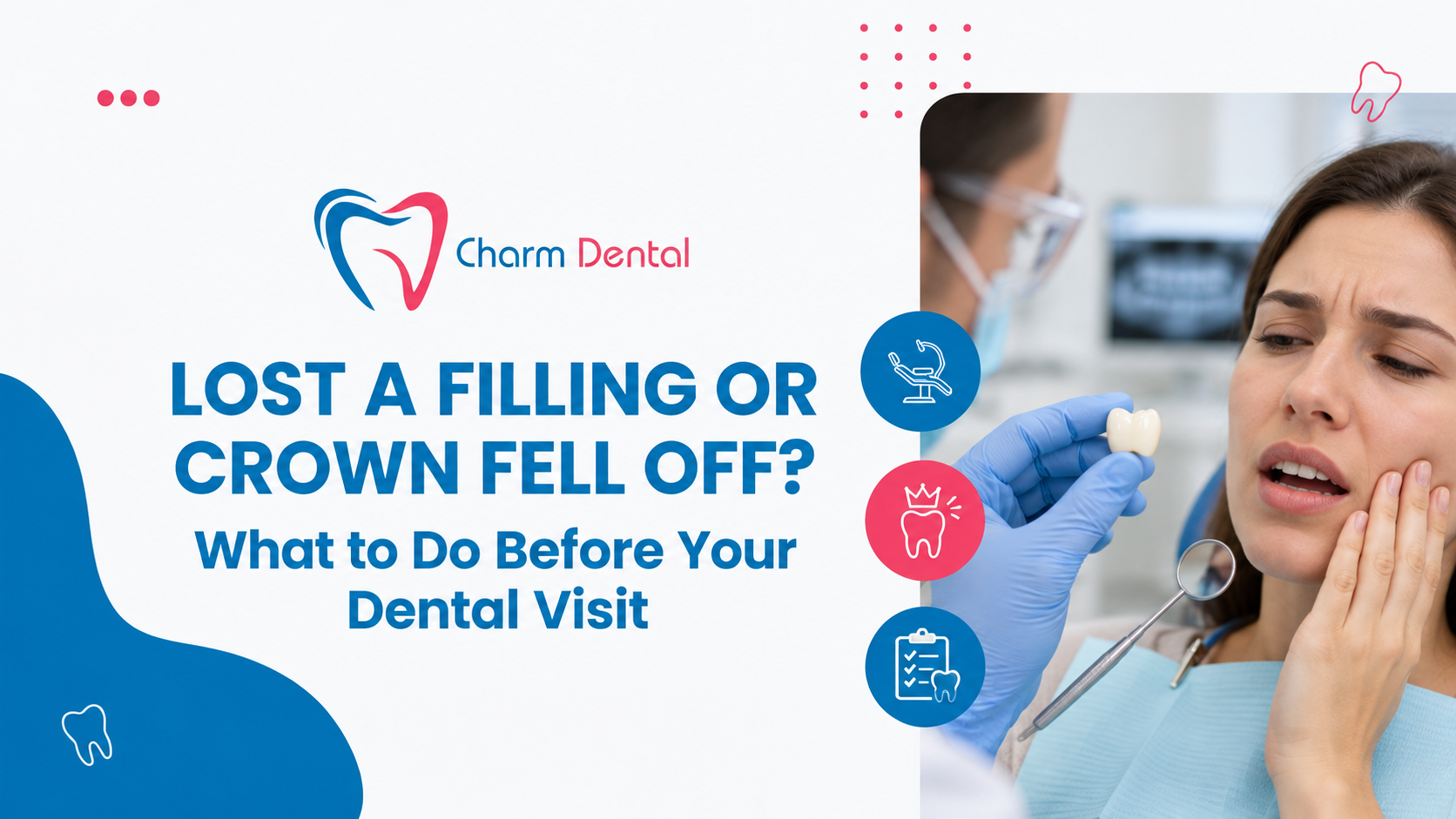
When a filling or crown comes loose, it can leave the tooth sensitive or uncomfortable to bite on. If a filling fell out or a crown fell off, pick up the piece, rinse it with warm water, and avoid chewing on that side.
Call your dentist for advice, even if there’s no pain. A missing restoration can expose the tooth to damage, and temporary filling material or dental cement is only a short-term measure.
In this blog, we’ll explain what to do before your visit, when to seek prompt care, and how a dentist may repair, recement, or replace the restoration.
Key Takeaways
- If a filling falls out or a crown falls off, save the restoration, rinse your mouth with warm water, and contact your dentist promptly.
- A lost filling or crown requires a dental examination, even if there is no pain or sensitivity.
- Avoid chewing on the affected side, and use temporary dental filling material or dental cement only as directed.
- Never use superglue or household adhesives to reattach a dental crown.
- Severe tooth pain, facial swelling, or fever requires urgent dental attention. Difficulty breathing or swallowing requires immediate emergency medical care.
- Depending on the tooth’s condition, your dentist may replace the filling, re-cement the existing crown, or recommend a new crown.
Table of Contents
What to Do Right Away If a Filling or Crown Falls Out
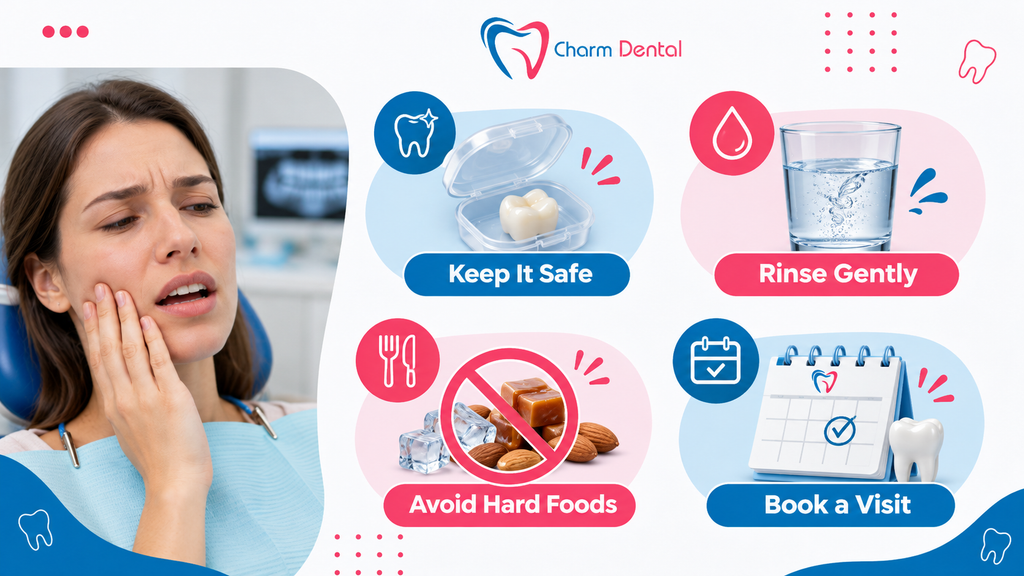
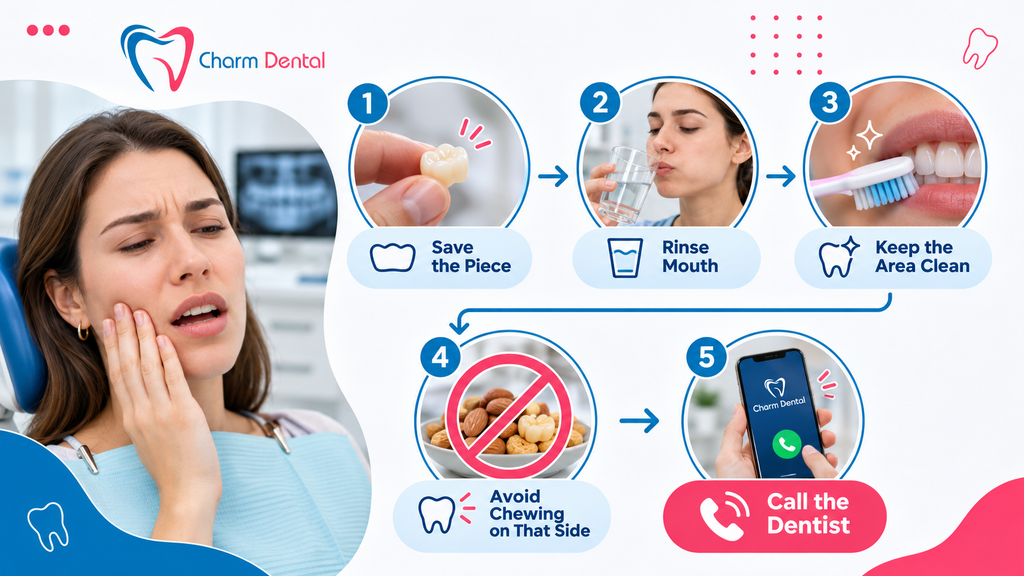
A loose filling or dental crown can leave the tooth exposed or sensitive. Take these steps while you arrange a dental visit:
- Save the piece
Put the filling or crown in a clean container and bring it with you. - Rinse gently
Use warm water to clear away food or debris. - Avoid chewing on that side
Choose soft foods until a dentist checks the tooth. - Protect the area
Cover a sharp edge with dental wax. Use temporary dental material only as directed. - Call your dentist
Describe what came loose and mention any tooth pain, swelling, or sensitivity.
Don’t use superglue or household adhesive, and don’t force a crown back into place. For other urgent dental problems, see our dental emergency advice.
If Your Filling Fell Out
A filling fell out may leave a hole, a rough edge, or sensitivity to hot, cold, or sweet foods.
Sometimes the tooth doesn’t hurt at all. Until a dentist checks it, keep the area clean and avoid putting pressure on that tooth.
Until your visit:
- Rinse gently with warm water after eating.
- Choose soft foods and chew on the other side.
- Avoid hard or sticky foods that could irritate the tooth.
- If needed, use pharmacy temporary filling material only as directed. It is not a permanent repair.
- Don’t use superglue, sharp tools, or household materials on the tooth.
| What you notice | What to do |
|---|---|
| Sensitivity to hot or cold | Avoid temperature triggers and call your dentist. |
| A sharp or rough edge | Cover it with dental wax if available. |
| No pain | Still arrange an exam; the tooth can need care without hurting. |
| A temporary filling fell out | Contact the dentist who placed it for instructions. |
A dentist can examine the tooth and decide whether it needs a replacement filling or other treatment. Charm Dental provides general dentistry, including fillings.

My Filling Fell Out, but It Doesn’t Hurt. Do I Still Need a Dentist?
Yes, even if your filling fell out and you have no pain, you still need a dental examination.
The tooth may be exposed even without sensitivity, and waiting until pain starts can delay care.
Call your dentist to arrange an exam and explain when you noticed the filling was missing.
Until then, keep the area clean, avoid chewing on that side, and don’t probe the opening with sharp objects. If you use temporary filling material, follow the package directions and treat it as short-term protection.
Proper oral hygiene and regular dental checkups can help extend the life of your fillings.
If Your Crown Fell Off
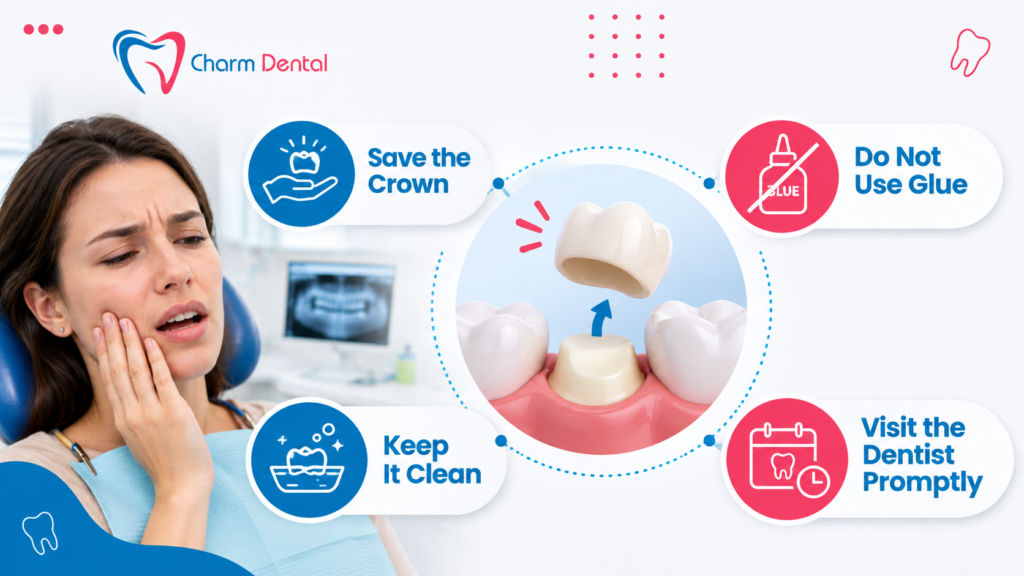
If a crown fell off, pick it up and keep it in a clean container. Rinse it and your mouth gently with warm water, then call your dentist for instructions.
The dentist can check whether the crown and tooth are suitable for re-cementing or need another repair.
Until your appointment:
- Avoid chewing on the exposed tooth.
- Choose soft foods and keep the area clean.
- If the tooth feels sharp, cover the edge with dental wax.
- Use temporary dental cement only if your dentist advises it and the crown fits securely without force. Never attempt to reattach a crown containing a broken piece of tooth.
- Never use superglue or force the crown back into place.
Crown Fell Off a Root Canal Tooth
If a crown fell off a root canal tooth, contact your dentist and tell them the tooth has had root canal treatment.
The crown may be protecting the remaining tooth structure, so arrange an exam rather than waiting for pain to develop.
Until the dentist advises you:
- Keep the crown in a clean container and bring it to the visit.
- Avoid chewing on that tooth, especially hard or sticky foods.
- Keep the area clean with gentle brushing.
- Don’t use household glue or force the crown back on.
Our dentist will check the tooth and crown before deciding whether the crown can be re-cemented or needs replacement.
Crown Came Off With Part of the Tooth Inside
If your crown came off with part of the tooth inside, call your dentist promptly and describe what you see.
Keep the crown and any loose pieces in a clean container, avoid chewing on that side, and don’t try to separate or reattach anything yourself.
The dentist will examine the remaining tooth and decide what restoration it needs. If a new crown is recommended, ask whether a same-day crown may suit your case.
Depending on the extent of the damage, dental crowns and bridges can help restore damaged teeth or replace missing teeth.
Old Crown Feels Loose or Smells Bad
If an old crown feels loose or you notice a bad taste or smell near it, contact your dentist for an exam.
Food or bacteria may be trapped around the crown, but only an examination can identify the cause. Don’t keep wiggling the crown or try to secure it with household glue.
Until your visit:
- Chew on the other side and avoid sticky or hard foods.
- Brush gently around the crown and rinse after eating.
- If the crown comes off, save it in a clean container and call the dentist.
- Mention pain, swelling, or sensitivity when you call.
A loose crown can come off unexpectedly, so arrange a dental visit rather than waiting for it to fall out.
Is a Lost Filling or Crown a Dental Emergency?
A lost filling or crown requires prompt dental attention, even if you have no pain. The exposed tooth may be more vulnerable to sensitivity, decay, and further damage.
The urgency of treatment depends on your symptoms and the tooth’s condition.
The American Dental Association (ADA) recommends contacting your dentist promptly during a dental emergency and providing details about your symptoms.
| What’s happening | What to do |
|---|---|
| The filling or crown came out, but there’s no pain | Call your dentist and arrange an exam. Avoid chewing on that side until the tooth is checked. |
| The tooth is sharp, cracked, or very sensitive | Call promptly and explain the symptoms so the office can advise you. |
| You have severe pain, swelling, or fever | Contact a dentist urgently and describe all symptoms. |
| You have trouble breathing or swallowing, or swelling is spreading quickly | Seek emergency medical care now. |
If your crown has fallen off or your filling is missing, Charm Dental Care provides emergency dental care in Houston to help address tooth pain, sensitivity, and damage.
Contact your nearest office to check same-day appointment availability.
Why Fillings and Crowns Come Loose
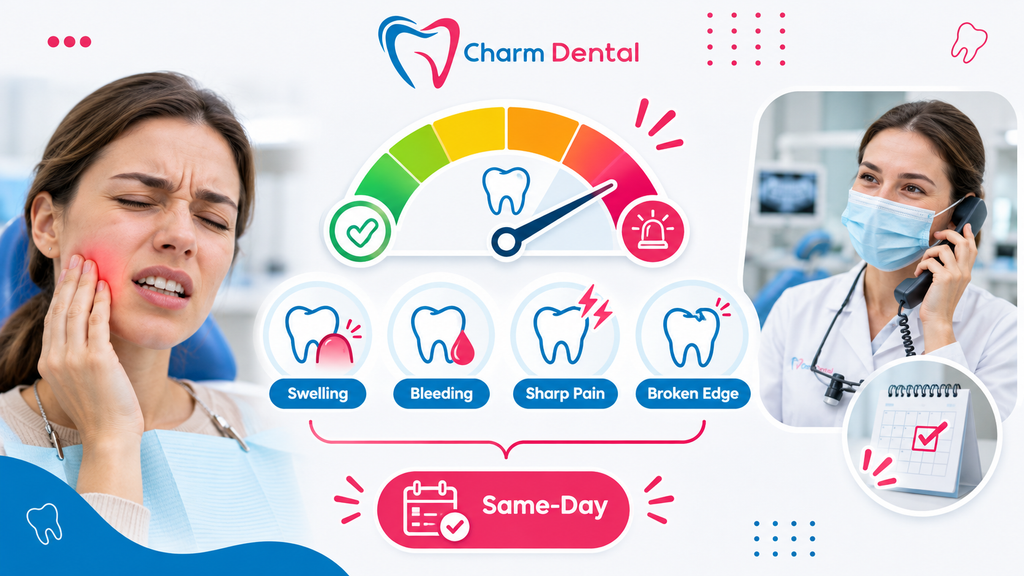
A filling may fall out, or a crown may come loose for several reasons. A dentist can examine the tooth and restoration to identify the cause.
1. Decay Around the Restoration
New decay can weaken the tooth or the area supporting a filling or crown.
2. Grinding or Clenching
Repeated pressure can wear or damage dental work. These signs can help you tell if you grind your teeth at night.
3. Hard or Sticky Foods
Biting hard items or pulling at sticky foods can put extra force on a restoration.
4. Wear Over Time
Fillings and crowns can wear with everyday use. These tips for caring for fillings may help you protect your dental work.
5. Cracks or Fit Problems
A crack in the tooth or a change in how the restoration fits can make it less secure. Have the tooth checked before trying to repair it yourself.
How a Dentist Fixes a Lost Filling or Crown
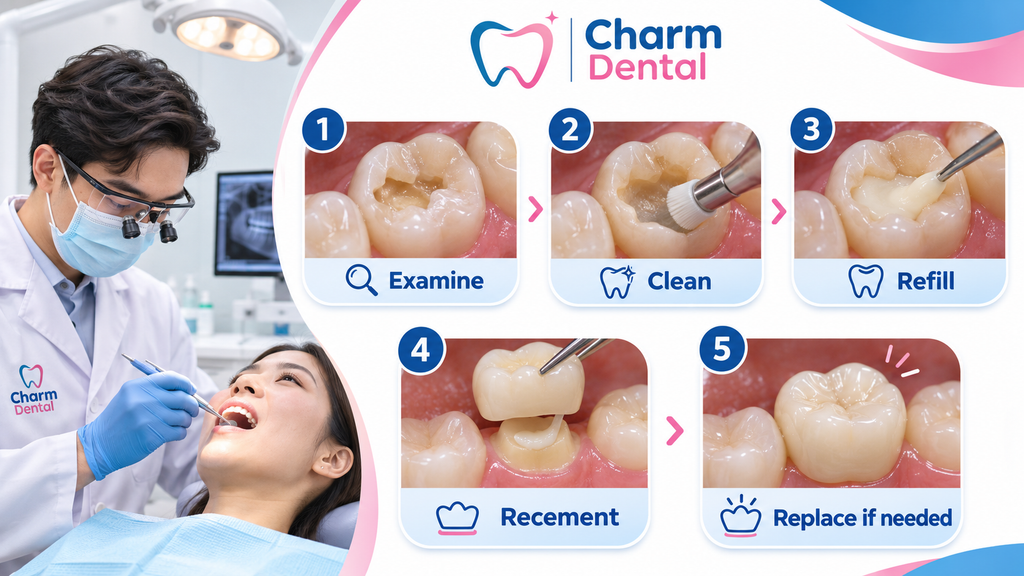
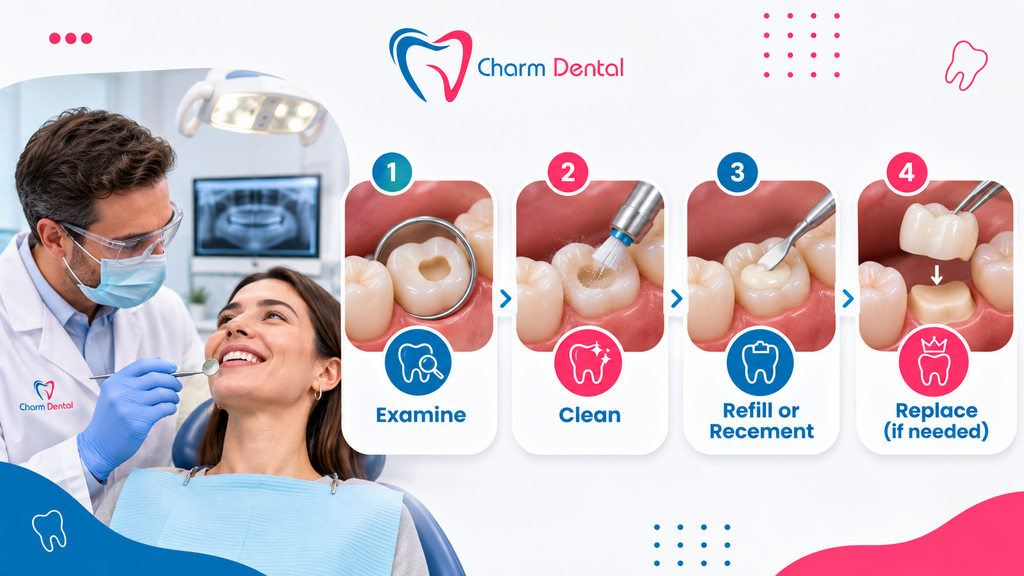
After a crown fell off or a filling came loose, the dentist examines the tooth and restoration before choosing a repair.
They may clean the area and take X-rays if needed to check for decay, cracks, or damage beneath the restoration.
Treatment may include:
- Re-cementing the crown: If the crown and tooth are in good condition and it fits properly, the dentist may be able to secure it again.
- Replacing a filling: If the tooth can be restored with a filling, the dentist removes damaged material and fills the area.
- Making a new crown: If the tooth needs more coverage or the original crown is damaged, the dentist may recommend a replacement.
- Treating more serious damage: If tooth decay or injury has reached the tooth’s inner tissue, additional treatment may be needed before the tooth is restored.
A same-day crown may be an option for some patients, depending on the exam and the office’s capabilities.
Restorative dental treatments can help repair damaged teeth and restore their function.
What Affects the Cost of Replacing a Filling or Crown?
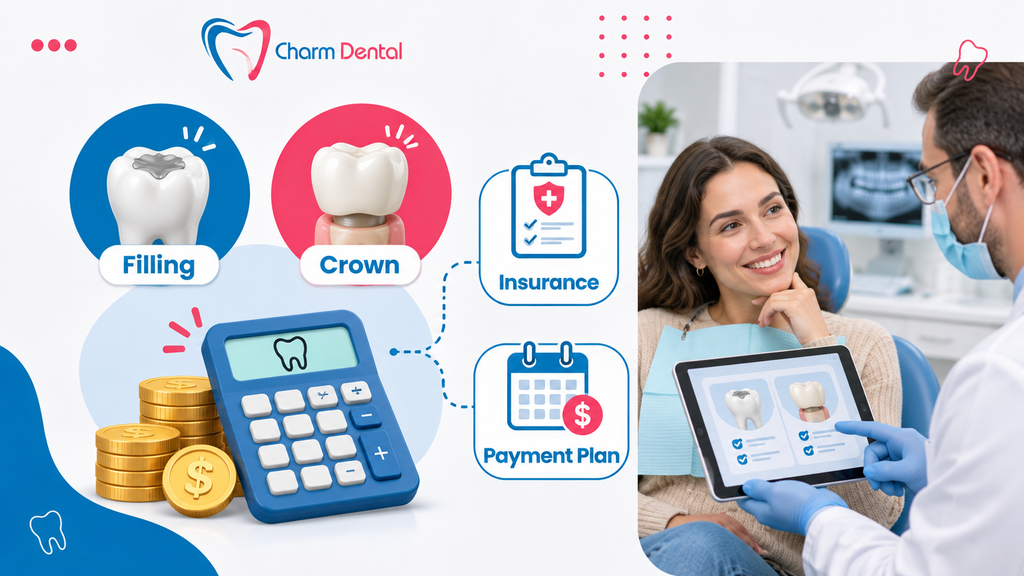
The cost to repair a filling that fell out or a crown that fell off depends on the tooth’s condition and the treatment needed.
An exam helps the dentist decide whether the restoration can be repaired or needs replacement.
1. Type of Restoration
Re-cementing an existing crown may cost less than replacing it, while dental crown costs with insurance depend on your coverage, crown material, and treatment needs.
2. Damage to the Tooth
Decay, cracks, or a broken piece of tooth can change the recommended treatment. If the tooth is also chipped, review factors that affect chipped tooth repair costs.
3. Additional Treatment
The dentist may need to treat damage beneath the restoration before repairing or replacing it.
4. Insurance and Payment
Ask your insurer how your plan may apply, and contact the office about available payment plans. Request a written treatment plan and estimate before care begins.

How to Stop It From Happening Again
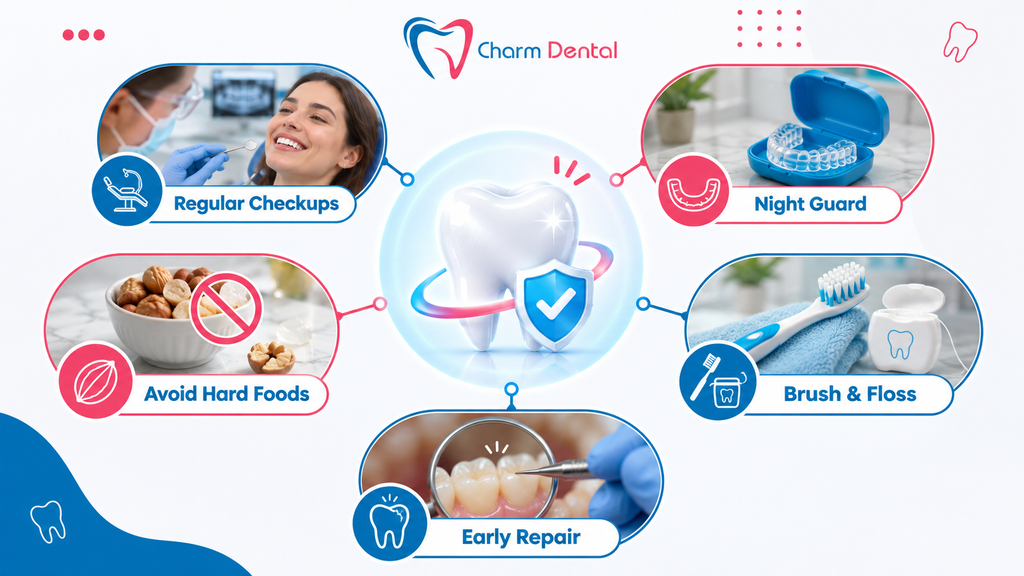
Once your dentist repairs the tooth, a few habits may help protect the restoration.
Fillings and crowns can wear over time, so keep up with routine care and tell your dentist if something feels different.
- Keep regular checkups: Exams can help your dentist spot wear or damage. Schedule teeth cleanings and preventive visits as recommended for you.
- Address grinding or clenching: Mention jaw soreness or worn teeth to your dentist. If you’re unsure whether you need a night guard or retainer, see the comparison of night guards and retainers.
- Avoid using your teeth as tools: Don’t bite ice, hard objects, or packaging.
- Be mindful of sticky foods: They can pull on restorations, especially if one already feels loose.
- Keep up daily cleaning: Brush and clean between your teeth to help manage plaque around fillings and crowns.
If a filling fell out or a crown becomes loose again, contact your dentist instead of trying to secure it at home.
Where to Get Care for a Lost Filling or Crown in Houston
Each office can advise you about next steps for a loose filling or crown. Call the location you plan to visit to ask about appointment availability; same-day and Saturday hours vary.
1. Charm Dental Spring, TX
Charm Dental Spring, TX
Spring patients can contact this office if a filling or crown comes loose. When you call, explain whether you have pain or sensitivity so the team can advise you.
2. Charm Dental Richmond, TX
Charm Dental Richmond, TX
If you’re near Richmond, call the office before visiting if you’ve lost a crown or filling. Bring the restoration with you if you found it.
3. Charm Dental Humble, TX
Charm Dental Humble, TX
Humble patients can contact the team to ask about an exam for an exposed or damaged tooth. Mention any swelling or sharp edges when you call.
4. Charm Dental Katy, TX
Charm Dental Katy, TX
Katy patients should call even if the tooth doesn’t hurt, since a dentist still needs to check the area. Ask the office about the next available appointment.
5. Charm Dental Tomball, TX
Charm Dental Tomball, TX
Tomball patients can contact the office if a crown feels loose or a filling is missing. Describe what happened and ask whether urgent care is available.
Why Choose Charm Dental Care for a Lost Filling or Crown?
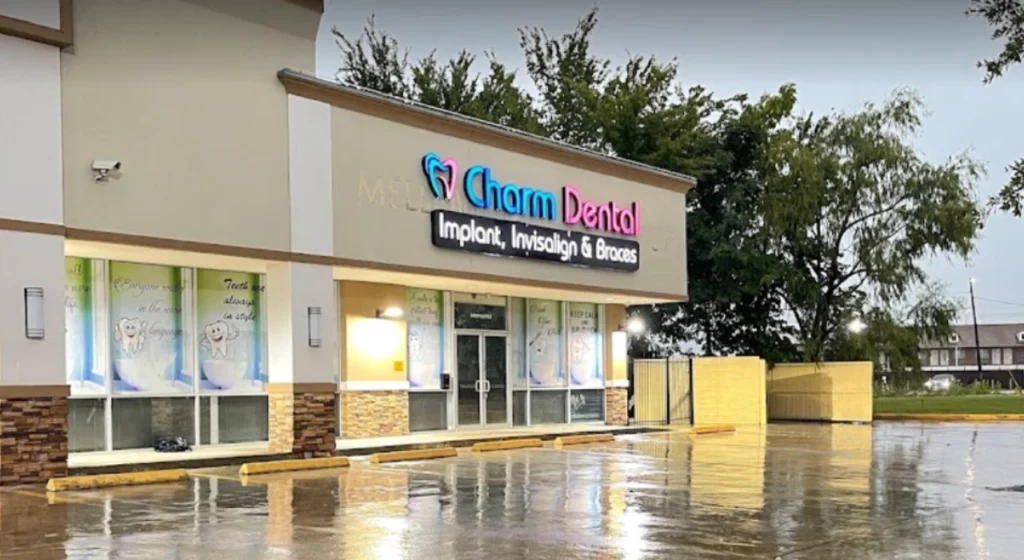
A loose filling or crown can be worrying.
At Charm Dental Care, the team can check the tooth, explain what needs attention, and talk through your options.
- Care for the whole family: Charm Dental offers dental care for children and adults.
- Help with urgent concerns: Call to ask about appointment availability if a crown or filling comes loose. Same-day visits depend on availability.
- Insurance and payment options: Charm Dental accepts most PPO plans. Medicaid and CHIP are available at select locations, so call to check your plan. Visit dental insurance for details, or see current dental offers.
- Patient experiences: Read patient reviews to hear about other people’s visits.
You Might Also Like
- Veneers Vs Crowns: Which One is Best For Your Smile
- Everything You Need to Know About Crowns and Bridges
- The Role of Dental Crowns and Bridges in Restorative Dentistry

Your Next Step for a Lost Filling or Crown
Finding a loose filling or crown can disrupt your day, but you don’t have to guess what to do. Save the restoration, keep the area clean, and avoid chewing on that tooth.
Temporary dental material may protect it briefly, but an exam is needed to determine whether it needs a new filling, crown, or other care.
If a filling fell out or a crown fell off, contact Charm Dental and describe your symptoms. Mention pain or swelling when you call.
Call your preferred location or request an appointment to ask about availability and get advice on what to do next.
FAQs (Frequently Asked Questions)
Q1. Can I Eat With a Lost Filling?
Yes, but choose soft foods and chew on the other side until a dentist checks the tooth. If a filling fell out, avoid hard or sticky foods and anything that makes the tooth sensitive.
Q2. Can I Glue My Crown Back On?
No, never use superglue or household adhesive on a crown that fell off. Keep the crown in a clean container and call your dentist for instructions.
Q3. Can You Swallow a Crown?
If you think you swallowed a crown, contact a healthcare professional for advice and let your dentist know. If you’re choking, coughing persistently, or having trouble breathing, get emergency help.
Q4. How Long Can I Wait to Replace a Filling?
There’s no single safe waiting period, so call your dentist and ask when you should be seen. If you develop tooth pain, contact a dentist promptly.
Q5. What If a Temporary Filling Falls Out After a Root Canal?
Call the dentist who performed the root canal and explain that the temporary filling fell out. Avoid chewing on that tooth and don’t pack the opening with household materials.
Q6. Do I Need a Dentist if My Lost Filling Doesn’t Hurt?
A lost filling requires a dental examination even without pain, as the exposed tooth may be vulnerable to further damage.
Q7. Can a Dentist Put My Old Crown Back On?
Sometimes. The dentist must check whether the crown is intact and still fits the tooth before deciding whether it can be re-cemented or needs replacement.
Q8. What Should I Do if My Crown Came Off With Part of the Tooth?
Keep the crown and any loose pieces in a clean container, avoid chewing on that side, and call your dentist promptly. Don’t try to separate or reattach the pieces yourself. Still unsure what to do? Contact Charm Dental and describe what happened.