Tongue tie surgery, also called ankyloglossia treatment, is a procedure performed when the tissue under the tongue is too tight, short, or restrictive, limiting tongue movement. In some children, it may affect breastfeeding, bottle-feeding, speech, eating, swallowing, or oral function.
Babies may struggle to latch, while older children may have difficulty with sounds, clearing food, or tongue movement. Not every child needs surgery. Mild cases may improve with monitoring, feeding support, or speech therapy.
When restriction affects comfort, feeding, speech, or oral development, tongue-tie surgery or a tongue-tie release procedure may be recommended after evaluation.
In this blog, we will explain the signs, how it is evaluated, treatment options, and recovery.
Key Takeaways
- Tongue-tie happens when the tissue under the tongue is too tight or short.
- Some children with tongue-tie may have feeding, speech, eating, or tongue movement problems.
- Not every tongue-tie needs surgery. Mild cases may only need monitoring or therapy.
- A dentist can check how well the tongue moves before recommending treatment.
- Tongue-tie treatment may include monitoring, feeding therapy, speech therapy, or a tongue-tie release procedure.
- A frenectomy can help release the tight tissue and improve tongue movement when treatment is needed.
- Parents should seek professional help if tongue-tie affects feeding, speech, swallowing, or daily oral function.
Table of Contents
What Is Tongue Tie?

Tongue tie in children means the tissue under the tongue is too tight or short, so the tongue cannot move as freely as it should. This tissue is called the lingual frenulum.
Some children have a tongue tie but no major problems. Others may have trouble with feeding, speech, eating, swallowing, or proper tongue movement.
Charm Dental Care Spring
Parents who notice these concerns can visit the Spring, TX, dental office for a gentle dental evaluation and guidance.
A Simple Way to Understand It
Think of the tongue as a small muscle that helps your child:
- Feed comfortably.
- Swallow properly.
- Speak clearly.
- Move food around the mouth.
- Clean food from the teeth and gums.
When the tongue is restricted, some of these everyday actions may become harder.
What Causes Tongue Tie?
Tongue tie is present from birth. It happens when the tissue under the tongue does not loosen enough during early development.
Parents do not cause tongue tie. It is simply something some babies are born with.
Does Every Tongue Tie Look the Same?
No. Tongue-tie can be mild, moderate, or more severe.
| Type | What Parents May Notice |
| Mild tongue tie | Child may have good tongue movement and few symptoms. |
| Moderate tongue tie | Feeding, speech, or tongue movement may feel limited. |
| More restrictive tongue tie | The tongue may have trouble lifting, moving forward, or moving side to side. |
The need for treatment depends on how the tongue works, not only how it looks. That is why a professional evaluation is important before deciding on the next step.
Common Tongue Tie Symptoms in Children

Tongue tie symptoms can look different depending on a child’s age. Some babies show signs during feeding, while older children may struggle with speech, eating, or tongue movement.
A proper evaluation is important because symptoms can also be caused by other feeding or oral development concerns.
Feeding Difficulties in Infants
Parents may notice that their baby:
- Has trouble staying latched.
- Feeds for a long time but still seems hungry.
- Makes clicking sounds while feeding.
- Gets tired or frustrated during feeds.
- Has milk leaking from the mouth.
Difficulty Breastfeeding or Bottle Feeding
Tongue restriction may make it harder for a baby to create a strong seal while feeding. This can lead to poor milk transfer, frequent feeding breaks, or discomfort for the breastfeeding parent.
Speech and Pronunciation Challenges
Some children with tongue-tie may have trouble making certain sounds clearly, especially those that require the tongue to lift or move forward. Speech concerns should be checked carefully before deciding on treatment.
Limited Tongue Movement
A child may find it hard to:
- Lift the tongue toward the roof of the mouth.
- Move the tongue side to side.
- Stick the tongue out past the lower front teeth.
- Lick the lips.
- Clear food from the teeth or cheeks.
Problems with Eating Certain Foods
Older children may struggle with foods that need more tongue movement. They may find it difficult to chew, swallow, lick ice cream, move food around the mouth, or manage certain textures.
These signs do not always mean a child needs tongue tie surgery. They simply mean it may be time to understand whether tongue restriction is affecting feeding, speech, or everyday oral function.
Charm Dental Care Katy
If your child has ongoing issues with feeding, speech, or tongue movement, you can schedule a pediatric dental evaluation in Katy, TX, for gentle guidance.
Also Read: When Should a Child See a Dentist for the First Time?

How Tongue Tie Can Affect a Child’s Development

Tongue-tie in children may affect more than just tongue movement. When the tongue cannot move freely, some children may have trouble with feeding, speech, oral cleaning, or simple daily mouth movements.
1. Impact on Feeding and Nutrition
Feeding may become difficult when a child cannot move the tongue well. Infants may struggle with latch, milk transfer, or feeding comfort. Older children may have trouble moving food around the mouth or swallowing certain textures.
When feeding feels difficult, children may become tired, fussy, or frustrated during meals.
2. Impact on Speech Development
The tongue plays an important role in forming certain sounds. Some children with restricted tongue movement may struggle with pronunciation, especially sounds that need tongue lifting or forward movement.
Speech concerns should be checked carefully. A dentist, pediatrician, or speech professional may help parents determine whether tongue-tie is part of the problem.
3. Impact on Oral Hygiene
The tongue helps clear food from the teeth, cheeks, and gums. If tongue movement is limited, food may stay in the mouth longer, especially around the back teeth or lower front teeth.
This may make brushing and oral hygiene more important for children with tongue restriction.
4. Impact on Daily Activities
Tongue-tie may also affect small, everyday actions, such as licking the lips, eating ice cream, swallowing comfortably, or moving the tongue side to side.
These concerns may seem minor at first, but they can affect comfort and confidence over time. A professional evaluation can help parents determine whether treatment is needed or whether the child only needs monitoring and support.
How Is Tongue Tie Diagnosed?
A tongue tie diagnosis should be based on how the tongue works, not only how it looks. Some children have a visible tongue-tie but no major symptoms, while others may have feeding, speech, or movement concerns that require closer evaluation.
During a pediatric dental evaluation, the dentist may check:
- How far can the tongue lift?
- How far can the tongue move forward?
- Side-to-side tongue movement.
- Feeding or speech concerns.
- Gum, teeth, and oral development.
- Parent observations at home.
The dentist may also ask about breastfeeding, bottle feeding, eating habits, speech concerns, or daily activities that feel difficult for your child.
If you are unsure whether your child needs tongue tie treatment, you can request a pediatric dental evaluation at Charm Dental Care to understand the next best step.
Charm Dental Care Richmond
Parents seeking support for their child’s oral development can schedule a family dental evaluation in Richmond, TX, for gentle guidance.
Also Read- Pediatric Dentist in Katy: Same-Week Appointments for Kids With Tooth Pain
When Is Tongue Tie Treatment Necessary?

Tongue tie treatment may be needed when limited tongue movement affects a child’s feeding, speech, eating, oral hygiene, or daily comfort.
A mild tongue-tie that does not cause symptoms may only require monitoring.
Parents should consider professional guidance if they notice:
- Feeding concerns: The baby struggles to latch, feeds for a long time, or becomes tired during feeding.
- Speech concerns: The child has trouble producing certain sounds clearly, especially those that require tongue lifting.
- Eating difficulties: The child struggles with chewing, swallowing, licking, or moving food around the mouth.
- Limited tongue movement: The tongue cannot lift, stretch forward, or move side to side comfortably.
- Oral hygiene concerns: Food often gets trapped in the mouth because the tongue does not clear it effectively.
Treatment decisions should be based on symptoms, function, age, and the child’s overall oral development. If parents are unsure about the next step, they can speak with Charm Dental Care for guidance and appointment support.
Also Read: Is a Pediatric Dentist Necessary for Your Kid?
Tongue Tie Treatment Options
Tongue tie treatment depends on your child’s symptoms, age, tongue movement, and daily challenges. Some children need only observation, while others may benefit from therapy or a tongue tie release procedure.
Parents can also review flexible payment choices before planning treatment, especially if care may involve evaluation, follow-up visits, or a procedure.
1. Monitoring Mild Cases
Mild tongue-tie may not require immediate treatment if the child is feeding well, speaking clearly, and moving the tongue without discomfort.
In these cases, the dentist may suggest watching your child’s development and returning for follow-up if symptoms appear later.
2. Speech or Feeding Therapy
Some children may benefit from support before or after treatment.
Feeding therapy may help infants who struggle with latching, milk transfer, or bottle-feeding. Speech therapy may help older children who have trouble with certain sounds or tongue movement.
3. Tongue Tie Release Procedures
A tongue tie release may be recommended when the tight tissue under the tongue is clearly affecting function. The goal is to help the tongue move more freely so that feeding, speech, eating, and other oral movements can improve.
What Is a Frenectomy for Tongue Tie?
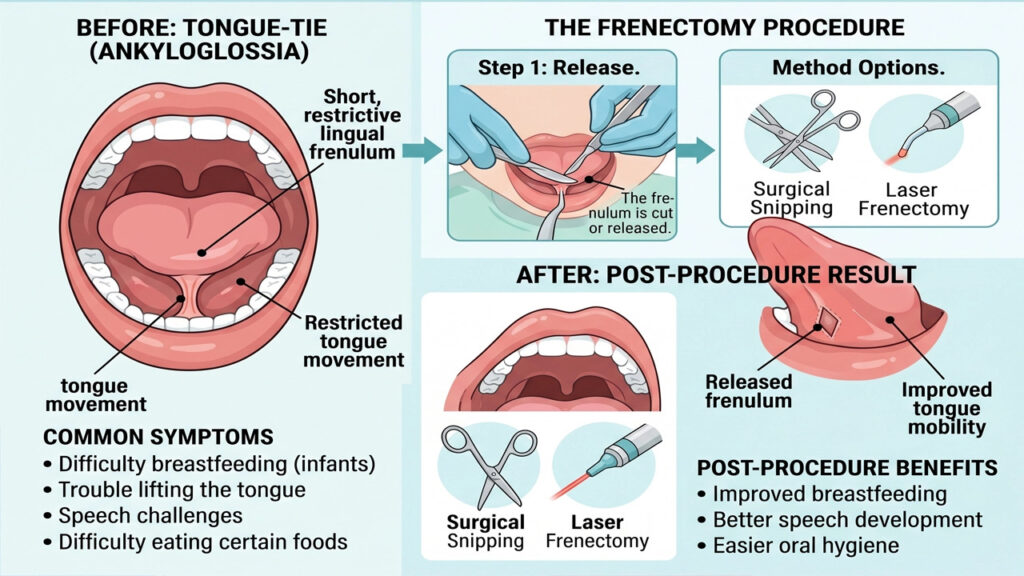
A frenectomy for tongue tie is a procedure that releases the tight band of tissue under the tongue. This tissue is called the lingual frenulum.
When it limits tongue movement and causes concerns with feeding, speech, eating, or other oral functions, a dentist may recommend a tongue-tie release after evaluation.
Understanding the Procedure
During a frenectomy, the restrictive tissue is carefully released so the tongue can move more freely. The exact method may depend on the child’s age, the severity of restriction, comfort needs, and the provider’s recommendation.
The goal is not only to change how the tissue looks. The goal is to improve tongue function when limited movement is causing real problems.
Who May Benefit from a Frenectomy?

A child may benefit from a frenectomy if tongue restriction is linked to:
- Ongoing breastfeeding or bottle-feeding difficulty.
- Trouble lifting or moving the tongue.
- Speech concerns connected to limited tongue movement.
- Difficulty eating, chewing, licking, or swallowing.
- Oral hygiene challenges caused by poor tongue mobility.
A professional evaluation is important before deciding on treatment because not every child with tongue tie needs a procedure.
Benefits of Tongue Tie Release
A tongue tie release may help improve tongue movement and make certain daily functions easier. In some children, it may support feeding, speech therapy progress, eating comfort, and oral function.
Parents who are planning treatment can also review Charm Dental Care’s current dental offers, while final procedure costs and care recommendations should always be confirmed during the child’s consultation.

What to Expect During a Tongue Tie Procedure?

A tongue tie procedure is usually planned after the dentist checks your child’s tongue movement, symptoms, and overall oral health. The goal is to make the process clear for parents and as comfortable as possible for the child.
Parents who want to feel more familiar with the clinic before visiting can watch Charm Dental Care’s patient-focused dental videos.
1. Initial Evaluation
The dentist first examines the tongue, mouth, teeth, gums, and oral development. They may also ask about feeding, speech, eating habits, tongue movement, and any concerns parents have noticed at home.
2. Preparing for Treatment
Before the procedure, the dental team explains what will happen, what comfort options may be used, and what aftercare may be needed. This is also the right time for parents to ask questions about healing, feeding, oral exercises, and follow-up care.
3. During the Procedure
During the procedure, the restrictive tissue under the tongue is carefully released. The exact method may depend on the child’s age, the severity of the tongue-tie, and the treatment plan recommended by the dentist.
Comfort and safety are the main focus during the visit.

For families who feel nervous about a dental procedure, Dr. Gaurav Sharma brings a calm, compassionate approach to care.
His experience in oral surgery, general dentistry, and patient-centered treatment helps children and parents feel more informed, comfortable, and supported during their visit.
4. Immediately After Surgery
After the procedure, some children may feel mild soreness or fussiness. Infants may need feeding support, while older children may be guided on soft foods, gentle care, and oral movement exercises if recommended.
Tongue Tie Recovery: Healing and Aftercare

Tongue tie recovery can look different for every child. Age, procedure type, feeding needs, and aftercare instructions all play a role in how quickly healing feels comfortable.
Parents should always follow the dentist’s specific aftercare guidance. This may include feeding support, gentle oral care, follow-up visits, or oral exercises, if recommended for the child.
For families planning ongoing dental care, Charm Dental Care’s dental membership plan may be worth reviewing.
1. Recovery Timeline
Some mild soreness, fussiness, or sensitivity may occur after a tongue-tie release. Many children begin feeling more comfortable as healing progresses, but the exact timeline depends on the child and the procedure.
A follow-up visit may be recommended to check healing and tongue movement.
2. Feeding After the Procedure
Infants may need time to adjust to feeding after treatment. Some babies feed more quickly and effectively, while others may need support from a feeding specialist or lactation consultant.
Older children may be advised to eat soft foods for a short time if their mouths feel sore.
3. Oral Exercises and Follow-Up Care
Some children may be given oral exercises to support tongue movement and healing. Parents should only do these exercises if they are recommended by the dentist or care provider.
Follow-up care helps ensure the area is healing properly and that the tongue is moving as expected.
Signs of Normal Healing
Parents may notice:
- Mild soreness.
- Temporary fussiness.
- Slight feeding changes.
- Gradual improvement in tongue movement.
- A healing area that changes appearance over time.
If parents notice heavy bleeding, increasing swelling, fever, worsening pain, or feeding problems that do not improve, they should contact the dental team for guidance.
Benefits of Early Tongue Tie Treatment

When tongue restriction affects feeding, speech, eating, or oral movement, early evaluation can help parents choose the right course of care.
Tongue tie surgery for children may be recommended only when the restriction is causing functional problems and other support options are not enough.
Early treatment may help in these ways:
1. Improved Feeding
For some infants, tongue tie release may make it easier to latch, suck, and feed more comfortably. This can reduce feeding frustration for both the baby and the parent.
2. Better Speech Development
Some children with restricted tongue movement may struggle with certain sounds. When tongue-tie is part of the concern, treatment may support progress in speech therapy and clearer tongue movement.
3. Enhanced Tongue Mobility
A tongue tie release can help the tongue lift, stretch, and move more freely. Better movement can make daily actions like swallowing, licking, and moving food around the mouth easier.
4. Improved Oral Function
The tongue plays an important role in eating, speaking, swallowing, and clearing food from the mouth. When movement improves, some children may find these everyday functions more comfortable.
Parents should remember that results can vary from child to child. A professional evaluation helps determine whether treatment is truly needed and what benefits may be realistic for your child.
Also Read- How to Choose the Right Pediatric Dentist in Houston, TX?
When Should Parents Seek Professional Help?

Parents should seek professional guidance when tongue-tie symptoms continue to affect feeding, speech, eating, or normal tongue movement.
Early evaluation can help you understand if your child needs monitoring, therapy, or a treatment plan.
You should consider a dental evaluation if your child has:
- Ongoing breastfeeding or bottle-feeding difficulty.
- Poor latch or frequent feeding frustration.
- Speech delays or unclear pronunciation.
- Trouble lifting or moving the tongue.
- Difficulty chewing or swallowing certain foods.
- Food often stays trapped in the mouth.
- Concerns about oral growth or development.
Charm Dental Care provides comprehensive pediatric evaluations to help parents understand their child’s oral health needs.
The dental team can check tongue movement, review symptoms, and create a personalized care plan based on your child’s age, comfort, and development.
If these concerns sound familiar, you can book a child’s oral health evaluation with Charm Dental Care for gentle guidance.

You Might Also Like
- Pediatric Dentistry in Katy: How to Choose the Right Dentist for Your Child
- A Guide to Dental Sealants for Children
- Top Ways to Prevent Cavities in Children
Why Families Choose Charm Dental Care?
Choosing care for a child with tongue tie concerns can feel overwhelming. Parents want clear answers, gentle guidance, and a dental team that takes time to understand the child’s symptoms before recommending treatment.
Charm Dental Care focuses on making pediatric visits comfortable, informative, and supportive for both children and parents.
- Child-friendly environment: The team helps children feel calm during dental visits, especially when they are nervous or unsure.
- Comprehensive evaluation: The dentist checks tongue movement, oral development, symptoms, and parent concerns before suggesting the next step.
- Personalized care planning: Every child’s needs are different, so treatment recommendations are based on age, comfort, symptoms, and function.
- Gentle communication: Parents receive clear explanations about possible care options, recovery, follow-up needs, and what to expect.
- Long-term oral health focus: Support feeding, speech, oral hygiene, and healthy development as the child grows.
FAQs (Frequently Asked Questions)
Q1.What Is Tongue Tie?
Tongue-tie is a condition in which the tissue under the tongue is too tight or short. This can limit tongue movement and may affect feeding, speech, eating, or oral function in some children.
Q2.Does Every Tongue Tie Require Surgery?
No, not every tongue-tie requires surgery. Mild cases may only need monitoring if the child is feeding, speaking, and moving the tongue comfortably. Tongue tie surgery is usually considered when tongue restriction causes functional problems.
Q3.Can Tongue Tie Affect Speech?
Yes, tongue-tie can affect speech in some children, especially sounds that require the tongue to lift or move forward. A professional evaluation can help parents understand whether tongue restriction is part of the concern.
Q4.At What Age Can Tongue Tie Be Treated?
Tongue-tie can be evaluated at any age, from infancy through childhood. The right time for tongue tie treatment depends on the child’s symptoms, feeding needs, speech concerns, and oral development.
Q5.How Long Does a Tongue-Tie Procedure Take?
A tongue-tie procedure is usually short, but the full visit may take longer due to evaluation, preparation, comfort care, and aftercare instructions.
Q6.Is A Frenectomy Painful?
A frenectomy for tongue tie is done with comfort in mind. The dentist will explain what comfort options may be used based on the child’s age and treatment needs.
Q7.How Long Does Recovery Take?
Tongue tie recovery can vary from child to child. Some children feel better quickly, while others may need more time, feeding support, oral exercises, or follow-up care.