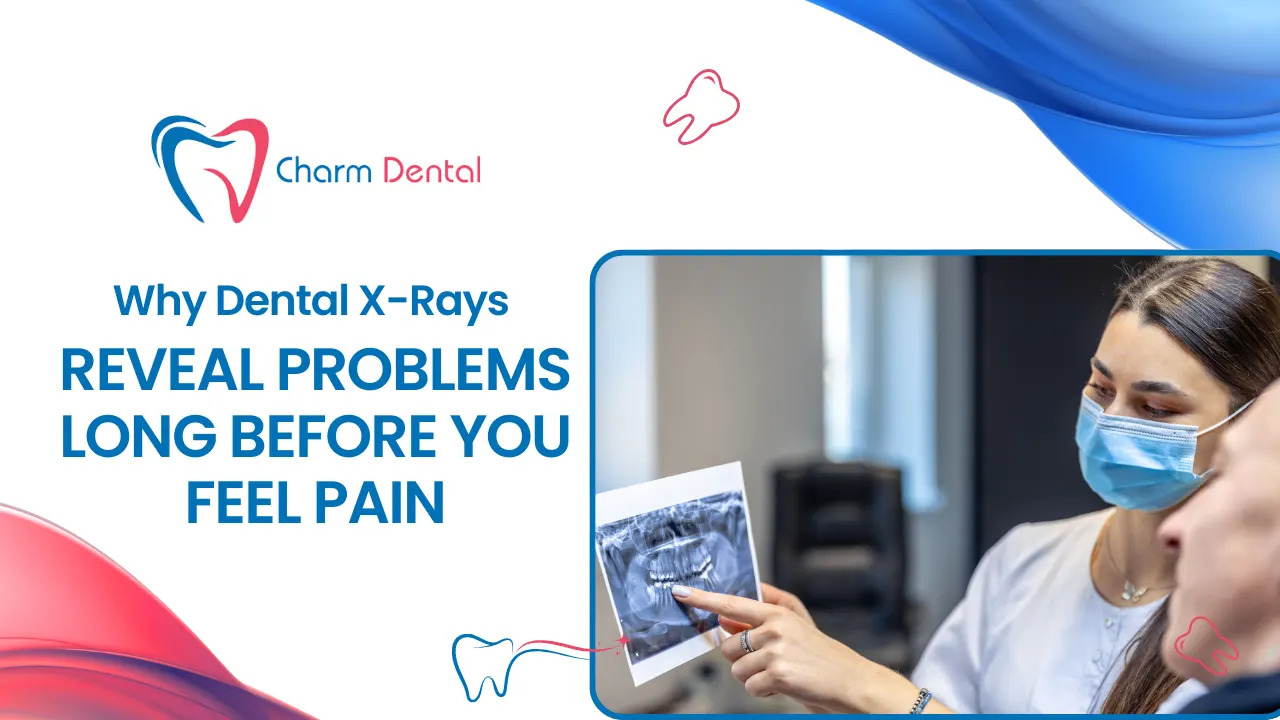
Many dental issues start without pain, which is why they are easy to miss. Studies show that up to 80% of dental problems are first detected during routine exams and X-rays, before patients notice any symptoms.
Tooth decay, infections, and bone changes often begin below the surface, where they cannot be seen or felt. Dental X-rays allow dentists to look beneath the enamel and gums to catch these issues early.
At Charm Dental Care, X-rays are used as part of preventive care to identify problems before they turn painful or complex. In this blog, we explain how X-rays work, what they reveal, and why early detection protects your teeth, time, and peace of mind.
Key Takeaways
- Many dental problems develop without pain and cannot be seen during daily brushing or mirror checks.
- Tooth enamel and gum tissue can hide early decay, infection, and bone changes.
- Dental X-rays reveal problems beneath the surface that visual exams cannot detect.
- Cavities between teeth, bone loss, and early infections are often found only on X-rays.
- Early X-ray detection helps prevent pain, tooth damage, and the need for complex treatments.
- Finding problems early usually means simpler care, fewer visits, and lower costs.
- Routine dental imaging plays a key role in long-term preventive oral health care.
Table of Contents
Why Many Dental Problems Don’t Show Symptoms Early?

Many oral health issues develop quietly, so hidden dental problems often go unnoticed at first.
Teeth and gums are designed to protect sensitive areas, so early changes do not always trigger pain or visible signs.
Decay can start beneath the enamel, and bone changes can occur below the gumline while everything feels normal.
Common reasons symptoms appear late include:
- Enamel has no nerves, so early damage is painless.
- Infections can begin deep inside the tooth or bone.
- Gum and bone changes progress slowly over time.
- The mouth adapts, masking early warning signs.
Because there is no discomfort, many people delay dental visits.
This is why routine check-ups and imaging are key to identifying problems early, before they become painful or require complex treatment.
Also Read: Can a Cavity Heal on Its Own?
Tooth Structure, Enamel Protection, And Hidden Damage
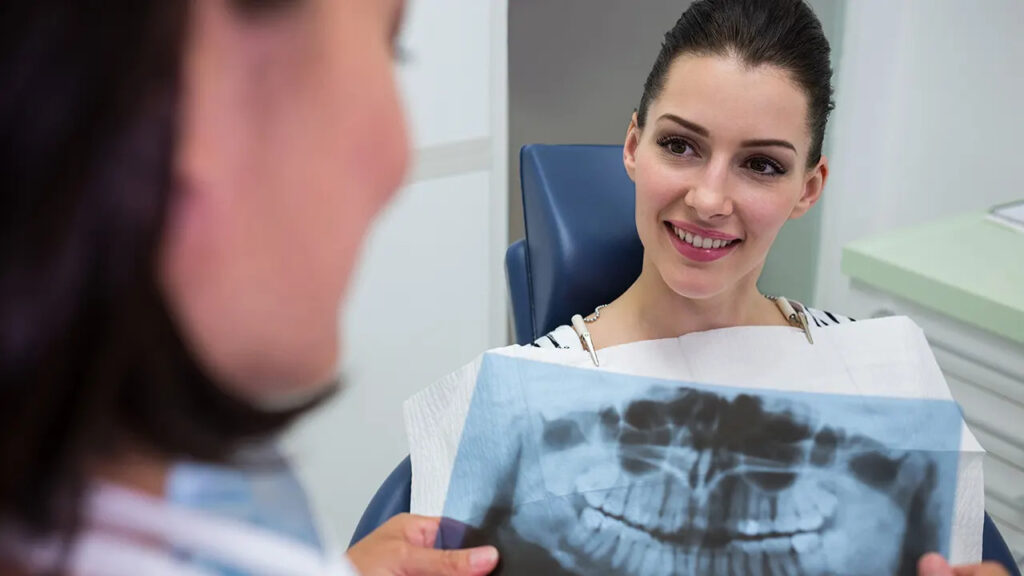
Teeth are built to protect sensitive inner layers, which is why early dental detection often depends on diagnostic tools rather than symptoms. The outer enamel layer is strong and has no nerve endings. Damage can begin here and continue below the surface without causing discomfort.
Beneath the enamel lies dentin and the pulp, where nerves and blood vessels are located. Problems may progress quietly in these deeper areas while the tooth still looks healthy.
Early damage may include:
- Decay forming beneath intact enamel.
- Infection starts inside the tooth structure.
- Bone changes occurring below the gumline.
Because these issues are hidden, they rarely cause pain at first.
This is why our professional dentists rely on imaging as part of routine care. To better understand how diagnostic tools are used during visits.
Why Pain Signals Come Late?
Pain usually appears only when damage reaches the nerves or causes inflammation. At this stage, tooth infection detection often reveals an issue that has already progressed.
Early X-rays help identify issues sooner, reducing the risk of sudden tooth pain and the need for more complex treatment.

Dental Problems Only Visible On X-Rays

Some dental issues develop in areas that cannot be seen during a regular visual exam. These are problems visible on dental X-rays and often occur long before pain, swelling, or sensitivity appear.
X-rays allow dentists to look between teeth, beneath the gums, and into the jawbone, where early damage commonly begins.
Hidden Cavities, Bone Loss, And Infections
X-rays play a key role in identifying hidden cavities that form between teeth or beneath existing fillings.
These areas are invisible in a mirror. Imaging also helps detect bone loss in teeth, which may indicate early gum disease or infection developing below the gumline.
Common issues revealed through X-rays include:
- Cavities forming between teeth or under restorations.
- Bone loss beneath the gums.
- Early infections near the tooth root.
- Structural changes that may lead to abscesses.
At Charm Dental Care, X-rays are used to spot these concerns early, helping patients avoid sudden pain or complex procedures later.
Interesting Read: Top 7 Indicators That You Have a Dental Emergency
Problems That Cannot Be Seen In The Mirror

Even healthy-looking teeth can hide serious issues beneath the surface.
This is where the benefits of dental imaging become clear. X-rays reveal problems early, allowing dentists to plan treatment before nerves are affected or symptoms begin.
Early imaging often means simpler care, shorter treatment time, and better long-term outcomes.
For patients who prefer visiting a nearby clinic for routine imaging and exams, Charm Dental Care offers convenient locations across Texas:
1. Spring Location – Easy access for regular preventive visits
2. Katy Dentist – Trusted care close to home
3. Richmond Location – Convenient for families and working professionals
4. Humble Location – Accessible care with flexible scheduling
Having local access makes it easier to stay consistent with check-ups and imaging, helping detect hidden issues early and protect long-term oral health.
How Dentists Use X-Rays To Detect Early Issues?

X-rays help dentists identify concerns that are not visible during a routine visual exam. This supports early dental diagnosis, allowing problems to be addressed before they turn painful or complicated.
By carefully reviewing images, dentists can understand what is happening beneath the surface and plan care accurately.
Preventive Diagnosis And Treatment Planning
X-rays are an important part of preventive dental exams and routine oral cancer screening. They help dentists track changes over time and decide when early treatment is needed.
Dentists use X-rays to:
- Detect decay before it reaches the nerve.
- Monitor bone health around teeth.
- Identify early signs of infection or inflammation.
- Plan treatments with minimal impact on healthy teeth.
This preventive approach helps keep care simple and predictable.
For patients concerned about cost, routine imaging is often covered under most plans, and options such as the Membership Plan and flexible Payment Options make preventive visits easier to manage.
Early detection with X-rays enables dentists to address small issues, reducing the need for more complex procedures later.

Why Early X-Ray Detection Saves Time, Teeth, And Money?

Catching dental problems early makes a real difference.
The importance of dental X-rays lies in identifying issues before they become painful, complicated, or expensive to treat. When problems are identified early, treatment is usually simpler and less invasive.
Early X-ray detection helps by:
- Preventing small cavities from turning into root infections.
- Protecting the bone and surrounding teeth from further damage.
- Reducing the need for emergency or complex procedures.
- Saving time by addressing issues in fewer visits.
It also helps patients avoid unexpected costs. Preventive imaging often leads to smaller treatments rather than major restorative work later.
At Charm Dental Care, X-rays are used as part of a preventive approach to protect long-term oral health.
For patients planning their next visit, explore our Current Offers to take a proactive step before problems escalate.
You Might Also Like
- How Do I Know If My Tooth Pain Is Serious?
- Importance of Attending Regular Check-Ups
- How to Deal With Tooth Sensitivity to Sugar

Conclusion
Dental X-rays play a vital role in protecting your oral health, especially when problems develop without pain. Many issues begin beneath the surface of the teeth and gums, where they cannot be seen or felt during everyday routines. X-rays help identify issues early, before they lead to infections, tooth loss, or costly treatments.
At Charm Dental Care, dental imaging is part of a preventive approach focused on early detection and long-term care. Catching problems early saves time, protects natural teeth, and reduces stress. If it has been a while since your last check-up, contact us to stay ahead of hidden dental issues and keep your smile healthy.
FAQs (Frequently Asked Questions)
Q1.What Problems Can Dental X-Rays Detect Early?
Dental X-rays can detect cavities between teeth, bone loss, early infections, impacted teeth, and changes below the gumline. These issues often develop without pain and are not visible during a regular visual exam.
Q2.Why Do Dentists Recommend X-Rays Even Without Pain?
Pain is usually a late sign of dental problems. Dentists recommend X-rays because many issues start beneath the surface and progress quietly. Imaging helps identify concerns early, before they become painful or complex.
Q3.Can Cavities Exist Without Visible Signs?
Yes. Cavities can form between teeth or under existing fillings without being visible in the mirror. X-rays are often the only way to detect these hidden areas of decay early.
Q4.How Often Should Dental X-Rays Be Taken?
The frequency of dental X-rays depends on your oral health, age, and risk factors. Dentists typically recommend them at intervals that support preventive care while minimising unnecessary exposure.
Q5.Are Dental X-Rays Safe For Routine Checkups?
Yes. Modern dental X-rays use very low radiation levels and are considered safe for routine exams. Protective measures are also used to further reduce exposure.
Q6.Do Dental X-Rays Help Prevent Expensive Treatments?
Absolutely. By identifying problems early, X-rays often allow for simpler and less costly treatments. If you want to stay ahead of hidden dental issues, it’s a good idea to book an appointment for a preventive exam.