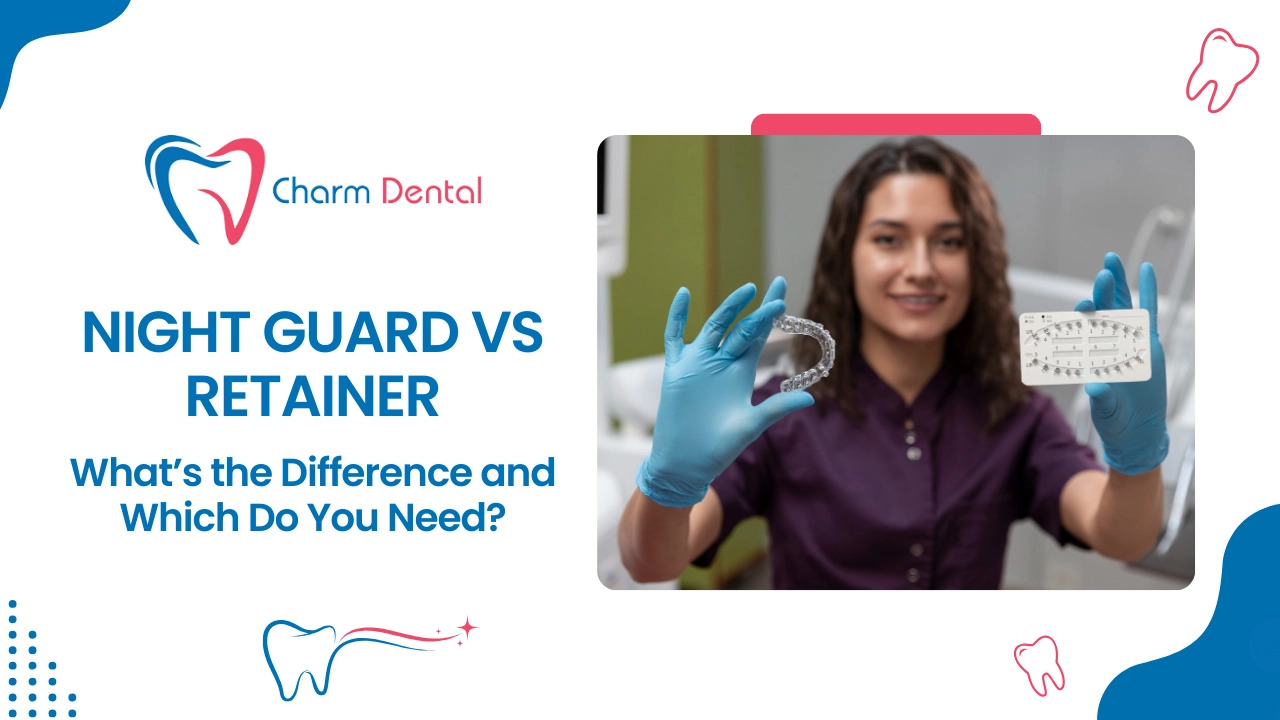
If you have ever woken up with sore teeth or a tired jaw, you may be grinding your teeth at night without realizing it. Many people hear about night guards and retainers, but are unsure which one they actually need. Both dental appliances fit over your teeth, but their jobs are very different.
A night guard vs retainer decision depends on your unique needs, whether you’re protecting your teeth from damage caused by teeth grinding at night, or keeping your teeth from shifting after orthodontic treatment.
In this blog, we will explain the difference in purpose, materials, care, and wear schedule so you can choose the right option with confidence and keep your smile protected.
Key Takeaways
- Night guards and retainers look similar but do different jobs.
- Night guards protect your teeth from grinding while you sleep.
- Retainers keep your teeth straight after braces or aligners.
- Custom dental guards and retainers fit better and last longer than store-bought ones.
- You wear a night guard only while sleeping, but retainers are worn according to a dentist’s schedule.
- Cleaning your appliance daily helps keep your mouth healthy and odor-free.
- Replace your guard or retainer if it cracks, feels loose, or causes your teeth to shift.
- A quick dental check can help you choose the right option for your smile and comfort.
Table of Contents
What Is Each Device Used For? (Bruxism vs Tooth Position)

Night guards and retainers may look similar, but they serve very different purposes.
- A bruxism guard (night guard) protects teeth from grinding or clenching during sleep. It absorbs pressure from jaw forces and prevents chips, cracks, and enamel wear.
- A retainer helps keep teeth in their corrected positions after orthodontic treatment. Its main role is to stop teeth from shifting back over time.
A simple way to remember it:
| Device | Main Purpose | Best for |
| Night Guard | Protects teeth from grinding and clenching | Jaw tension, headaches, worn or cracked teeth |
| Retainer | Maintains alignment after braces or aligners | Keeping teeth straight and stable |
If you notice morning soreness, headaches, or increased tooth sensitivity but haven’t had any recent orthodontic changes, a guard may be the right fit.
If your main goal is to keep your smile aligned, a retainer comes first.
Also Read–How Do I Know If My Tooth Pain Is Serious?
Why Materials Matter? (Soft, Hard & Dual-Laminate Options)

Night guards and retainers come in different materials, and the right choice depends on your comfort, bite pressure, and long-term needs.
A custom dental guard is designed by your dentist to better protect your enamel than store-bought options.
| Type | Best For | Feel & Fit | Durability |
| Soft Night Guard | Mild clenching or early bruxism | Cushioned and comfortable | Shorter lifespan |
| Hard Acrylic Guard (Occlusal Splint) | Moderate to severe grinding | Very strong and supportive | Long-lasting |
| Dual-Laminate Guard | Heavy nighttime bruxism with sensitivity | Soft inside, tough outside | Strong + comfortable |
Retainers are usually made from clear plastic or metal wire, which hold tooth position rather than absorbing bite force.
Good to know!
Most PPO insurance plans provide some level of coverage for night guards when medically necessary.
We review your benefits before treatment so you understand the cost clearly.
Families without insurance can also save through our Membership Plan.

Over-the-Counter vs Custom-Made — Which Should You Choose?
When jaw clenching or grinding becomes a concern, many people start with an over-the-counter mouthguard from a pharmacy.
While these options are easy to buy, they are not made for your bite and can sometimes worsen symptoms.
| Feature | Over-the-Counter Guard | Custom Dental Guard (Dentist-Made) |
| Fit | Generic | Personalized to your teeth and bite |
| Comfort | Bulky or loose | Slim, secure, comfortable |
| Protection | Basic shock absorption | Designed for true bruxism protection |
| Longevity | Wears down quickly | Stronger materials last longer |
| TMJ/Jaw Support | Minimal | Helps reduce muscle stress and headaches |
Why is custom recommended?
A custom dental guard protects teeth better, stays in place while you sleep, and prevents uneven bite pressure, which can reduce long-term wear and dental costs.
Financial Tip
Custom guards are more affordable than replacing cracked teeth or crowns later. We help you check:
If you’re unsure which option fits your needs, bring your current guard to your next visit we’ll assess your bite and guide you clearly.
When and How Often Should You Wear It?

Your dentist recommends a guard or retainer based on what your mouth needs most, and when you should wear it matters for results.
Here’s the general guidance:
- Night guards are worn while sleeping to protect teeth from teeth grinding at night or clenching.
- Retainers follow a schedule that depends on orthodontic treatment:
• Full-time wear at first.
• Transition to nighttime-only after teeth stabilize.
Some patients alternate: retainers to maintain alignment, night guards to protect enamel.
If you notice increased sensitivity or changes in your bite, it may be time for a quick dental check. Our team tracks progress and adjusts if needed, so your device keeps doing its job effectively.
Need help with fit or nighttime discomfort? Book an appointment. We can adjust your appliance or recommend a better option for comfort and relief.
Read More– Invisalign vs Braces

How to Care for Your Guard or Retainer?
A clean guard or retainer keeps your mouth healthy and helps your appliance last longer.
Good retainer care is especially important because plaque and bacteria can build up while you sleep.
Daily Cleaning Tips
• Rinse with cool water after removing in the morning.
• Brush gently with a soft toothbrush (no toothpaste — it scratches).
• Use mild liquid soap or approved mouthguard cleaning foam.
• Let it air-dry fully before storing.
• Keep it in a ventilated case to avoid moisture buildup that damages an occlusal splint.
What to Avoid?
• Hot water can warp the shape of a bruxism guard or retainer.
• Alcohol-based mouthwash or harsh cleaners.
• Biting down to remove the appliance.
• Leaving it unprotected in pockets or bags.
• Skipping cleaning, which leads to odor and bacterial growth.
If stubborn buildup appears or your appliance starts to smell, we can professionally clean or replace it to keep everything fresh and safe.
Good cleaning habits protect your appliance and help your smile stay healthy in the long term.
Read More–Teeth Cleaning: Pros, Cons, Procedure & Aftercare Tips
When Should You Replace Your Night Guard or Retainer?

Even high-quality appliances do not last forever.
A bruxism guard or retainer can wear down over time, especially if grinding or clenching is strong. Replacing it at the right time protects your teeth and keeps jaw muscles relaxed.
Signs It’s Time for a New Appliance
• Cracks, small tears, or thinning material.
• It feels loose, uncomfortable, or suddenly too tight.
• New tooth movement or shifting bite.
• Increased TMJ jaw pain or headaches in the morning.
• Odor or discoloration that does not clean off.
• You wake up grinding through the appliance.
If a guard or retainer is not fitting well, it may stop doing its job, leading to more damage or discomfort.
How Charm Dental Care Helps?
• We review wear patterns during checkups.
• PPO insurance plans benefits may apply toward replacements.
• Our Membership Plan reduces out-of-pocket costs.
• Quick digital impressions for a perfect custom fit.
• Dental offers options available for unexpected replacements.
A properly fitting appliance means better protection, better sleep, and healthier smiles.

You Might Also Like
• Can’t Sleep Due to Tooth Pain?
• Top 7 Indicators That You Have a Dental Emergency
• Why Is One Tooth Implant So Expensive?
Conclusion
Choosing between a night guard and a retainer depends on what your smile needs most. A night guard protects teeth from grinding and reduces jaw tension during sleep, while a retainer keeps teeth from shifting after orthodontic treatment. Some people benefit from both, especially if they grind and have recently completed braces or clear aligners.
At Charm Dental Care, we help you understand the cause of jaw pain, worn enamel, or shifting teeth, and guide you to the right appliance. With PPO insurance support, membership savings, and payment plans, it is easy to protect your smile without stress. Reach out anytime to get the right solution for your teeth.
FAQs (Frequently Asked Questions)
Q1: Can A Retainer Replace A Night Guard?
No. A retainer keeps teeth aligned, while a night guard protects against grinding and clenching forces.
Q2: How Long Does A Night Guard Last?
Most last 1–5 years, depending on material quality and grinding intensity.
Q3: Will A Night Guard Help With Jaw Pain And Headaches?
Yes. It reduces pressure on jaw muscles and may help with morning jaw pain solutions and headaches linked to grinding.
Q4: Are Over-the-Counter Guards Good Enough?
They work temporarily but may feel bulky or loose. A custom dental guard offers better protection and comfort.
Q5: How Do I Clean A Night Guard Or Retainer?
Rinse daily, brush with mild soap, air-dry fully, and avoid hot water or alcohol-based cleaners.
Q6: What Are The Signs Of Bruxism In Adults?
Sore jaw in the morning, worn teeth, headaches, chipped enamel, and increased sensitivity during chewing.
Q7: Should I Wear My Retainer Forever After Braces?
To keep teeth from shifting, long-term nighttime retainer wear is usually recommended.
Q8: Can A Night Guard Fix Teeth Alignment?
No. It protects against grinding but does not move teeth. Retainers maintain alignment.
Q9: When Should I Replace A Retainer Or Guard?
Replace if it cracks, feels loose or tight, develops odor or discoloration, or you notice shifting teeth.
Q10: Can I Use My Night Guard For Sports Protection?
No. Sports mouthguards are thicker and designed to absorb impact, while bruxism guards focus on grinding forces during sleep.